Copenhagen vs Stockholm: Which Nordic Capital Should You Visit First?
Should I visit Copenhagen or Stockholm for a city break?
Copenhagen if you want a compact, walkable/cycleable city with a stronger food scene, better day-trip variety, and slightly easier logistics. Stockholm if you want a larger, more architecturally dramatic city spread across 14 islands, with arguably richer museum culture (Vasa Museum) and more neighbourhood diversity. Both are expensive by European standards — budget roughly 700–1,000 DKK / 800–1,100 SEK per person per day excluding accommodation.
Two great cities, one difficult choice
The Copenhagen versus Stockholm debate comes up constantly among first-time Scandinavia visitors, and the honest answer is that they are not equivalent experiences. They share Nordic DNA — expensive, design-conscious, well-organised — but they feel very different on the ground.
This comparison runs through the areas that actually matter for a city break: walkability, cost, food, museums, day-trips, and the intangibles that tourism guides rarely admit to. For the practical logistics if you decide to do both, see the Copenhagen to Malmö train guide — Malmö sits on the direct rail line most travellers use to continue toward Stockholm.
| Copenhagen | Stockholm | |
|---|---|---|
| Layout | Compact, walkable/cycleable | Spread across 14 islands |
| Best for | Food, cycling, day-trips | Museums (Vasa), architecture, nightlife |
| Minimum stay | 3–4 nights | 3–4 nights |
| Signature museum | Designmuseum Danmark, Louisiana | Vasa Museum |
| Winter draw | Tivoli Christmas market | Gamla Stan Christmas atmosphere |
Size and walkability
Copenhagen covers roughly 88 km² in its inner city, but the tourism zone — Nyhavn, Strøget, Tivoli, the main museum cluster, and Christianshavn — is extremely compact. Most visitors can walk between major sights in 20–30 minutes. Add a hire bike (the city’s cycling infrastructure is genuinely world-class), and you rarely need the Metro for anything inside the city ring.
Stockholm is built across 14 islands and covers a much larger footprint. Gamla Stan (the old town), Djurgården (museums), Södermalm, and Östermalm each require transit between them. The Tunnelbana (Metro) is excellent but adds logistical overhead. First-time visitors consistently find Copenhagen easier to navigate without pre-planning.
Winner for walkability: Copenhagen.
Cost comparison (DKK vs SEK, 2026)
Both cities are expensive. Here are honest benchmark costs:
| Item | Copenhagen (DKK) | Stockholm (SEK) | Approx EUR equivalent |
|---|---|---|---|
| Midrange lunch | 150–220 | 130–200 | 13–22 EUR |
| Coffee (flat white) | 50–65 | 50–70 | 5–7 EUR |
| Museum entry (average) | 110–175 | 100–200 | 11–20 EUR |
| Metro single journey | ~24 | ~40 | 2.30–4 EUR |
| Budget hostel dorm | 220–300 | 200–350 | 22–35 EUR |
| Mid-range hotel (per night) | 900–1,500 | 800–1,400 | 90–150 EUR |
| Supermarket beer | 15–20 | 15–22 | 1.50–2 EUR |
The currency difference can be deceptive. DKK and SEK sound similar in numbers but are different in value — 1 EUR = roughly 7.45 DKK and 10.5 SEK (2026 rates). Stockholm can feel slightly cheaper when you see lower numbers on menus, but convert before assuming. The Copenhagen trip cost guide has the full DKK breakdown if you want to plan the Copenhagen half of a combined trip precisely.
Winner for cost: Roughly equal, with Stockholm marginally cheaper for accommodation and Copenhagen marginally pricier for food. Neither is budget-friendly.
Food and drink
Copenhagen’s food scene is arguably the best in northern Europe. The New Nordic movement started here with Noma, and while Noma has closed its regular service, the city’s restaurant culture has matured into something more accessible: excellent smørrebrød at dozens of lunch spots (Aamanns, Schønnemanns, Torvehallerne), creative New Nordic at mid-price restaurants, Reffen for street food, Torvehallerne for market food, and one of Europe’s strongest coffee cultures.
Stockholm’s food scene is also excellent but operates at a different register. The Swedish classic — husmanskost, meatballs with lingonberry, herring platters — is more comfort-food-oriented. Stockholm has strong fine dining (Frantzén and others) and a good casual scene, particularly in Södermalm. The smörgåsbord tradition is distinctively Swedish. For travellers whose main interest is food culture, Copenhagen has the edge in innovation and variety per square kilometre.
Winner for food: Copenhagen, particularly for the smørrebrød tradition and café culture. Stockholm for classic Swedish comfort food.
Museums and culture
Stockholm holds an advantage here, largely due to the Vasa Museum — one of the most extraordinary museums in Europe, housing a near-complete 17th-century warship raised from the harbour floor. No other city has anything quite like it. Stockholm also has the Historiska Museet (Swedish History Museum), the ABBA Museum (very popular, very particular), and the open-air Skansen — the world’s oldest open-air museum, with traditional Swedish buildings and farm animals.
Copenhagen’s museums are very good but less individually iconic. The National Museum of Denmark is comprehensive and free for some exhibits. Ny Carlsberg Glyptotek is a genuinely beautiful building with a strong antiquities collection. Designmuseum Danmark is world-class for design lovers. Louisiana (technically outside Copenhagen in Humlebæk) is one of the best modern art museums in Europe. But no single Copenhagen museum hits the way the Vasa does.
Winner for museums: Stockholm (the Vasa alone tips the balance).
Day-trips
Copenhagen day-trips are exceptional:
- Kronborg Castle (Helsingør, 45 min train) — Hamlet’s castle, UNESCO-listed
- Frederiksborg Castle (Hillerød, 40 min train) — the Danish Versailles
- Roskilde (25 min train) — Viking Ship Museum, UNESCO cathedral
- Louisiana Museum (40 min train) — world-class modern art in stunning coastal setting
- Malmö, Sweden (35 min train) — literally cross a country for the day
Stockholm day-trips are also good — Uppsala, Sigtuna, the archipelago by ferry — but the archipelago (the most distinctive option) requires longer boat journeys and is weather-dependent. Copenhagen’s day-trips are faster by train and more consistently accessible.
Winner for day-trips: Copenhagen.
Cycling culture
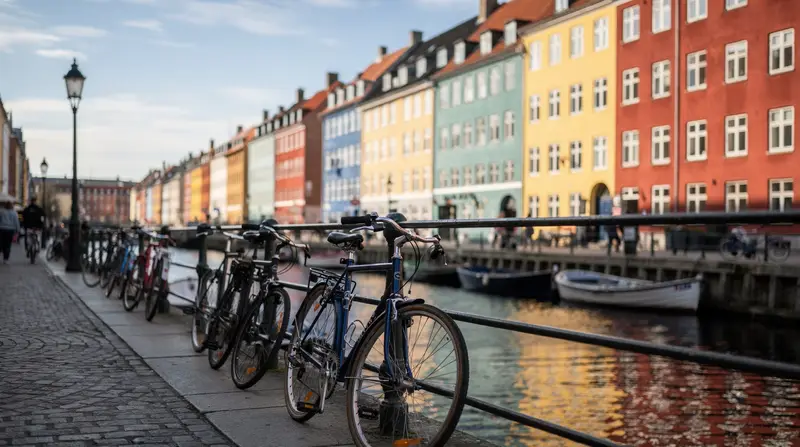
Copenhagen is simply the most cycle-friendly city in the world for tourists. 390 km of dedicated cycling lanes, bike hire available everywhere, locals who follow genuine cycling rules (not chaotic pavement cycling). Riding in Copenhagen feels safe even for non-regular cyclists.
Stockholm has cycling infrastructure but the city’s hilly topography and island structure make it less naturally suited to casual tourism by bike. Most visitors use the Metro.
Winner for cycling: Copenhagen, definitively. See the biking in Copenhagen guide for rental options if this tips your decision.
Nightlife
Stockholm has a stronger club scene (Stureplan and Södermalm areas), more late-night bars, and a tradition of club nights that runs later. Copenhagen’s nightlife is good — particularly in Vesterbro and the Meatpacking District (Kødbyen) — but closes earlier and is smaller in scale.
Winner for nightlife: Stockholm.
Architecture and visual feel
Stockholm’s Gamla Stan (Old Town) is among the most photogenic medieval urban environments in Europe — narrow streets, coloured buildings, the Royal Palace. The city’s waterfront views across between islands are dramatic in a way Copenhagen’s waterfront is not.
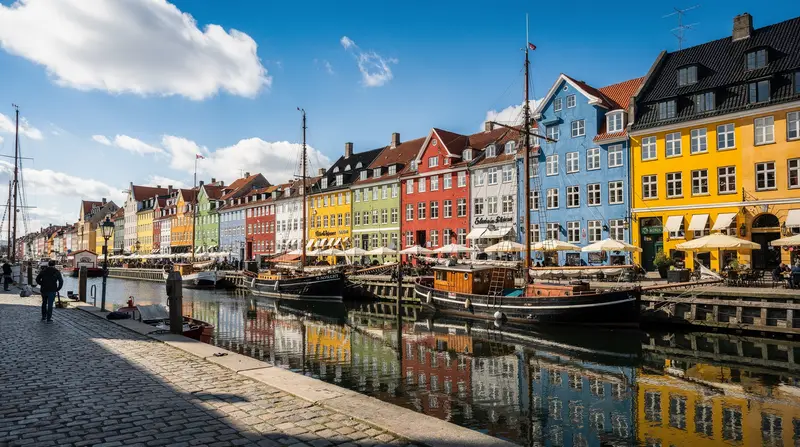
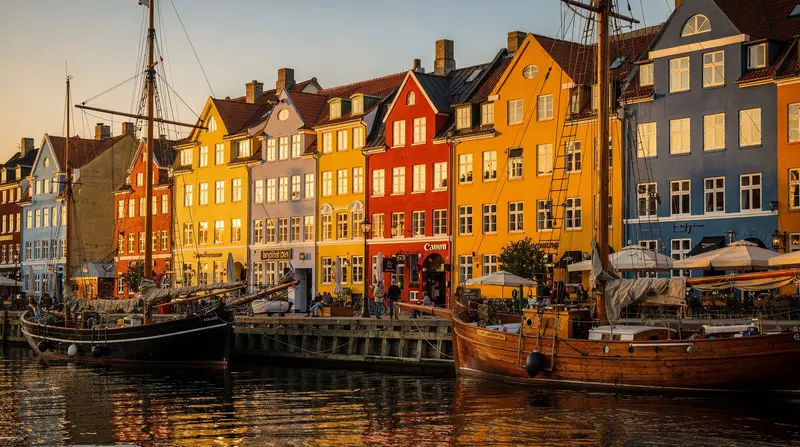
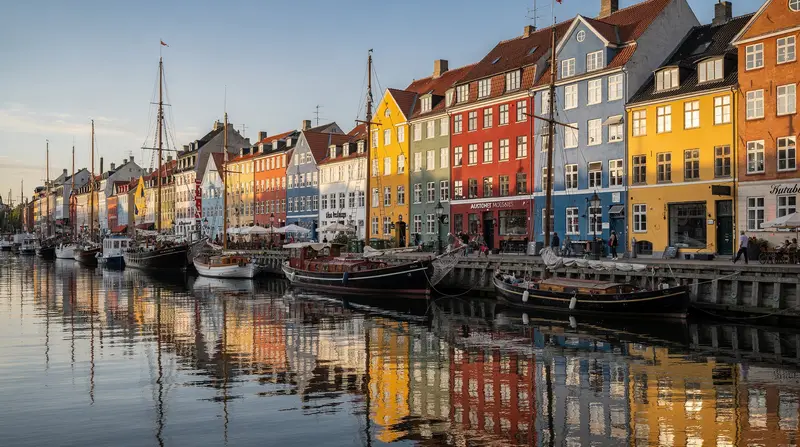
Copenhagen’s architecture is varied: Nyhavn’s coloured houses are iconic, Frederiksstaden around Amalienborg is grand, and the newer Christianshavn and harbour area have a contemporary energy. But Stockholm photographs as a more consistently beautiful city.
Winner for architecture: Stockholm.
Hygge versus lagom: the underlying design philosophies
Both cities are frequently discussed through a lifestyle-concept lens — Danish hygge and Swedish lagom — and the distinction is more than marketing. Hygge, roughly “cosy contentment,” shows up in Copenhagen as candlelit cafés, wool blankets on outdoor terrace chairs even in cool weather, and an emphasis on comfort and warmth as a social value in itself. Lagom, roughly “just the right amount,” shows up in Stockholm as a more restrained, balanced approach to consumption and design — Swedish interiors and public spaces tend toward functional moderation rather than overt cosiness.
In practice, this means Copenhagen’s café culture leans toward lingering, candlelit indulgence (see the what is hygge guide and the best cafés for hygge guide), while Stockholm’s equivalent spaces feel more minimal and efficiency-oriented. Neither is objectively better, but if the specific atmosphere of a trip matters as much as the sights, this difference is worth weighing alongside cost and logistics.
The Malmö bridge bonus
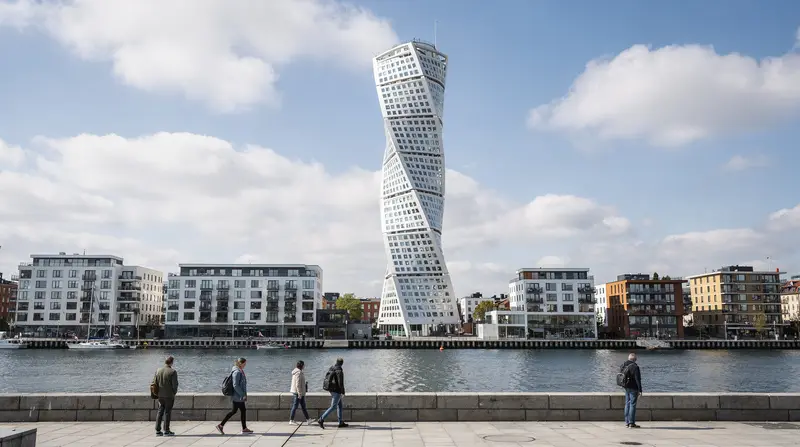
One thing Copenhagen offers that Stockholm cannot: you can visit a second country in under 40 minutes by train. The Øresund Bridge connects Copenhagen to Malmö (Sweden) — a genuine city with its own character (the Turning Torso tower, old town, good food scene) — for around 130–160 DKK return. For visitors excited by the novelty of crossing between Denmark and Sweden in a day, this is a Copenhagen-exclusive experience. Our Malmö day-trip guide covers the logistics.
When each city wins
Choose Copenhagen if:
- You want maximum walkability and ease of navigation
- The food scene (smørrebrød, New Nordic, pastries) is a priority
- You want varied day-trips by fast train
- You are travelling with a bike or want to cycle everywhere
- You are visiting in winter for Christmas markets (Tivoli is exceptional)
- First-time Scandinavia visitor with limited time
Choose Stockholm if:
- Museum culture — especially maritime history — is a priority
- You want a larger, more architecturally dramatic city
- Nightlife is important
- You want the Swedish archipelago experience
- You prefer a more complex city to explore over multiple visits
Combining both
The best answer for anyone with 7+ days: do both. Copenhagen for 3 nights, Stockholm for 3 nights, connected by the 5-hour train through Sweden (or a budget flight). The two cities complement each other rather than overlap. You will not feel like you are seeing the same city twice.
A practical route: start in Copenhagen, use it as your base for 3–4 nights including the Malmö day trip across the Øresund Bridge, then continue by the SJ high-speed train (or a short flight) north to Stockholm for the second half of the trip. This sequencing means you experience the bridge crossing twice — once as a Copenhagen day-trip, once as the start of the longer journey north — rather than backtracking. Booking the Copenhagen–Stockholm leg 2–3 weeks ahead typically secures noticeably better SJ fares than booking within a week of travel.
Frequently asked questions about Copenhagen vs Stockholm
Which city is safer for tourists?
Both are very safe by European and global standards. Petty crime (pickpocketing in tourist areas) exists in both but at low rates. Stockholm has had higher-profile security incidents in some suburbs in recent years, but these are geographically distant from tourist areas. Neither city poses meaningful safety concerns for typical city-break visitors.
Can I visit both Copenhagen and Stockholm in one trip?
Easily, if you have 6+ days. The train connection is excellent: several daily departures, 4.5–5 hours, no border formalities (Schengen zone). Book SJ high-speed trains at least 2–3 weeks in advance for the best prices.
Which city has better weather in summer?
Both are pleasant in summer (June–August), with long daylight hours — up to 17–18 hours of light. Stockholm is slightly warmer on average. Both cities can be cold and rainy even in summer. Pack a layer regardless.
Is English widely spoken in both cities?
Yes, extensively. Swedes and Danes both have very high English proficiency. You will have no practical difficulty with English in restaurants, shops, hotels, or tourist attractions in either city.
Which is better for a solo female traveller?
Both score very highly for solo travel safety. Copenhagen’s compact layout and 24-hour Metro make late-night navigation easy. Stockholm’s public transport is also reliable. Neither is a city where solo female travellers typically report safety concerns.
Which city has better Christmas markets?
Tivoli Gardens Christmas market in Copenhagen is widely considered one of Europe’s best — magical setting, good quality, genuinely atmospheric from mid-November to January. Stockholm’s Gamla Stan and Skansen Christmas markets are also excellent. Copenhagen wins on the Tivoli factor.
Frequently asked questions — Copenhagen vs Stockholm: Which Nordic Capital Should You Visit First?
Is Copenhagen or Stockholm more expensive?
Both are among Europe's most expensive cities. Stockholm is slightly cheaper for accommodation on average, but food costs are similar. A mid-range meal costs 150–250 DKK in Copenhagen (15–25 EUR) and 150–250 SEK in Stockholm (13–22 EUR at current rates). Museum entry is roughly comparable. The exchange rate between DKK and SEK fluctuates — always convert before you travel.Which city is easier to get around without a car?
Copenhagen is more compact and easier on foot or by bike. Stockholm is larger and more spread out across islands, making the Metro (Tunnelbana) more essential. Both have excellent public transport. Copenhagen's Metro runs 24 hours; Stockholm's Tunnelbana does not run all night.How far apart are Copenhagen and Stockholm?
By high-speed train (SJ X2000 or similar), Copenhagen to Stockholm takes around 4.5–5 hours and costs 300–800 SEK depending on booking lead time. There are several daily departures. It is feasible to combine both cities in one trip, spending 2–3 nights in each.Which city has better food?
Copenhagen has the stronger global reputation for food, particularly for New Nordic cuisine, smørrebrød, and the coffee-and-pastry culture. Stockholm has a very good food scene — husmanskost (traditional Swedish cooking), meatballs, and a strong restaurant culture — but Copenhagen's food density is higher per square kilometre in the city centre.Which is better for families with children?
Copenhagen edges ahead for families: Tivoli Gardens is unique, the Blue Planet Aquarium is excellent, LEGOLAND is a day-trip option, and the city's cycle-friendly infrastructure makes getting around with children easier. Stockholm's Skansen open-air museum and Junibacken (children's museum) are also strong family options.Which city has better winter travel?
Copenhagen in winter has Tivoli Christmas markets (one of Europe's best) and a cosy indoor food and café culture. Stockholm in winter is darker and colder but has the Gamla Stan (Old Town) Christmas atmosphere and is closer to Swedish Lapland. Both reward a winter visit differently.