Copenhagen vs Amsterdam: Which City Break is Right for You?
Should I visit Copenhagen or Amsterdam for a city break?
Amsterdam if you want more cultural density, lower cost, an easier flight connection, and a well-worn backpacker-to-boutique infrastructure. Copenhagen if you want a calmer, more refined experience — better food scene, cycling without the chaos, smaller crowds, and the honest Nordic angle. Amsterdam is cheaper; Copenhagen is quieter and increasingly more interesting to eat in.
The honest framing
Amsterdam and Copenhagen are frequently compared by European city-break planners, and the comparison is reasonable: both are Northern European capital cities with strong canal cultures, famous cycling scenes, and reputations for being expensive-but-worth-it.
But they are genuinely different cities with different strengths. This comparison tries to be useful rather than promotional — each city wins on specific criteria, and which criteria matter to you determines which city you should visit. If your real question is Copenhagen against a different Nordic capital, see the Copenhagen vs Stockholm guide instead.
| Amsterdam | Copenhagen | |
|---|---|---|
| Cost | 20–30% cheaper | More expensive across the board |
| Best for | Museums, nightlife, flight access | Food, cycling comfort, calm |
| Minimum stay | 3 nights | 3–4 nights (5 with day-trips) |
| Standout museums | Rijksmuseum, Van Gogh, Anne Frank | Louisiana, Glyptotek, Designmuseum |
| Crowd levels | Heavily touristed core | Noticeably calmer |
Getting there
Amsterdam (AMS) is one of Europe’s major aviation hubs. Budget carriers fly from dozens of European cities, and long-haul connections from North America and Asia are extensive. You can fly from most European capitals for 30–80 EUR on a budget airline.
Copenhagen (CPH) is well-connected but smaller as a hub. Flights from London, Paris, Frankfurt, and other European cities are available, but you will generally pay more than for equivalent Amsterdam routes. Scandinavian Airlines is the main carrier; budget options are fewer.
Winner for accessibility: Amsterdam, clearly. This is one of the most practical arguments for choosing Amsterdam if you are on a budget.
Cost (real numbers)
| Item | Amsterdam (EUR) | Copenhagen (DKK / EUR equiv.) |
|---|---|---|
| Mid-range lunch | 15–25 EUR | 150–250 DKK (~20–33 EUR) |
| Coffee | 3–5 EUR | 45–65 DKK (~6–9 EUR) |
| Museum entry | 10–22 EUR | 110–175 DKK (~15–23 EUR) |
| Budget hotel (per night) | 80–150 EUR | 700–1,300 DKK (~94–174 EUR) |
| Public transport single | 1.50–4 EUR | ~24 DKK (~3.20 EUR) |
| Supermarket beer | 1–2 EUR | 15–20 DKK (~2–2.70 EUR) |
Copenhagen is consistently more expensive, particularly for food and coffee. Plan to spend 20–30% more per day for Copenhagen than Amsterdam for a similar travel style. The Copenhagen trip cost guide and Copenhagen on a budget guide go into the exact levers if you choose Copenhagen and want to close some of that gap.
Winner for cost: Amsterdam, significantly.
Cycling
Both cities are famous for cycling, and both deserve their reputations, but the experience is very different.
Amsterdam cycling is chaotic in the best possible way. Cyclists, pedestrians, trams, and cars share overlapping space in the city centre in a system that appears anarchic but is governed by informal rules that locals understand perfectly. Tourists who hire bikes in Amsterdam often find the experience initially stressful — a wrong turn puts you in front of a tram. The city has ~500 km of cycle lanes, but many are shared or interrupted.
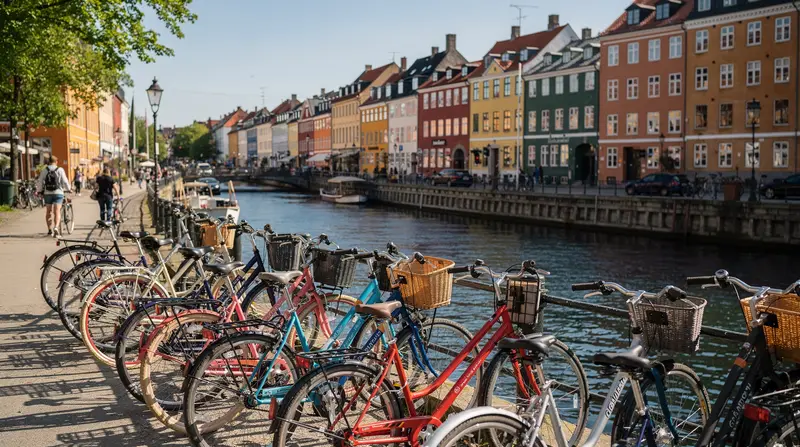
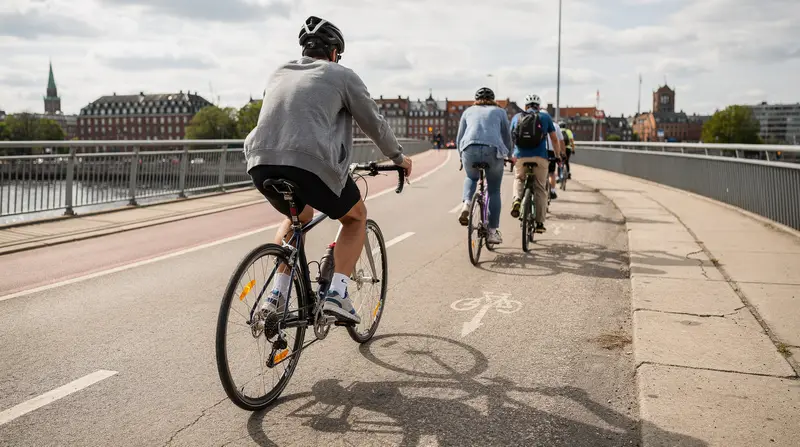
Copenhagen cycling is more structured. Dedicated cycle lanes are physically separated from traffic on most main roads. There are clear cycling rules, cyclists respect lights, and the infrastructure assumes you are a normal person on a bike rather than a specialist. Tourists consistently report Copenhagen as more comfortable to cycle in than Amsterdam.
The cycling tourism experience — guided bike tours, hire bikes, cycling to attractions — is excellent in both cities. But Copenhagen is calmer for less experienced urban cyclists. The biking in Copenhagen guide and cycling rules and etiquette guide cover what to expect before you rent.
Winner for cycling comfort: Copenhagen. Amsterdam for atmosphere and cycling density.
Canals and waterfront
Both cities were built around canals and define much of their character around water.
Amsterdam’s canal ring (grachtengordel) is a UNESCO World Heritage Site — a consistent ring of 17th-century merchant houses lining parallel canals. The architectural coherence is remarkable. Canal boat tours, houseboats, and the density of bridges create a unique urban texture.
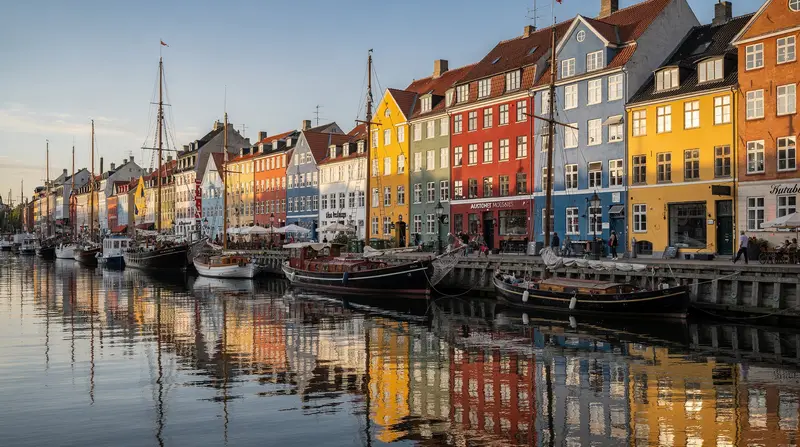
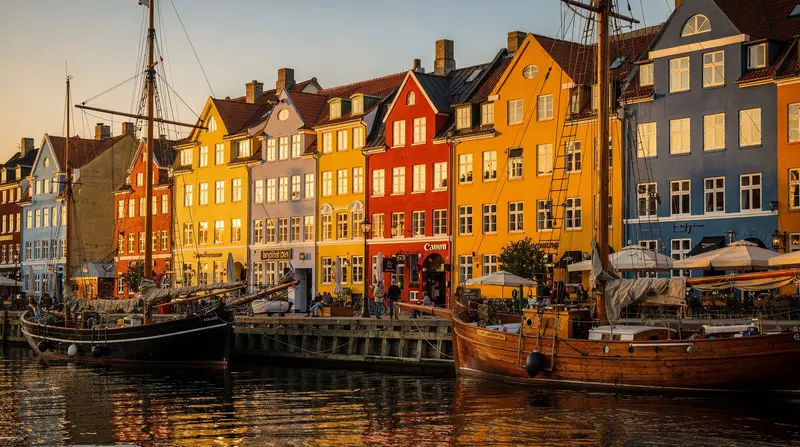
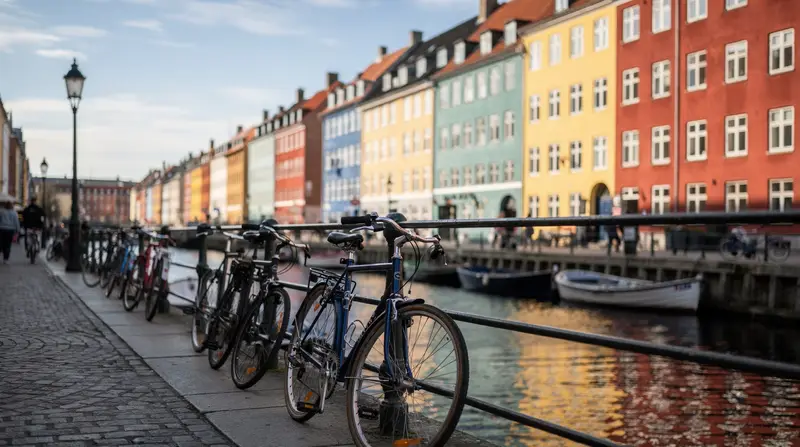
Copenhagen’s canals are more fragmented. Nyhavn — the famous coloured-house canal — is the iconic image, but it is one short stretch. Christianshavn has quieter canal streets. The Inner Harbour area is more industrial-feeling. The canal cruise experience in Copenhagen is excellent, but the city is not defined by canals the way Amsterdam is.
Winner for canal culture: Amsterdam.
Museums
Amsterdam has one of the highest concentrations of world-class museums in Europe: the Rijksmuseum (Rembrandt’s Night Watch, Vermeer), the Van Gogh Museum (the largest Van Gogh collection in the world), the Anne Frank House (powerful and unique), the Stedelijk for modern art. These are not merely good — they are genuinely among the most significant museums on the continent.
Copenhagen has excellent museums — Ny Carlsberg Glyptotek (beautiful building, strong antiquities and French Impressionism), National Museum (comprehensive Danish history), Designmuseum Danmark (world-class for design), Louisiana Museum of Modern Art (a day-trip away, but extraordinary). But no single Copenhagen museum competes individually with the Rijksmuseum or the Anne Frank House as a global draw.
Winner for museums: Amsterdam, by a clear margin.
Food and coffee
Copenhagen is the more significant food city in terms of global influence. The New Nordic cuisine movement — which changed how Europe thinks about Scandinavian cooking — originated here. The practical effect: Copenhagen has an exceptionally strong restaurant culture across all price points, superb smørrebrød (open-faced sandwiches that are genuinely satisfying rather than novelty), excellent pastries (Danish pastries taste better in Denmark), and one of the strongest urban coffee cultures in Europe. Torvehallerne market and Reffen street food court are genuine highlights.
Amsterdam has a diverse international food scene — Indonesian cuisine (rijsttafel is a genuine tradition from the colonial period), Dutch pub food (bitterballen, Dutch cheese), and a strong bar-and-food culture. But Amsterdam is not a city that visitors primarily travel to for the food, whereas Copenhagen increasingly is. See the best food in Copenhagen guide and smørrebrød guide for specifics.
Winner for food: Copenhagen, clearly.
Crowd levels
Amsterdam received 20+ million tourists per year before the pandemic and has been implementing tourist-reduction policies since. The city centre — particularly the Red Light District, the Anne Frank House queue, Dam Square, and the canal ring on weekends — is genuinely overcrowded in summer. The city government is actively discouraging some types of mass tourism.
Copenhagen attracts significantly fewer tourists and feels calmer as a result. Nyhavn on a July afternoon is busy, but not in the way Amsterdam’s peak areas are. Museums have queues but not multi-hour waits. Residential neighbourhoods remain residential.
Winner for crowd levels: Copenhagen, significantly.
Nightlife
Amsterdam has a larger, more established nightlife scene — more clubs, longer closing times, and a greater volume and variety of nightlife offerings across the city. The Leidseplein and Rembrandtplein areas, combined with club nights and the general tourist party culture, give Amsterdam a more active evening scene.
Copenhagen’s nightlife (Vesterbro’s Kødbyen, craft beer bars) is good but smaller scale. It rewards those looking for a relaxed evening more than those seeking large-scale clubbing.
Winner for nightlife: Amsterdam.
Weather and light
Both cities sit at similar latitudes and share broadly the same Northern European climate pattern, but the experience diverges more than the raw numbers suggest. Amsterdam’s weather is milder and wetter more consistently through the year — frequent light rain rather than dramatic swings.
Copenhagen has a more pronounced seasonal contrast: the summer light is genuinely extraordinary (see the northern summer nights guide for what a Copenhagen June evening actually looks like), with sunset past 22:00 at the solstice, while winter is darker and colder than Amsterdam by a noticeable margin. If long summer evenings spent outdoors matter to your trip, Copenhagen has the edge; if you’d rather avoid extreme seasonal swings altogether, Amsterdam’s climate is steadier year-round.
Tone and atmosphere
This is subjective but consistently reported: Copenhagen feels calmer, more residential, and less performed. The tourist experience is genuine rather than tourist-industrial. The city goes about its life; you join it.
Amsterdam’s tourist centre has, particularly in the past decade, developed a tourist-industrial quality — an ecosystem of tourist-facing restaurants, overpriced cafés with Dutch-themed merchandise, and attractions designed primarily for high throughput. The city beyond the tourist belt (Jordaan, De Pijp, North Amsterdam) is excellent and less affected, but requires effort to reach.
Winner for atmosphere: Copenhagen, for visitors who prefer a city that has not fully commodified itself.
Day-trip potential
An underrated part of this comparison: what each city offers once you leave the centre for a day. Amsterdam’s obvious day-trips — Zaanse Schans (windmills), Haarlem, Utrecht — are pleasant but modest, generally under 2 hours round trip and light on standalone content beyond a few hours of wandering.
Copenhagen’s day-trip roster is more substantial and more varied: Helsingør’s Kronborg Castle (Shakespeare’s Elsinore) is 45 minutes away, Roskilde’s UNESCO Viking Ship Museum is 25 minutes away, the Louisiana Museum of Modern Art at Humlebæk is a genuinely world-class gallery 45 minutes away, and Malmö in Sweden is a different country 15–35 minutes away by train across the Øresund Bridge. Few European capitals offer this range of a UNESCO site, a world-class art museum, a castle, and an international border all within an hour. The day trips from Copenhagen guide covers the full list.
Winner for day-trip range: Copenhagen, by a clear margin.
Which should you choose?
Choose Amsterdam if:
- Budget is a significant constraint
- Accessible flights are important (more budget options)
- Major museum culture — Rijksmuseum, Van Gogh, Anne Frank — is a primary draw
- This is your first European city break and you want well-developed tourist infrastructure
- Nightlife is important
Choose Copenhagen if:
- Food — particularly smørrebrød, New Nordic cuisine, and pastries — is central to your trip
- You want a calmer city with fewer crowds in the tourist core
- Cycling in a well-organised environment appeals
- You want to extend into excellent day-trips (Kronborg, Roskilde, Louisiana, Malmö)
- You prefer spending more for a less tourist-heavy experience
Consider both if you have 8–10 days in Northern Europe: Amsterdam 3 nights, Copenhagen 4 nights (or vice versa via a budget flight connection) covers two genuinely different experiences without significant overlap.
Frequently asked questions about Copenhagen vs Amsterdam
Which city is better for a weekend break?
For a pure weekend (Friday–Sunday), Amsterdam edges ahead due to better flight connections, lower cost, and the ease of doing the main museums in 2–3 days. Copenhagen is better for a long weekend (3–4 nights) when you can explore more slowly and get beyond the obvious sights.
Are both cities safe for tourists?
Yes, both are safe by European standards. Amsterdam has higher petty theft in the tourist centre (pickpocketing in the Red Light District and crowded areas). Copenhagen has very low petty crime. Both cities are safe for solo travel including solo female travel.
Which is better for a family trip?
Copenhagen for families: Tivoli Gardens, the Blue Planet Aquarium, cycling infrastructure, and LEGOLAND as a day-trip make it family-focused. Amsterdam’s family offer (Artis Zoo, children’s science museum NEMO) is solid but less distinctive. Copenhagen wins for children.
How long do you need in each city?
Amsterdam: minimum 3 nights to cover the major museums and canal area properly. Copenhagen: minimum 3 nights for the city, 4–5 if you want to include day-trips (highly recommended). Both cities reward longer stays.
Is English spoken in both cities?
Yes, extensively. Both Dutch and Danish people have very high English proficiency. You will have no practical difficulty communicating in either city in English in any tourist or service context.
What is the best season to visit both cities?
May–June and September are the best months for both: good weather, manageable crowds, and the cities functioning normally. July–August is peak tourist season in both (higher prices, more crowds). Winter is viable — both have good indoor culture and Christmas traditions — but cold and grey.
Frequently asked questions — Copenhagen vs Amsterdam: Which City Break is Right for You?
Is Copenhagen or Amsterdam more expensive?
Amsterdam is noticeably cheaper than Copenhagen in almost every category. A mid-range meal in Amsterdam costs 15–25 EUR; in Copenhagen it costs the equivalent of 20–35 EUR. Amsterdam accommodation is more competitive due to greater hotel supply. Budget 20–30% more per day for Copenhagen versus Amsterdam.Which city has better cycling?
Both are excellent cycling cities, but for different reasons. Amsterdam's cycling is more chaotic — tourists weave between experienced local cyclists, trams, pedestrians, and cars in a complex ecosystem. Copenhagen's cycling infrastructure is arguably better-organised: separated lanes, clear rules, less conflict between cyclists and trams. Copenhagen is more comfortable for occasional cyclists; Amsterdam is more intense.Which city has better museums?
Amsterdam has the stronger museum offering: the Rijksmuseum (Rembrandt, Vermeer), Van Gogh Museum, Anne Frank House, Stedelijk, Eye Film Museum. Copenhagen's museums are excellent (Glyptotek, National Museum, Louisiana, Designmuseum) but the sheer density of globally significant collections in Amsterdam is higher.How do the canals compare?
Both cities are defined by canals, but they feel different. Amsterdam's canal ring is wider, more architecturally consistent, and more central to the city layout. Copenhagen's canals are narrower and more varied — Nyhavn is the postcard view, but Christianshavn's canals have a different, quieter character. Canal cruises are excellent in both cities.Which is better for a first-time Europe visitor?
Amsterdam, for its ease of access (major hub airport, more budget flights), greater accommodation range, and well-developed tourist infrastructure. Copenhagen is slightly more demanding to navigate and more expensive, but rewards those who engage with it properly.What is the food scene like compared?
Copenhagen has the stronger modern food reputation — New Nordic cuisine, excellent smørrebrød, one of Europe's best café and pastry cultures. Amsterdam has a diverse international food scene and strong brown café culture (brown bars with beer and snacks), but no equivalent food innovation story. For serious food travellers, Copenhagen is the more compelling destination.