Frederiksborg Castle Guide: Denmark's National History Museum in Hillerød
From Copenhagen: Private Frederiksborg Castle Tour
Duration: 4-5 hours
How do you get to Frederiksborg Castle from Copenhagen?
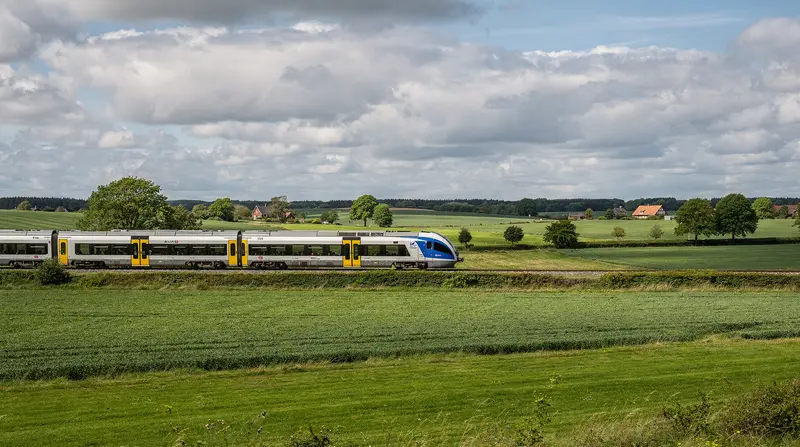
Take the S-tog line E (or A/C) from Copenhagen Central or Nørreport to Hillerød. The journey takes approximately 55–60 minutes and trains run every 10–20 minutes. Hillerød station is a 15-minute walk from the castle, or a short bus ride. Return fare is approximately 150 DKK. Entry to Frederiksborg Castle costs 120 DKK for adults; covered by the Copenhagen Card.
| Where | Hillerød, North Zealand (S-tog from Copenhagen) |
| Cost | 120 DKK adults / 40 DKK children 6–17 |
| Time needed | 3–4 hours including the garden |
| Getting there | S-tog line E, 55–60 min, then 15-min walk |
| Best time | Thursday afternoons for the free organ concert |
The castle Christian IV built
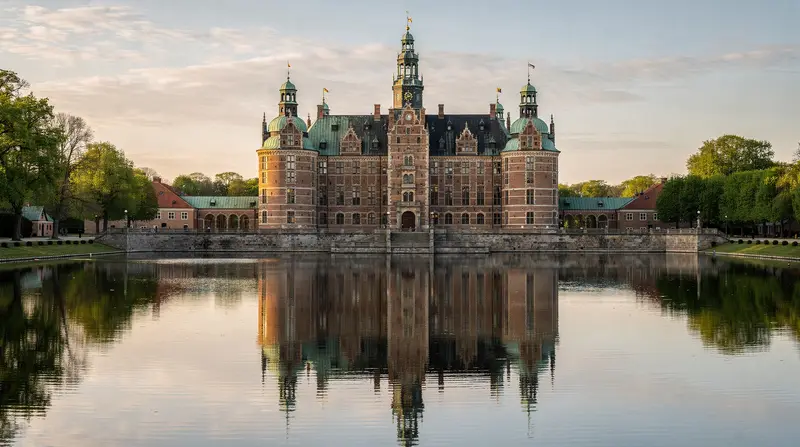
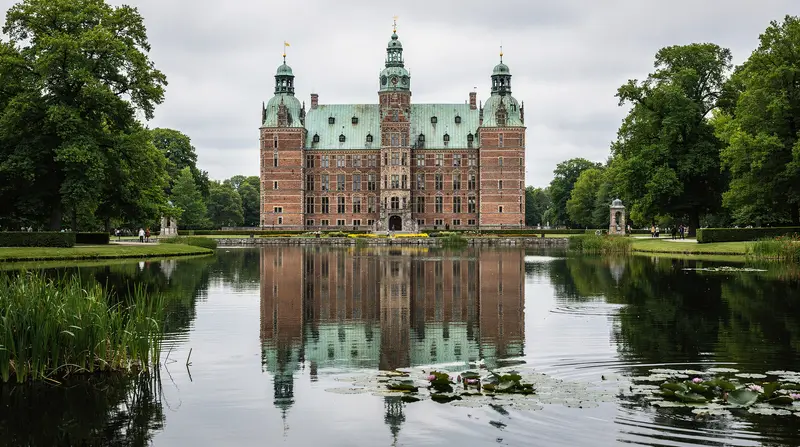
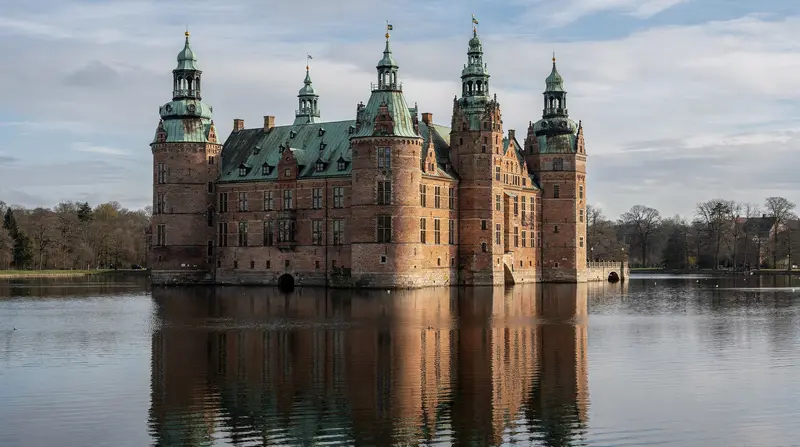
Frederiksborg Castle in Hillerød is the largest Renaissance palace in Scandinavia and the best surviving example of the building ambitions of King Christian IV — one of the most prolific royal builders in European history. Between 1600 and 1620, Christian replaced an earlier castle with a structure of extraordinary scale: three interconnected castle islands on a lake, connected by bridges, with a church, royal apartments, audience halls, and service buildings covering the full extent of the natural lake islands.
The castle served as the principal royal residence and the site of royal coronations from 1671 to 1840 (when the practice moved to Roskilde Cathedral). A catastrophic fire in 1859 destroyed most of the interior, but the rebuilt castle — funded by the Carlsberg brewery founder J.C. Jacobsen — reopened in 1884 as the Museum of National History, which it remains today.
What sets Frederiksborg apart from most Danish heritage sites is the quality of its current use. The museum does not simply preserve empty rooms; it uses the castle’s 70 chambers to house a coherent, engaging collection of Danish portraits, paintings, and historical objects covering 500 years. You learn something here, which is not always the case at royal palaces.
Getting to Frederiksborg Castle by train
S-tog from Copenhagen: The S-tog (suburban rail) line E runs from Vanløse and Frederiksberg through Copenhagen Central and Nørreport to Hillerød. Line A also connects to Hillerød via a different route. Both terminate at Hillerød station. Journey time from Copenhagen Central: approximately 55–60 minutes. From Nørreport: approximately 50 minutes.
Frequency: Trains run every 10–20 minutes during the day. Check Rejseplanen (rejseplanen.dk) for exact departures.
Fare (2026): Approximately 150 DKK return (5 zones) using a Rejsekort card or station ticket. Copenhagen Card covers the journey.
Hillerød station to the castle: The castle is approximately 1.2 km from Hillerød station. Walk south on Slotsgade — approximately 15 minutes, flat and signposted. Alternatively, bus 301E or 302 covers part of the route. Most visitors walk; the route passes through the pleasant town centre.
Entry prices and opening hours
Admission 2026:
- Adults: 120 DKK (~16 €)
- Children 6–17: 40 DKK
- Under 6: Free
- Students (with ID): 80 DKK
- Copenhagen Card: Covered
Opening hours:
- April–October: 10:00–17:00 daily
- November–March: 11:00–15:00 daily
The museum is closed on a small number of Danish public holidays — check the Frederiksborg website before visiting around Christmas or Easter.
What to see inside the castle
The Coronation Hall (Riddersalen)
The Knights’ Hall and Coronation Hall at the top of the main castle building is the grandest single space — used for royal coronations from 1671 to 1840 and still the setting for major state receptions. The ceiling is painted, the walls hung with portraits of Danish kings and princes, and the floor retains the original design. This room alone justifies the entry price.
The chapel (Ridderkirkens)
The chapel is the most important room in the castle and one of the best-preserved Renaissance chapel interiors in Scandinavia. Constructed under Christian IV between 1606 and 1617, it escaped the 1859 fire almost entirely intact. The Compenius organ, installed in 1610, is still playable — it is one of the oldest functioning organs in Europe. Free organ concerts take place on Thursdays during the summer season (check dates at the museum).
The chapel pews carry the arms of the Danish Order of the Elephant and the Order of the Dannebrog — Denmark’s highest royal orders. The woodwork is extraordinarily detailed; the craftsmen were Dutch and German, brought to Denmark specifically for this project.
The historic apartments
The royal apartments across the castle’s three buildings cover the private rooms of successive Danish monarchs from Christian IV onwards. These include the Winter Room (Christian IV’s private study, with the original painted ceiling), the audience chambers, and the queen’s apartments.
The rooms are furnished with period furniture and objects from the Museum of National History collection — a more coherent presentation than many royal palaces, which display empty rooms with velvet ropes. The furniture is real, in period, and often labelled with its specific history.
The Museum of National History collection
The museum’s portrait collection — approximately 500 major works — is displayed throughout the castle rooms. Every significant Danish public figure from 1500 onwards is represented: kings, ministers, military commanders, scientists, artists, and writers. The portraits range from formal court paintings to 20th-century photographs.
For Danish history visitors, the collection is genuinely useful as a reference: identifying faces seen elsewhere in Danish museums and monuments, placing figures in context. For visitors without specific historical knowledge, the best approach is to move slowly through the rooms and use the museum’s labelling system to understand what you are seeing.
The collection extends to recent history: there are rooms dedicated to the 20th century, including the German occupation (1940–1945) and the post-war welfare state. This contemporary material is unusual for a historic royal palace and makes the museum’s historical range unusual in Europe.
The baroque garden
The formal baroque garden south of the castle is often skipped by visitors who arrive tired from the interior and head directly to the café. This is a mistake.
The garden was restored in 1996 following original plans from the early 18th century — a large geometric parterre with clipped hedges, gravel paths, fountain basins, and a central axis extending 300 metres south from the castle. The restoration was funded by the Carlsberg Foundation (the same foundation that rebuilt the castle interior in the 1880s).
The best view of Frederiksborg Castle is from the far end of the garden axis: looking north across the parterres and the lake to the three-island castle complex. This is the composition that appears in most photographs of the castle — red-painted roofs, copper spires, reflections in the lake. Allow 30 minutes minimum for the garden.
Entry: Free. The garden is open year-round during daylight hours.
Guided tours vs DIY
DIY is reasonable for most visitors. The Museum of National History labels its collection clearly in Danish and English, and the castle’s room-by-room information guides are available in multiple languages at the entrance. For visitors with a particular interest in Danish royal history or Renaissance architecture, the self-guided experience is sufficient.
Organised tours add value in specific cases:
The private Frederiksborg Castle tour from Copenhagen (4–5 hours including transport) is the best option for visitors who want expert commentary on the portraits and the history of individual rooms — the national history collection has layers of significance that the general labelling does not fully unlock.
For visitors wanting to combine Frederiksborg with Kronborg in a single efficient day, the Castles of North Zealand Day Tour handles the transport between the two castles and includes guided entry to both. This is the tour that makes the combined-castle day genuinely comfortable rather than rushed.
Frederiksborg vs Kronborg: which should you visit?
If you can only do one castle day trip from Copenhagen, the choice matters:
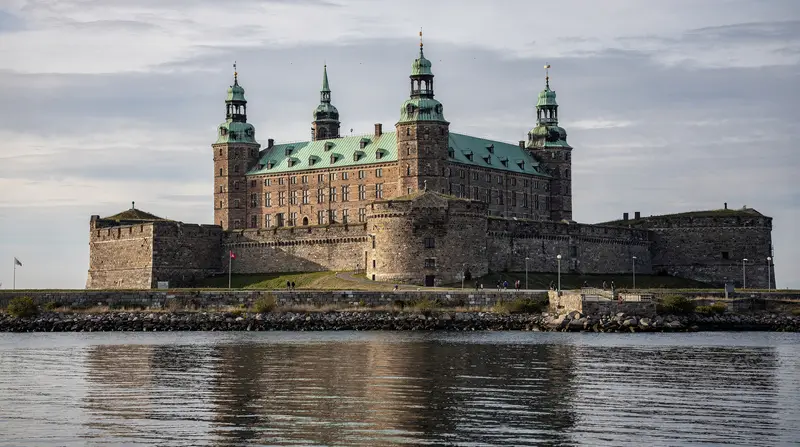
Choose Kronborg (Helsingør) if:
- The Hamlet connection and cultural/literary significance interest you
- You prefer dramatic exterior architecture and sea views
- You want a shorter, easier train journey (45 min vs 55–60 min)
- Military history and fortification architecture appeal
Choose Frederiksborg (Hillerød) if:
- You want a richer interior museum experience
- Danish history, portraiture, and furnished historic rooms interest you
- You want to see the best baroque garden in Denmark
- You are combining with a walk around a pleasant small town (Hillerød is underrated)
Choose both if you have a full day and energy for the circuit. The North Zealand Castles Route guide covers the timing in detail.
For the fuller Kronborg picture before you decide, see the Kronborg and Hamlet castle guide, and for how Frederiksborg fits into a wider North Zealand day, the day trips from Copenhagen overview ranks it against Roskilde, Louisiana, and Malmö. If you are also visiting Copenhagen’s in-city royal palace, the Rosenborg Castle guide covers the crown jewels and how it complements a Frederiksborg visit.
Photographing Frederiksborg well
The castle rewards visitors who plan around light. The classic composition — the three-island castle reflected in the lake, seen from the far end of the baroque garden axis — works best in the soft light of early morning or the hour before closing, when the crowds thin and the low sun catches the copper roofs and red brick. Midday light in summer is harsher and tends to flatten the reflections in the lake.
Inside, photography is permitted throughout the interior, but the Coronation Hall and chapel are dimly lit by design (to protect the paintings and woodwork), so a camera or phone with reasonable low-light performance helps; flash is not necessary and can be intrusive to other visitors in the smaller rooms. The garden, by contrast, is best photographed in bright conditions, when the geometric parterres and clipped hedges read clearly from the elevated viewpoints near the castle.
Seasonal differences worth planning around
Spring (April–May) brings the garden’s formal planting into its best condition without the full summer crowds. Summer (June–August) is peak season for both visitor numbers and the Thursday organ concerts, and the extended opening hours (10:00–17:00) make a full, unhurried visit easiest to fit around the train schedule. Autumn (September–October) offers a similar experience to spring with fewer flowers but excellent light for photography, particularly late in the day.
Winter (November–March) sees reduced hours (11:00–15:00) and a starker, quieter garden, but the castle interior — heated, atmospheric, and far less crowded — arguably suits the season better than most Danish outdoor attractions, and the shorter queues make it easier to spend real time with individual portraits rather than moving through rooms at a summer-crowd pace — a genuine trade-off worth considering if you have flexibility over when to visit North Zealand.
Hillerød town
Hillerød’s town centre, between the station and the castle, is quiet, pleasant, and largely tourist-free. The main street (Slotsgade) has independent cafés and bakeries worth stopping at before or after the castle visit. The Torvet (main square) has a small market on weekdays.
The lake around the castle is walkable on a path running its full circumference — a 2–3 km flat walk with views of the castle from multiple angles. In summer this is one of the more pleasant walks in North Zealand.
The Hillerød destination guide covers the town beyond the castle in more depth, including where to eat and what else is nearby if you want to extend the visit into a fuller day. If you are travelling with the Copenhagen Card and plan to visit Louisiana or Roskilde on other days, run the numbers there — the card frequently pays off once three or more paid day-trip attractions are involved.
Practical information
Address: Frederiksborgvej 46, 3400 Hillerød
Train: S-tog line E from Copenhagen Central or Nørreport to Hillerød, 55–60 minutes, every 10–20 minutes.
Entry 2026: Adults 120 DKK, children 6–17: 40 DKK, under 6: free, students: 80 DKK. Copenhagen Card: covered.
Hours: April–October 10:00–17:00, November–March 11:00–15:00 daily.
Café: The castle has a café on the ground floor with lake views. Reasonable prices for a castle café (sandwich 90–120 DKK, coffee 45–55 DKK).
Photography: Permitted throughout the interior and garden.
Accessibility: The ground floors of the main castle building are accessible. Upper floors have historic staircases. Contact the museum in advance for specific requirements.
Frequently asked questions about Frederiksborg Castle
Who built Frederiksborg Castle and why?
Christian IV (reigned 1588–1648) built Frederiksborg between 1600 and 1620, replacing his father’s earlier castle on the same site. Christian was among the most prolific royal builders in Danish history — he also built Rosenborg Castle in Copenhagen, the Round Tower, and the Nyboder naval barracks, among dozens of other projects. Frederiksborg was intended as a statement of royal power and the primary royal residence outside Copenhagen.
What happened to Frederiksborg Castle in 1859?
A fire started in the castle laundry in December 1859 and destroyed most of the interior, including the royal apartments, the Coronation Hall ceiling, and much of the furniture. The exterior walls survived. The Carlsberg brewery founder J.C. Jacobsen funded the reconstruction, which began in 1861 and was completed in phases through the 1880s. The rebuilt castle reopened as the Museum of National History in 1884.
Is there an organ concert at Frederiksborg?
Yes. The Compenius organ in the chapel (installed 1610, one of the oldest functioning organs in Europe) is played at free concerts on Thursdays at 13:30 during the summer season (typically May–September). Concerts are approximately 30 minutes and are included in the castle entry price. No booking required — arrive early for a seat in the chapel.
How is Frederiksborg different from Rosenborg Castle in Copenhagen?
Rosenborg in Copenhagen is smaller, more intimate, and focused on the personal collections of Danish kings (crown jewels, regalia, specific royal objects). Frederiksborg is much larger and functions as a national history museum with a broad portrait and painting collection. Rosenborg is better for the crown jewels and personal royal artifacts; Frederiksborg is better for understanding the arc of Danish history. Both are worth visiting; they complement rather than duplicate each other.
Can you visit the castle garden without buying a museum ticket?
Yes. The baroque garden is free and open year-round during daylight hours. You do not need a castle entry ticket to walk the garden and see the exterior of the castle from the south. This is a worthwhile option if you have already visited the interior or if you are on a tight budget.
Frequently asked questions — Frederiksborg Castle Guide: Denmark's National History Museum in Hillerød
What is Frederiksborg Castle?
Frederiksborg Castle (Frederiksborg Slot) is a large Renaissance castle built on three small islands in a lake in Hillerød, North Zealand. Constructed by King Christian IV between 1600 and 1620, it served as the principal royal residence and the site of royal coronations until 1840. Today it houses the Museum of National History — Denmark's national portrait and history collection covering 500 years from the Reformation to the present — across approximately 70 rooms.How much does Frederiksborg Castle cost to enter?
Adults pay 120 DKK (approximately 16 €). Children aged 6–17 pay 40 DKK. Children under 6 are free. Students (with valid ID) pay 80 DKK. The Copenhagen Card covers admission. Tickets are purchased at the castle entrance; advance booking is less critical here than at Kronborg but can save time in summer.Is Frederiksborg Castle better than Kronborg?
They are very different experiences. Kronborg is famous for Hamlet and its military architecture; Frederiksborg is better as a historical experience because its interior is fully furnished and the Museum of National History gives context to the rooms. Kronborg has a more dramatic exterior and better views; Frederiksborg has better-quality interior rooms and a remarkable baroque garden. Many visitors find Frederiksborg more satisfying because the collections are richer.How long does a visit to Frederiksborg Castle take?
Allow 2.5–3 hours for the castle interior: the main historic rooms (Coronation Hall, Knights' Hall, royal apartments, chapel) plus the Museum of National History collection. Add 45–60 minutes for the baroque garden and the exterior walk around the lake. A comfortable full visit takes 3.5–4 hours on site.What is in the Museum of National History at Frederiksborg?
The museum covers Danish history from around 1500 to the present through approximately 500 portraits, paintings, and objects spread across 70 rooms. Highlights include portraits of all Danish monarchs from Christian I onwards, major battle paintings, Renaissance furniture in situ, and 20th-century additions extending the collection to contemporary history. The portrait collection is the largest and most systematic record of Danish public life in existence.Is the baroque garden at Frederiksborg worth visiting?
Yes, and it is often overlooked by visitors who spend all their time in the castle interior. The formal baroque garden — restored to its 17th-century design in 1996 — extends south of the castle across a large parterre with geometric beds, clipped hedges, and a long fountain axis. The view back towards the castle from the far end of the garden axis is among the best architectural photographs available in Denmark. Free to enter; open year-round.Can I combine Frederiksborg with Kronborg in one day?
Yes, but the day is long and the visits are rushed. Start at Kronborg (Helsingør, 45 minutes from Copenhagen), leave by 13:00, take the train to Hillerød (approximately 45 minutes via change at Snekkersten), and arrive at Frederiksborg around 14:00 for a 2.5–3 hour visit before closing. This leaves no time for Helsingør town or the Frederiksborg gardens at leisure. The North Zealand Castles Route guide covers this in detail.
Top experiences
Bookable activities with verified prices and instant confirmation on GetYourGuide.