Smørrebrød: Where We Actually Ate in Copenhagen
Three Places, Three Different Experiences
Most smørrebrød articles give you a ranked list of ten restaurants and leave you to figure out which one to book. This is not that. This is a record of three specific meals we actually ate — what we ordered, what it cost, what worked, and where we had questions. If you want the wider spread of dishes to try beyond smørrebrød, our Copenhagen food bucket list covers the rest.
We ate smørrebrød three times in Copenhagen, each time in a different context: a classic lunch restaurant, a market stall, and a new-generation place that is technically smørrebrød but treating the format as a creative medium. The experiences were distinct enough to be worth describing separately.
| Place | Style | Cost/person | Booking |
|---|---|---|---|
| Hallernes (Torvehallerne) | Market stall, casual | 150–250 DKK | None needed |
| Schønnemann | Classic sit-down | 250–400 DKK | Book weeks ahead |
| Aamanns Etablissement | Modern, composed | 195–250 DKK+ | Book online |
For the background on the dish itself, see our smørrebrød guide before you pick a place.
Hallernes Smørrebrød — Torvehallerne Market
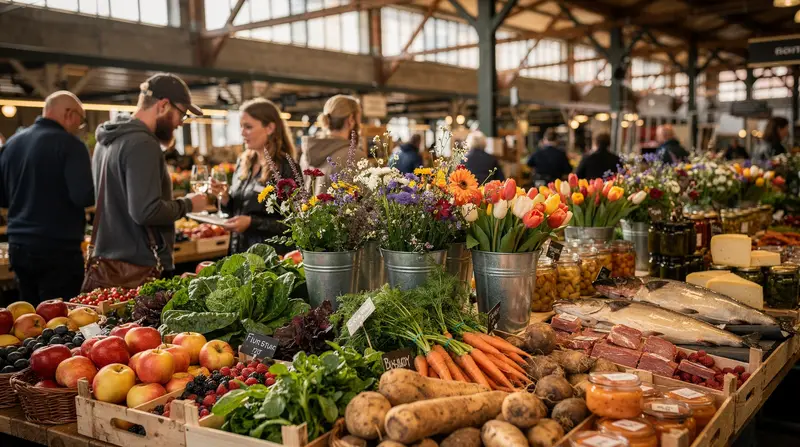
First stop, day two. Torvehallerne is the covered market near Nørreport Station, and Hallernes Smørrebrød operates from a counter in one of the halls. It is not a sit-down restaurant — you order at the counter, get a small tray, find one of the market stools, and eat there. Casual, fast, no booking required.
We ordered three pieces between us: a herring in curry sauce, a roast beef with remoulade and crispy onions, and a liver pâté (leverpostej) with pickled beets and cress. Each piece cost 65–90 DKK, so the total for three pieces was 225 DKK including the beer (a Tuborg at 45 DKK, which is market pricing).
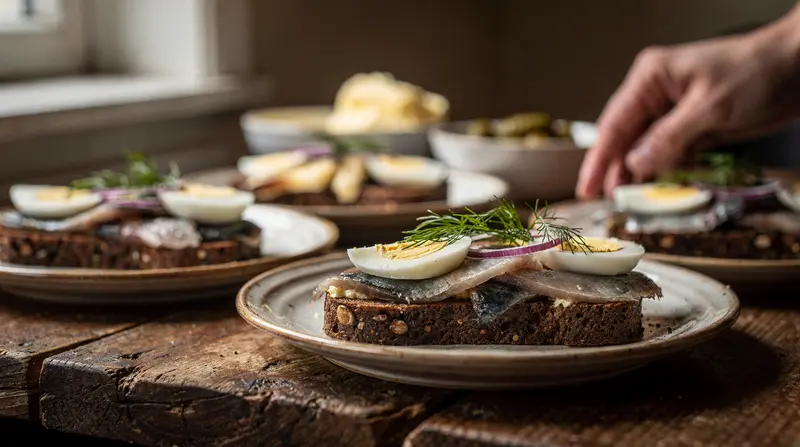
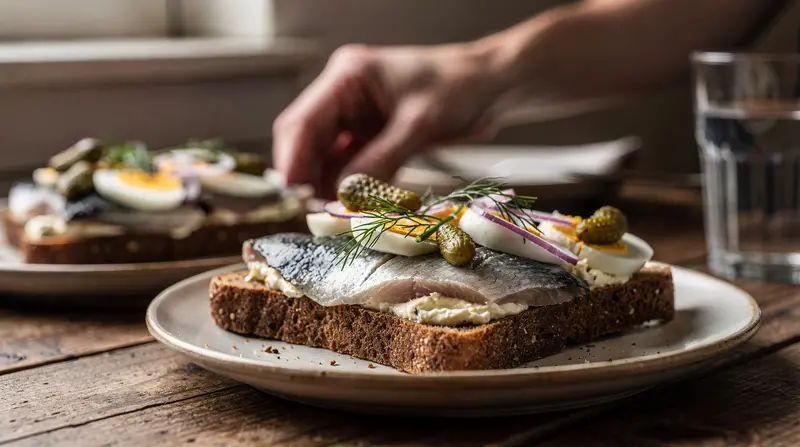
The herring was good — the curry preparation is a sweeter, mellower sauce than the name suggests, and the combination with the dense sour rye bread works better than it sounds. The roast beef was excellent: thin-sliced, the remoulade tart, the onions properly crispy. The liver pâté was the most specifically Danish thing we ate — rich, slightly gamy, the pickled beets cutting the fat — and we are glad we ordered it even though we were unsure.
What we appreciated: the bread. The rugbrød at Hallernes is the right texture — dense, barely yielding, with a mild sourness that supports rather than competes with whatever is on top. This is where cheap smørrebrød versions often fail; the bread is wrong and everything else suffers.
What we would do differently: Order the herring in two different preparations and compare them. We only had one, and a fellow customer next to us had three different herring versions laid out and was clearly an expert doing a comparative study.
Verdict: Good value, genuinely good food, the right place to start. Budget 150–250 DKK per person for a proper lunch.
Schønnemann — The Classic Experience
Schønnemann opened in 1877 and is the most-cited traditional smørrebrød restaurant in Copenhagen. It requires a booking, serves lunch only (kitchen closes at 15:00), and is the kind of place where the menu changes with the seasons and the staff have been there long enough to know the regulars by name.
We booked three weeks ahead and got the last available table on a Wednesday at 11:30.
The menu is long and deliberately organised — it lists fish, meat, and vegetable toppings separately from the bread options. You mix and match: choose your bread (dark rye or a softer white bread for certain toppings), choose your toppings, and three pieces is the standard lunch portion.
We ordered: a gravad laks (cured salmon) with mustard-dill sauce, a plaice fillet (rødspættefilet) with remoulade and lemon, and a Bombay-style beef tartare that was listed as a signature. With a carafe of aquavit-based schnapps (a small carafe at 145 DKK), the bill came to 520 DKK for two people. Expensive for lunch by most European standards. Not expensive by Copenhagen standards.
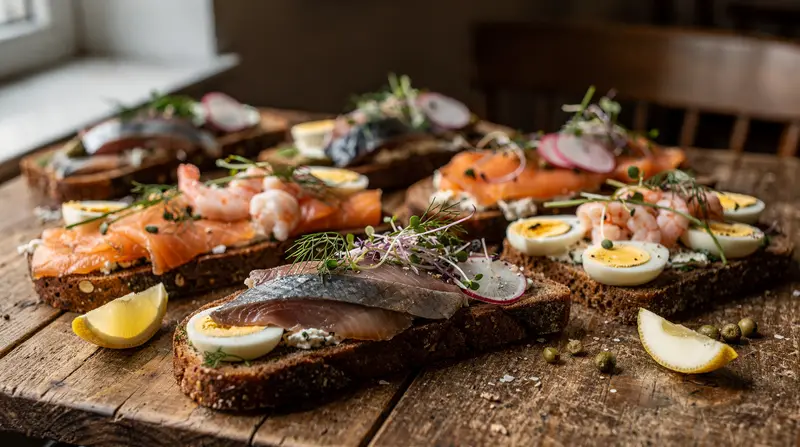
The salmon was the best smørrebrød we had on the trip: the fish cured to exactly the right texture, the mustard sauce applied in a thin layer that did not overwhelm, topped with fresh dill and a sliver of lemon. Clean and precise. The beef tartare was the most technically confident — the fat content balanced, the seasoning restrained in a way that made you focus on the beef’s flavour rather than its dressing.
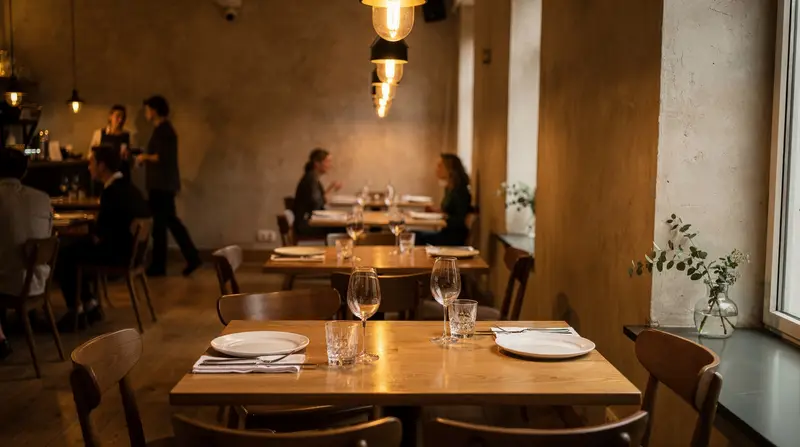
The room: wooden panelling, close-set tables, the particular low light of a room that has not been redesigned since the early twentieth century. Older Danish clientele at most tables. A sense that the city outside is a different century.
What we would do differently: Nothing. Worth every krone and worth booking early.
Verdict: The benchmark. Do this once if you want to understand what smørrebrød can be. Budget 250–400 DKK per person for lunch with a drink.
Aamanns Etablissement — New Generation Smørrebrød
Adam Aamann is the chef most associated with bringing smørrebrød into the contemporary Danish restaurant conversation — less traditional lunch restaurant, more considered kitchen that happens to work with the same format. The original Aamanns Deli takeaway exists in multiple locations; the Etablissement on Øster Farimagsgade is the full sit-down restaurant, open for both lunch and dinner.
We went for Saturday lunch. The space is modern — wood, white walls, the spare Danish aesthetic that signals “we care about the food, not the décor budget.” Booking required, but the online system was simple.
The menu reads differently from Schønnemann — fewer toppings, more composed, with descriptions that explain the sourcing or preparation rather than simply naming the topping, in the spirit of what we cover in our New Nordic without the noma price piece. We ordered three pieces: a smoked whitefish with horseradish crème and apple, a duck confit with pickled blackcurrant and watercress, and a blue cheese with honey-roasted rye crisps.
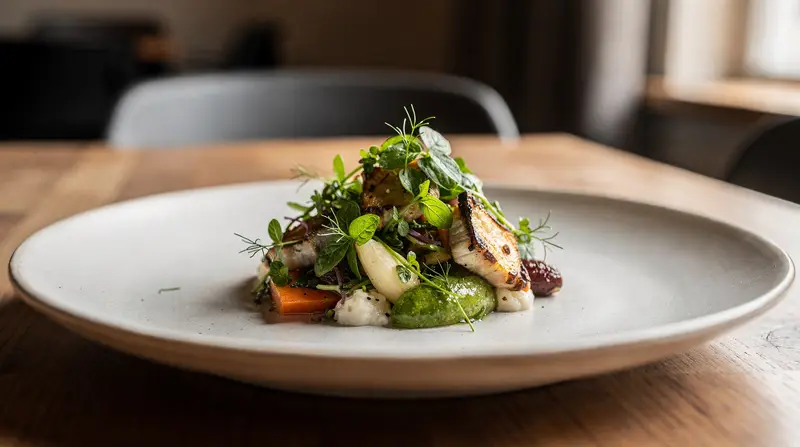
The whitefish was revelatory. Lightly smoked, the horseradish used sparingly, the apple providing a fresh acidity — this was smørrebrød as a dish, not just bread with toppings, and the whole thing had been thought through. The duck was the most overtly New Nordic of the three: the pickled blackcurrant sharp and sweet at once, the duck pulled to a consistency that held on the bread without crumbling.
The bread at Aamanns is made in-house. It is lighter than the traditional rugbrød — more crumb, slightly less sour — which felt strange at first and then made sense when you understood that the toppings are more delicate and the traditional bread would have overwhelmed them.
Bill: 390 DKK for two, without drinks (we had water). Add a glass of wine and you are near 500 DKK.
What we would do differently: Go for dinner as well, where the format expands into more courses and the cooking becomes more ambitious.
Verdict: The best technical cooking of the three, and the most interesting if you have any interest in how Danish food has evolved in the last twenty years.
If You Want a Guided Introduction
If choosing between the three feels like too much decision-making on a short trip, a guided food tour covers smørrebrød alongside other Danish staples in one outing.
Copenhagen food tour with Danish classicsIt will not replace booking Schønnemann yourself if that specific experience matters to you, but it is a reasonable way to sample the format without committing to a full sit-down lunch.
Which One to Book
If you only have one smørrebrød lunch and want the classic experience with no ambiguity about tradition: Schønnemann. Book early. Go at 11:30 before the room fills.
If you want good food with no advance planning and minimal cost: Hallernes Smørrebrød at Torvehallerne, any weekday around noon.
If you want to understand what contemporary Danish food looks like through the lens of the smørrebrød format: Aamanns, lunch or dinner.
All three are worth eating. None of them is a tourist trap. The tradition they represent is specific enough to Copenhagen that it is one of the better reasons to visit — see our best restaurants in Copenhagen guide for how they fit into the wider dining scene.
For background on the dish itself and the history of smørrebrød, see our full smørrebrød guide.