New Nordic Food Without the Noma Price Tag
The Problem with How New Nordic Is Usually Discussed
Every article about New Nordic cuisine in Copenhagen begins with noma. René Redzepi. The fermentation lab. The moment the restaurant topped the World’s 50 Best list in 2010 and the entire food world started paying attention to Denmark. It is a genuine story. It is also completely useless information if your budget for dinner in Copenhagen is something below 3,000 DKK per person.
Noma closed its restaurant format in early 2024 and now operates as a food laboratory and occasional pop-up. But the price point was never the point anyway. The point is that the New Nordic philosophy — hyper-seasonal, locally sourced, fermented and foraged, the cooking shaped by the specific landscape of northern Europe — has spread through Copenhagen’s food culture to a degree that you can eat it without a reservation made four months in advance and a budget that covers most people’s monthly rent.
This is about those options.
| Entry level | Reffen street food, around 200–250 DKK |
| Mid-range | Lunch tasting menus, around 350–550 DKK |
| Street-level classic | New Nordic smørrebrød, around 100–150 DKK/piece |
| Market option | Torvehallerne composed lunch, around 150–200 DKK |
| Full experience | Michelin-level tasting menu, well above 1,000 DKK |
For the full spectrum of Copenhagen’s food scene beyond New Nordic specifically, see our best food in Copenhagen guide.
What New Nordic Actually Means in Practice
Before the where, a brief clarification on the what. New Nordic is not a specific set of dishes. It is a set of principles:
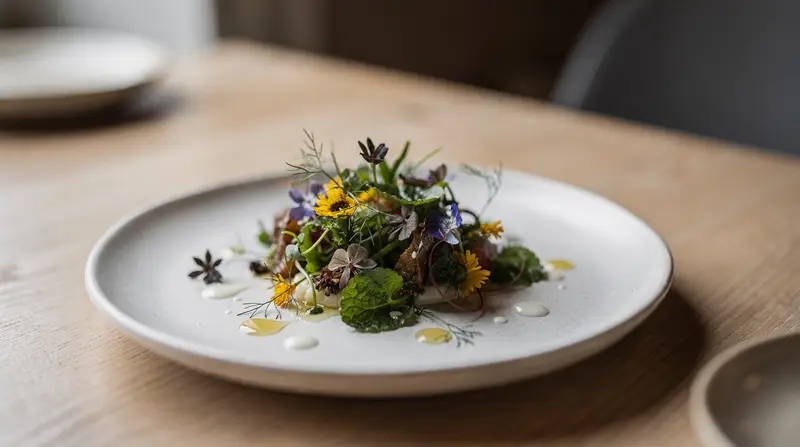
Seasonality: The menu changes to reflect what is growing right now. In January, that means root vegetables, preserved fish, pickled everything. In July, radishes and herbs and strawberries with cream. This sounds obvious, but it is a specific commitment that distinguishes New Nordic restaurants from those that buy produce from wherever is cheapest regardless of season.
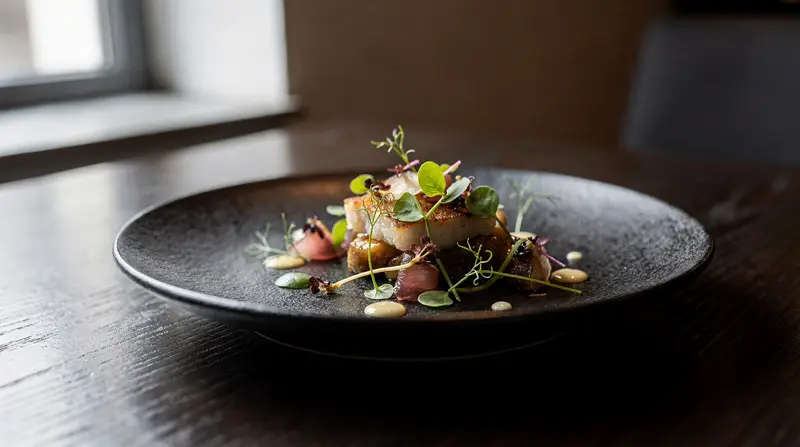
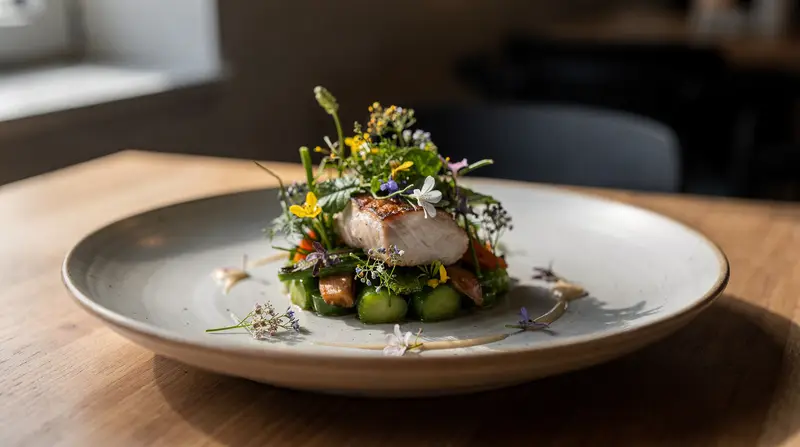
Nordic ingredients: Foraged plants like ramsons and wood sorrel. Danish cheeses. Fish from Scandinavian waters — pollock, herring, sand dab, not necessarily salmon and cod. Game from Danish forests. Seaweed from the Danish coast. Ingredients that appear in the landscape, not on a French or Italian grocery list.
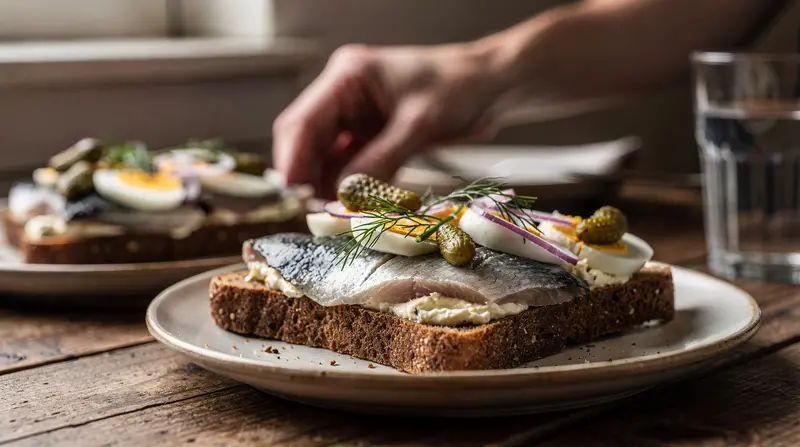
Fermentation: Noma’s fermentation lab made this famous, but the technique predates that by centuries in Nordic preservation culture. Pickled herring, acidic lacto-fermented vegetables, aged dairy — these are not experiments, they are the way food was kept through northern winters. New Nordic kitchens use them with intention rather than necessity.
Restraint: The aesthetic tends toward small, precise portions with minimal but exact garnish. This can feel underwhelming if you arrive expecting an Italian main course. It makes more sense when you understand the tasting menu format — you are eating many things in sequence rather than one large thing.
Entry Level: Reffen and Street Food Markets
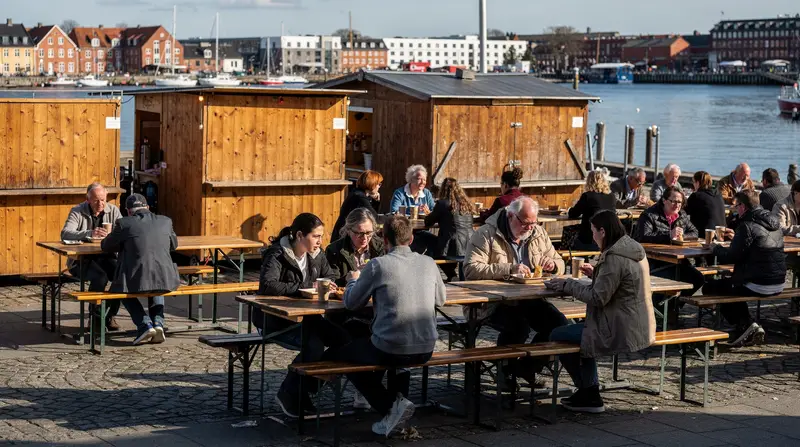
Reffen on Refshaleøen is the most accessible point of contact with what happened to Danish food culture after noma. Several of the vendors are run by chefs who spent time in fine dining kitchens — and the menus show it. This is not standard street food.
A specific vendor worth seeking: look for whoever is currently doing fermented vegetable preparations or seasonal vegetable-forward dishes. The stalls change season by season, but there is consistently someone applying New Nordic thinking to a 100 DKK plate. Combine this with a fish taco from the Nordic fish vendors and a local craft beer and you have dinner for 200–250 DKK that reflects the current state of Copenhagen food thinking better than an expensive tourist restaurant.
Reffen runs April through October. Go on a weekday evening before 18:00. Our full Reffen street food guide covers the vendor rotation and how to get there.
Mid-Range: Lunchtime Tasting Menus
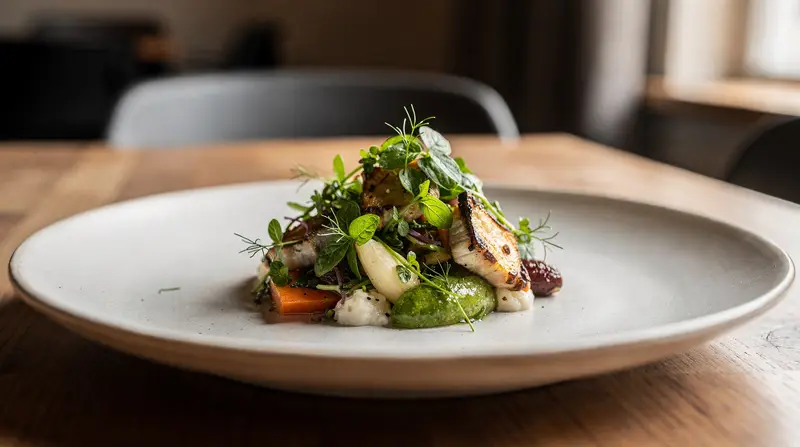
Several New Nordic restaurants offer a lunch version of their tasting menu at a significantly reduced price — often five courses for 350–550 DKK versus dinner prices of 900–1,500 DKK for the same or similar kitchen.
Domestic on Vesterbrogade: consistently good value, seasonal tasting menu at lunch, around 395 DKK for five courses. Booking required. The cooking is confident without being showy.
Forhaven in Frederiksberg: a garden restaurant with seasonal tasting menus that change weekly. Lunch option around 450 DKK. One of the quieter recommendations that consistently delivers.
Restaurant Barr from the same group that operated noma’s second phase: lunch dishes around 180–250 DKK each, with a focus on North Sea produce and fermented preparations. Not a tasting menu format — you order à la carte and choose your pace. Budget 450–600 DKK for a proper lunch with wine.
Street-Level: The Smørrebrød Connection
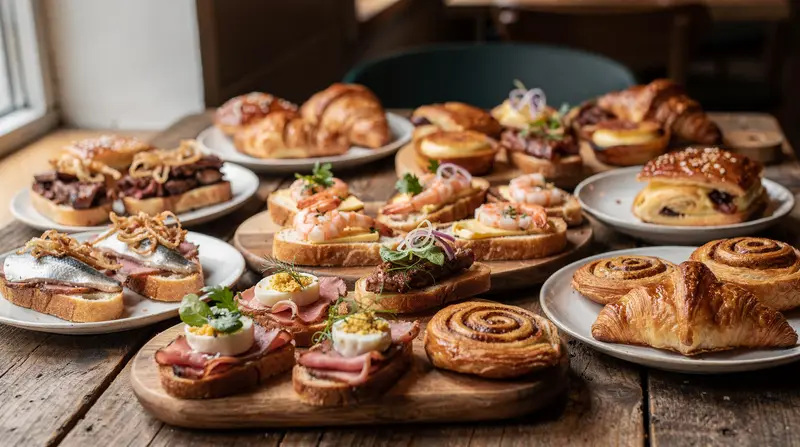
The clearest expression of New Nordic principles at accessible prices is the evolved smørrebrød lunch. Aamanns in particular — described in our separate smørrebrød account — applies exactly the same sourcing and seasonal principles to the traditional open sandwich format at 100–150 DKK per piece.
This is not a compromise. It is New Nordic in its most distinctly Danish form.
The Food Tour Option
If you want context alongside the eating — someone to explain why a particular fermentation technique matters, what region produced this fish, why this bread is different from sourdough — the New Nordic food tour with tastings and meal runs four hours and hits several locations across the city. It costs more than eating the same things independently, but the guided context changes the experience for people who want to understand rather than just eat.
The Copenhagen food tour with Danish classics is a broader option that covers New Nordic alongside traditional Danish food — smørrebrød, pastry, street food — for visitors who want an overview rather than a deep dive.
Torvehallerne: The Deli Version
Torvehallerne market has several vendors whose sourcing and preparation reflects New Nordic principles without any tasting menu format or fine dining presentation. The smoked and cured fish stalls buy from specific Danish smokeries. The cheese counters stock aged Danish and Faroese cheeses that you cannot find in supermarkets. The bread at Meyers Bageri is made from heritage grain varieties.
A composed market lunch — some cured fish, a couple of cheeses, good bread, a jar of pickled something — runs 150–200 DKK and requires no booking. You eat from paper at a market stool. See our Torvehallerne market guide for a stall-by-stall breakdown.
What You Are Missing at the Lower Price Points
Honesty requires saying this: the New Nordic tasting menu at a Michelin-level Copenhagen restaurant is a genuinely different experience from eating at a market or a smørrebrød lunch. The precision of the cooking, the progression of a twelve-course menu, the specific wines chosen to match fermented preparations — these things cannot be approximated at lower price points.
But the principles are accessible. The ingredients are accessible. The philosophy that shaped modern Copenhagen food culture expresses itself everywhere in the city, from a 90 DKK fermented vegetable dish at Reffen to a 150 DKK piece of evolved smørrebrød at Aamanns to a 450 DKK lunch tasting menu at a neighbourhood restaurant.
You do not need to spend 3,000 DKK to eat in the spirit of what Copenhagen’s food culture became. You need to eat thoughtfully and know where to look.
For a full guide to New Nordic restaurants across price points, see our best New Nordic restaurants guide and our Copenhagen Michelin guide.