Copenhagen Food Bucket List: 10 Things to Eat Before You Leave
Copenhagen Is a Food City
We knew it intellectually before arriving. We did not understand it fully until we sat down to our first proper smørrebrød lunch and worked through each open sandwich slowly, and the flavours were more considered than we had expected from what looked like glorified bread and toppings. Copenhagen’s food culture runs deeper than the noma headlines suggest. This is the list of things you should eat — and roughly what to expect to pay.
Copenhagen food bucket list at a glance
| Dish | Typical price | Where |
|---|---|---|
| Sit-down smørrebrød (2–3 pieces) | 150–350 DKK | Schønnemann, Aamanns, Torvehallerne |
| Wienerbrød (Danish pastry) | 30–55 DKK | Lagkagehuset, Ole & Steen, Juno the Bakery |
| Rød pølse (hot dog) | 35–55 DKK | Pølsevogn carts; DØP for the upgrade |
| New Nordic tasting menu | 700–1,200 DKK | Mid-tier restaurants below Noma level |
| Reffen street food | 80–200 DKK | Refshaleøen (April–October) |
| Herring, 2+ preparations | 50–130 DKK per piece | Any smørrebrød lunch |
| Flæskesteg (roast pork) | 60–90 DKK (roll) | Traditional Danish lunch spots |
| Soft serve with liquorice | 40–65 DKK | Kiosks citywide |
| Specialty filter coffee | 40–55 DKK | Coffee Collective, Prolog, Democratic |
Prices are approximate 2026 figures in Danish kroner — Copenhagen is expensive, so budget honestly.
1. Smørrebrød — A Proper Sit-Down Version
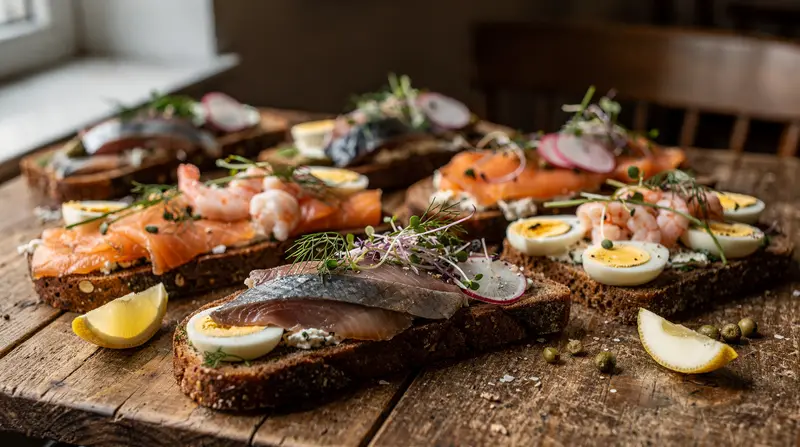
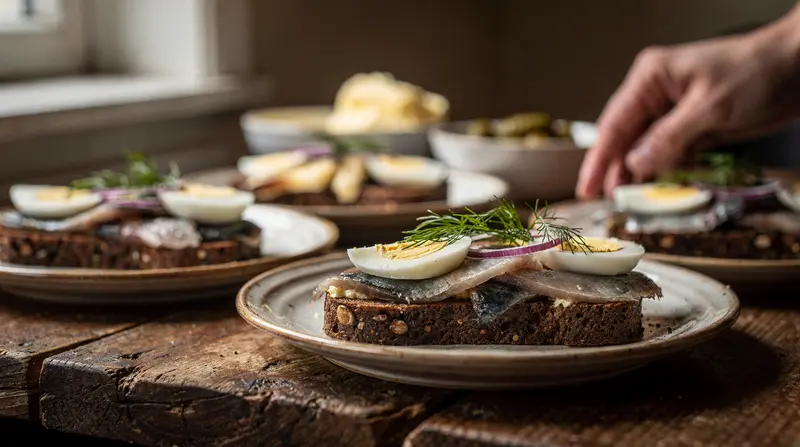
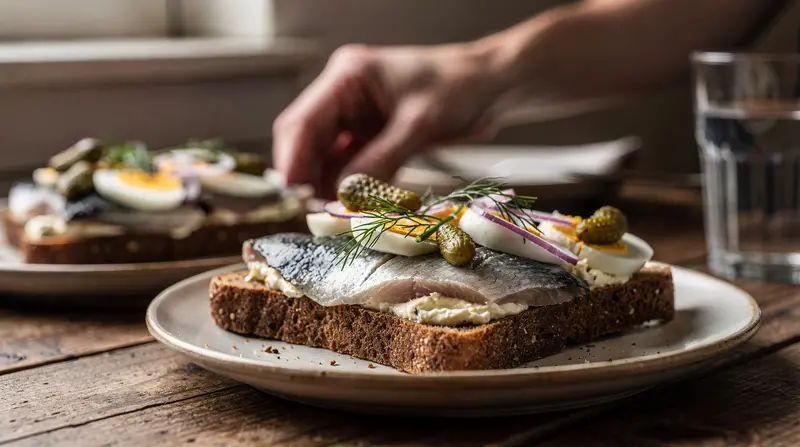
Smørrebrød is the Danish open sandwich: a slice of dense, slightly sour rye bread (rugbrød) topped with combinations that range from herring in various preparations to liver pâté, roast beef with remoulade and crispy onions, or cured salmon with dill. The bread is the foundation — it is not a neutral base, it has flavour of its own, and it changes the entire experience compared to the French or Dutch open sandwiches you might know.
The key word is “proper.” You can buy a lukewarm version from a supermarket for 35 DKK. That is not this. A sit-down lunch at a smørrebrød restaurant — Torvehallernes Hallernes Smørrebrød, Schønnemann, Aamanns — costs between 150 and 350 DKK per person for two to three pieces. The presentations are architectural by Nordic standards. You eat them with a knife and fork. You take your time.
We have a full account of where we actually ate in a separate post — the smørrebrød places we actually tried.
2. Wienerbrød (Danish Pastry, Not American Danish)
The pastry called a “danish” outside of Denmark is a pale imitation of what you will find in Copenhagen’s bakeries. Wienerbrød — the Danish word, meaning “Viennese bread” — is laminated dough with real butter in quantities that make the pastry feel substantive rather than flimsy, filled with marzipan, custard, or fruit, and glazed properly.
Lagkagehuset and Ole & Steen are the main chains. A single pastry costs 30–45 DKK. For something more artisan, Juno the Bakery in Nørrebro has been cited repeatedly as one of the best in the city — expect to queue, especially on weekend mornings. Budget 45–55 DKK per item.
The card game: buy one of everything that looks good, find a bench in Kongens Have, and work through them with a coffee. This is both very cheap and very good.
3. Rød Pølse — The Classic Hot Dog
The Danish hot dog is an institution. The rød pølse (red sausage) is a bright red, lightly spiced pork sausage served in a long bun with a specific combination of condiments: remoulade (a mustardy mayonnaise), ketchup, and crispy fried onions. The pølsevogn (hot dog cart) is a fixture of Danish street life going back to the 1920s.
These are not gourmet. They are also not trying to be. They cost 35–55 DKK and taste exactly right when you have been walking for two hours and your feet ache. The central station area and the square at Rådhuspladsen have reliable carts. Eat standing up. Order a Carlsberg if they have it.
There are also elevated hot dog versions at restaurants like Warpigs or DØP (Ø stands for “organic”), where the dogs are made from better-quality meat and cost 70–90 DKK. Worth trying if you want to understand the range.
4. A New Nordic Tasting Menu — Somewhere Below Noma Level
The New Nordic movement changed how the world thinks about Scandinavian food, and Copenhagen remains its ground zero. But Noma-level prices (3,000–5,000 DKK per person including wine) are not necessary to experience the cuisine.
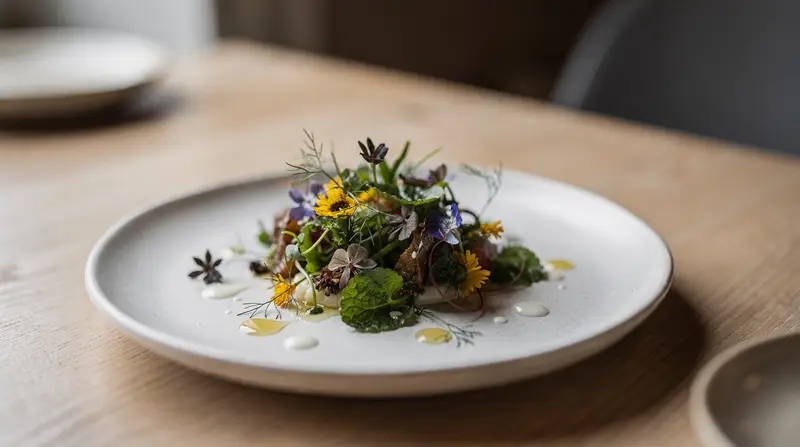
A good New Nordic tasting menu of five to eight courses at a mid-tier restaurant runs 700–1,200 DKK per person without wine. Places like Kadeau, Geranium’s more accessible offshoot concepts, or Restaurant Mes — the style is consistent: hyper-seasonal, Danish produce, fermentation, foraged ingredients presented with the kind of precision that makes you wonder how much time went into each plate.
For a guided introduction to the food and a sense of what the terminology means, the New Nordic food tour with tastings is a sensible option before committing to a full evening tasting menu.
5. Reffen Street Food — the Best 100 DKK Meal in Copenhagen
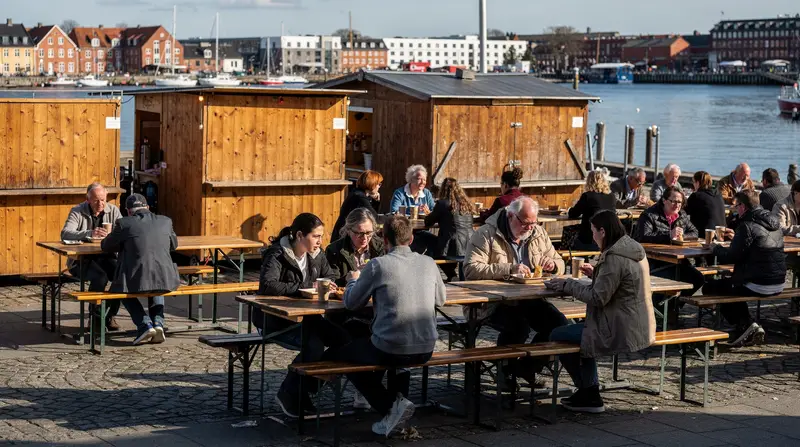
Reffen is a seasonal street food market on Refshaleøen, the former shipyard island east of the city centre. It runs from April through October. It is not a tourist market — it is where locals eat on warm evenings.
The stalls represent everything from Nigerian to Korean to Faroese, and most dishes fall between 80 and 130 DKK. The fish tacos and the smash burgers and the Thai larb all exist here, but the more interesting things are the vendors doing things specific to the Nordic context — lamb from the Faroe Islands, fish from Bornholm, fermented vegetable preparations from a chef who clearly spent time in a New Nordic kitchen before opening here.
The seating is long communal tables by the water. The view is of the old cranes and the harbour. Go on a Thursday or Friday evening, arrive before 18:00 to avoid the longest queues, and budget 150–200 DKK for food and a local craft beer.
6. Torvehallerne Market — The Morning Version
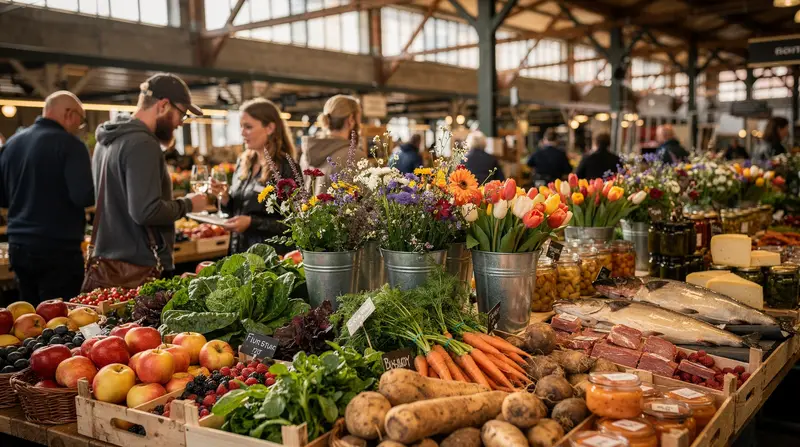
Torvehallerne is a covered market near Nørreport Station with two halls and a collection of food vendors, delis, and coffee bars. Go in the morning, not at midday when it is crowded and the energy is wrong for eating at leisure.
The morning routine: a coffee from The Coffee Collective (one of the city’s best specialty roasters, with a stall inside), and something to eat from whichever counter looks good. The cured fish deli, the cheese vendors, the bread from the Meyers Bageri stand — all of these are good. Budget 80–120 DKK for coffee and a breakfast item.
The lunch options inside Torvehallerne are overpriced relative to what you get. Grød porridge is an exception — 95 DKK for a bowl that is filling enough to carry you to late afternoon.
7. Herring — in at Least Two Preparations
Pickled herring (marineret sild) appears on smørrebrød menus and is one of those things that sounds like a test and turns out to be genuinely good. The variations matter: mustard herring, curry herring, tomato herring, plain pickled — each has a distinct character. Eating only one preparation means you have not really tried it.
The best context is a smørrebrød lunch where you order two or three pieces of bread and include herring as one of them. Cost per piece: 80–130 DKK at a sit-down restaurant, 50–70 DKK at a market.
8. Flæskesteg — Roast Pork with Crackling
Flæskesteg is the Danish Sunday roast: a pork leg cooked with the rind on until the crackling (svær) is dense and salty and shatters when you press it. It is served with red cabbage braised with vinegar and sugar, boiled potatoes, and a dark gravy that has been reduced for longer than seems reasonable.
You will not find this at tourist restaurants. You find it at Danish lunch spots that still serve traditional food — places like Restaurant Kronborg in the city, or at a pølsevogn that does a roast pork roll (a flæskesteg sandwich on a soft bun with pickled red cabbage). The roll version costs 60–90 DKK and is excellent street food for a cold day.
9. Soft Serve with Liquorice
Soft serve ice cream is a minor obsession in Copenhagen. The interesting version is soft serve with salt liquorice (lakrids) — a flavour combination that is, without any irony, excellent. The liquorice in Denmark is the Nordic variety, which is salty and intense rather than sweet, and it works with the dairy creaminess of the ice cream in a way that makes you reconsider what good ice cream can be.
Vaniljeisen kiosks and several stand-alone ice cream shops around the city offer this. Price: 40–65 DKK for a portion. The Broens Gadekøkken area on Christianshavn bridge sometimes has a stall in summer.
10. A Proper Coffee — Specialty, Not a Chain
Copenhagen has one of the strongest specialty coffee cultures in Europe. The Coffee Collective (multiple locations), Prolog (Vesterbro), Democratic Coffee (near Copenhagen City Hall) — these are independent roasters and cafés that treat filter coffee as seriously as the New Nordic kitchen treats a turnip.
A filter coffee costs 40–55 DKK. An espresso-based drink, 50–65 DKK. This is expensive by most European standards and worth paying once for the experience.
The Danish café habit is to sit. Order, find a table, stay. The concept of hygge is lived out in café culture more than anywhere else in the city — the candles, the low light, the people who have been there for two hours and do not appear to be leaving. Factor in the time.
For a deeper guide on where to eat across different categories, see our best food in Copenhagen guide and the food tours available if you want a guided introduction. The Taste of Denmark food tour is a solid four-hour introduction to the range of what the city eats.
How to eat well without overspending
Copenhagen rewards mixing high and low. One New Nordic tasting menu, one proper smørrebrød lunch, and the rest of your meals from markets and street stalls is the balance most visitors find works. The smørrebrød guide explains what to order and how the open sandwiches are built, while the New Nordic cuisine explained guide demystifies the fermentation-and-foraging language before you commit to an evening tasting menu. If the Noma-tier prices put you off, our New Nordic without the Noma price piece finds the same ideas at a fraction of the cost.
For the cheaper end, the Reffen street food guide and the Refshaleøen destination page cover the best 100–200 DKK meal in the city, and the Torvehallerne market guide is the go-to for a morning of grazing. Do not skip the bakeries — the Copenhagen bakeries and pastry guide is where the wienerbrød lives.
Frequently asked questions about eating in Copenhagen
Is it expensive to eat in Copenhagen?
Yes — Copenhagen is one of Europe’s pricier food cities. A sit-down smørrebrød lunch runs 150–350 DKK per person, a specialty coffee 40–55 DKK, and a mid-tier New Nordic tasting menu 700–1,200 DKK. But you can eat brilliantly for less: a hot dog is 35–55 DKK, a Reffen street food meal 80–130 DKK, and a bakery pastry 30–55 DKK. The best food in Copenhagen guide covers options at every budget.
What food is Copenhagen most famous for?
Smørrebrød (the Danish open sandwich on rye), New Nordic cuisine — the fermentation-and-foraging movement Noma made famous — and Danish pastries (wienerbrød) are the three things most associated with the city. Beyond those, the rød pølse hot dog, specialty coffee, and the street food at Reffen round out a genuine bucket list. See the New Nordic cuisine explained guide for the headline style.