Home of Carlsberg Copenhagen: the honest guide to the brewery visit
Copenhagen: Home of Carlsberg Experience Entry Ticket
Is the Carlsberg brewery experience worth visiting?
For beer drinkers and anyone interested in industrial history or impressive nineteenth-century architecture: yes, genuinely worth it. The Elephant Gate, the Jacobsen brewhouse and the beer museum have real substance. The two included beers are generous. Budget two to two and a half hours. For non-drinkers or anyone uninterested in beer or brewing history, the exhibition is beer-centric enough that it may not justify the entrance price (170–210 DKK).
Book your Home of Carlsberg entry ticket in advance to secure your visit time and avoid the walk-up queue in summer. The ticket includes museum entry and two beer tokens.
| Where | Gamle Carlsberg Vej 11, Vesterbro |
| Cost | Around 170 DKK adult (2 beers included), 210–250 DKK with guided tour |
| Time needed | 2–2.5 hours |
| Getting there | Bus 26 from Rådhuspladsen (~12 min) or 15 min by bike |
| Best time | Weekday mornings (10:00–12:00) |
What the Carlsberg experience actually is
Home of Carlsberg is not a working industrial brewery tour. The Carlsberg production that supplies supermarkets and bars across Europe and beyond happens in a large modern facility not open to visitors. What you are visiting at Gamle Carlsberg Vej 11 is the original historical brewery campus — the buildings where J.C. Jacobsen began production in 1847 — converted into a visitor experience.
This distinction matters because it affects expectations. You are not watching beer being made at industrial scale. You are exploring nineteenth-century brewing architecture, a museum about the history and science of beer, and a small working brewpub (the Jacobsen brewery) that makes premium small-batch beers in the historical buildings.
For the right visitor — someone interested in Danish industrial history, brewing science, or architecture — this is genuinely worthwhile. For someone who wants to see a working brewery in action, the experience is more museum than production facility.
The historical context: J.C. Jacobsen and Danish brewing
The Carlsberg story is worth understanding before you visit, because it makes the buildings and the exhibition considerably more interesting.
J.C. Jacobsen was a Copenhagen brewer who in 1847 moved his operation to a new site outside the city walls — at the time, Valby was farmland. He was a systematic, scientifically minded businessman who saw the Copenhagen beer market as one in need of quality improvement and who invested in research alongside production.
The name Carlsberg comes from his son Carl and the hill (bjerg in Danish) on which the brewery was built. The father-and-son relationship became complicated — Carl Jacobsen eventually established his own New Carlsberg brewery (Ny Carlsberg) on adjacent land, and the two operations competed before merging into the Carlsberg Group in 1906.
J.C. Jacobsen’s most significant contribution to brewing globally was through the Carlsberg Research Laboratory, established in 1875. In 1883, Emil Christian Hansen, working in the laboratory, succeeded in isolating a single yeast cell and cultivating a pure yeast culture — a technique that eliminated the inconsistency and unpredictability of wild yeast fermentation that had plagued commercial brewing. The discovery transformed international commercial brewing; Jacobsen made the single-cell yeast technique freely available to the global brewing industry, which is why it is still in use today. Most commercial lager worldwide descends from this work.
The Carlsberg Foundation, established in J.C. Jacobsen’s will, continues to fund Danish scientific research across all fields. The foundation owns the controlling stake in the Carlsberg Group. This funding model — a commercial brewery financing fundamental scientific research — is unusual and worth knowing when you see the research laboratory exhibits.
What you see: the main elements
The Elephant Gate
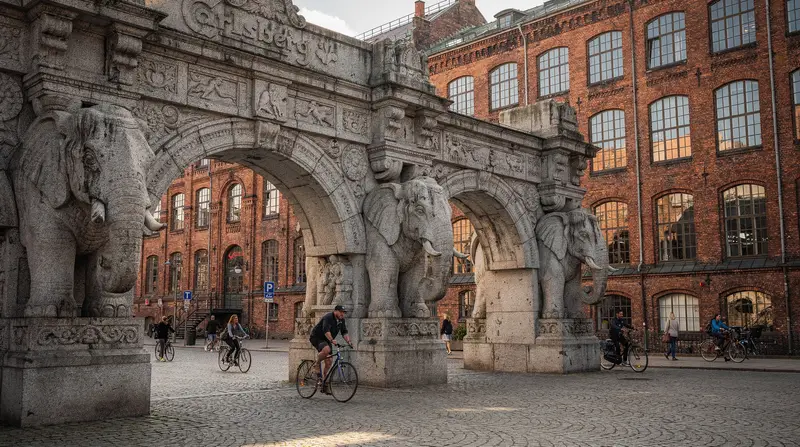
The first thing most visitors encounter is the Elephant Gate (Elefantporten), the ornate entrance to the old brewery compound on Ny Carlsberg Vej. Four large stone elephants — carrying obelisks on their backs — flank the gateway in a design that references ancient history and is entirely impractical from a functional perspective. They were commissioned by Carl Jacobsen in 1901.
The elephants have become one of Copenhagen’s most photographed non-central landmarks. They are worth seeing regardless of whether you enter the visitor experience — the gate is visible from the street.
Inside the compound, the historical brewery buildings are the primary visual draw: large, handsome nineteenth-century industrial architecture in Danish brick, considerably more aesthetically considered than most contemporary factory buildings.
The Beer Museum
The museum covers the history of beer from ancient Sumerian evidence through the development of commercial lager production to the contemporary craft beer scene. It is well-produced, multilingual and includes a Carlsberg-specific section on the laboratory’s yeast research.
The museum is honest about Carlsberg’s history without being a simple corporate celebration. The section on global brewing science — the yeast discovery, the development of modern quality control, the spread of consistent lager production — is genuinely interesting and not something you encounter at most brewery visitor experiences.
Budget 45–60 minutes for the museum if you read the exhibits carefully.
The Jacobsen Brewpub
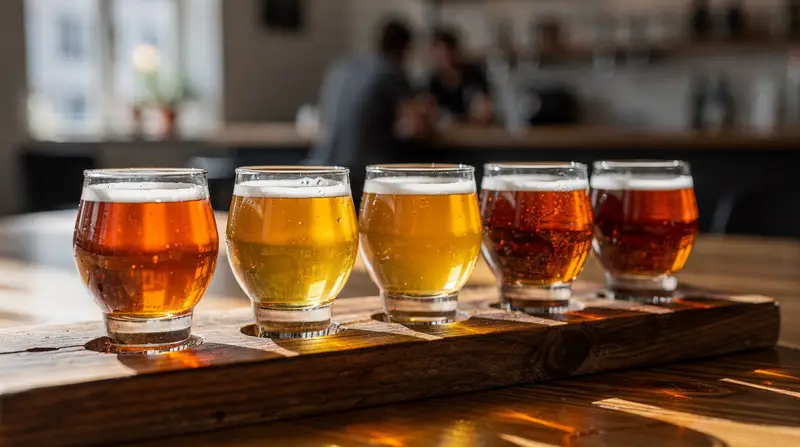
The Jacobsen brewery hall is the most atmospheric space in the complex — the original brewing equipment remains in place, and the brewpub operates in and around it. The beers served here are produced in small batches and are significantly more interesting than mainstream Carlsberg: dark lagers, wheat beers, seasonal ales and occasional experimental formats.
Your two included beer tokens can be redeemed at the Jacobsen bar. The beers are served in appropriate glassware and come with a simple explanation of style. This is not a craft beer experience in the Mikkeller sense — the range is narrower and the approach more traditional — but the setting makes it worthwhile.
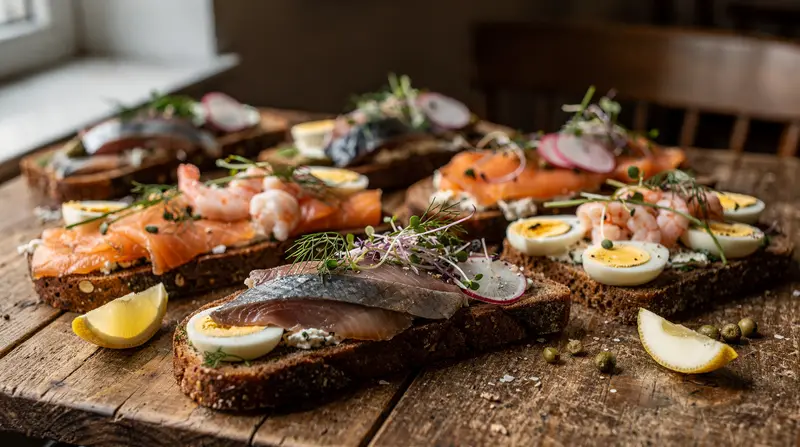
Additional beers cost 75–95 DKK for a 40cl glass. Food is available (open sandwiches, light plates, 75–150 DKK each) if you want to make this a longer stop.
The Guided Brewery Tour
The guided tour (available with the premium ticket at 210–250 DKK) covers areas of the historical complex not included in the self-guided route, with context on brewing science and the Carlsberg family history provided by a guide.
The tour is worth the additional cost if you are genuinely interested in the history rather than just the buildings. If you are a casual visitor, the self-guided route covers the main visual elements adequately.
Practical information
Address: Gamle Carlsberg Vej 11, 1799 Copenhagen Opening hours: Daily 10:00–17:00. Last entry 16:00. Getting there: Bus 26 from Rådhuspladsen (about 12 minutes). By bike, 15 minutes from Central Station via Vesterbrogade. No metro or S-Tog stops within easy walking distance. Tickets: 170 DKK adult (includes two beer tokens), 90 DKK children 12 and under. Premium ticket with guided tour: 210–250 DKK. Copenhagen Card: free entry included. Wheelchair access: The historical buildings have some uneven surfaces; the museum and brewpub are accessible. The guided tour route has a few challenging sections.
Best time to visit: Weekday mornings (10:00–12:00) for minimal crowds. Summer weekends (June–August) are the busiest period. The open-air courtyard with the Elephant Gate is best in daylight.
Combining with other visits: The brewery is in western Vesterbro, about 15 minutes by bike from the Meatpacking District (Ködbyen). A logical half-day route combines the Carlsberg visit with a lunch stop at Warpigs (Mikkeller’s barbecue and beer restaurant at Flæsketorvet 25) and an evening at Mikkeller Bar on Viktoriagade. This covers both the historical commercial brewing and the contemporary craft beer scenes in a single Vesterbro day.
The Copenhagen industrial past and Carlsberg City walking tour covers the broader urban development story of the Carlsberg neighbourhood — useful if you want to understand how the old brewery site is being transformed into a residential and commercial district.
Carlsberg City: the neighbourhood beyond the museum
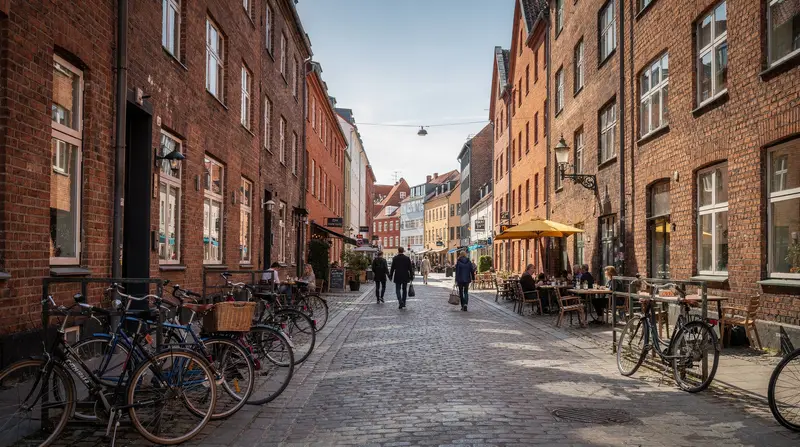
The historical brewery sits inside a much larger transformation: Carlsberg Byen, a former industrial site being converted into one of Copenhagen’s newest residential and cultural neighbourhoods. Wandering the Carlsberg City area beyond the ticketed visitor experience costs nothing and shows the scale of the redevelopment — new apartment blocks alongside preserved industrial buildings, public squares, and a water tower converted into housing. Give it 20–30 minutes if you have time after the museum.
For a full evening rather than a single stop, pair Carlsberg with dinner and drinks in nearby Vesterbro: Warpigs (Mikkeller’s barbecue restaurant) is a 15-minute cycle away in the Meatpacking District, and the Mikkeller craft beer walk covers the contemporary side of Copenhagen’s beer scene for a similar price. If beer history in one neighbourhood and beer culture in another both appeal, the Mikkeller craft beer walk in Vesterbro is a natural same-day pairing with the historical Carlsberg visit.
If Carlsberg is one of several stops on a tight budget day, see the Copenhagen on a budget guide for how it fits alongside free attractions, and the things to do in Copenhagen guide for how it ranks against the city’s other sights.
Frequently asked questions about the Home of Carlsberg
How much does the Home of Carlsberg cost?
The standard adult ticket is 170 DKK (around 23 euros) including two beer tokens. An enhanced ticket with guided brewery tour costs 210–250 DKK. Children under 12 pay 90 DKK. The Copenhagen Card covers entry.
How long does the Carlsberg visit take?
Self-guided: 90 minutes to two hours. With the guided brewery tour: two to two and a half hours total.
What do you actually see at the Carlsberg brewery?
The original J.C. Jacobsen brewery building (1847), the famous Elephant Gate, the Beer Museum covering global brewing history and Carlsberg’s yeast science contribution, and the Jacobsen brewpub with small-batch house beers included in your ticket.
Where is the Carlsberg brewery and how do I get there?
Gamle Carlsberg Vej 11, Vesterbro. Bus 26 from Rådhuspladsen (12 minutes). By bike, 15 minutes from Central Station.
What is the Jacobsen brewpub?
A small-batch brewing operation in the historical brewery hall, producing more interesting beers than mainstream Carlsberg. Your two included tokens are redeemed here; additional beers cost 75–95 DKK.
Is the Carlsberg site the same as the Carlsberg City development?
Adjacent but distinct. Carlsberg Byen is a new residential and commercial neighbourhood built on the former brewery’s surrounding land. The Home of Carlsberg visitor experience occupies the historical brewery buildings within this development.
Can you visit Carlsberg without booking in advance?
Yes, walk-up tickets are available at the entrance most days. Mornings are quietest. Pre-booking is recommended for the guided brewery tour as group sizes are limited.
Top experiences
Bookable activities with verified prices and instant confirmation on GetYourGuide.