Biking Copenhagen as a Tourist: What Nobody Tells You
On Arriving at the Rental Shop
The man at the rental counter in Vesterbro looked us up and down — two people who had clearly never cycled in a city that treats cycling as infrastructure rather than recreation — and said: “Keep right on the cycle track, signal with your arm, do not stop suddenly, do not look at your phone, and do not go onto the pedestrian path.” He said it in the tone of someone who has had this conversation three hundred times and once watched a tourist pull hard left without checking for overtaking cyclists.
We nodded. We did not fully understand what we were agreeing to. Here is what we learned.
| Rental cost | Around 150 DKK per bike per day (standard 3-speed) |
| Where | Rental shops across Vesterbro, Nørrebro, Indre By |
| Helmet | Not legally required for adults, usually provided anyway |
| Fine for running a red | 1,000 DKK — enforced |
| Time to feel competent | 2-3 days of regular riding |
How the Cycle Tracks Work
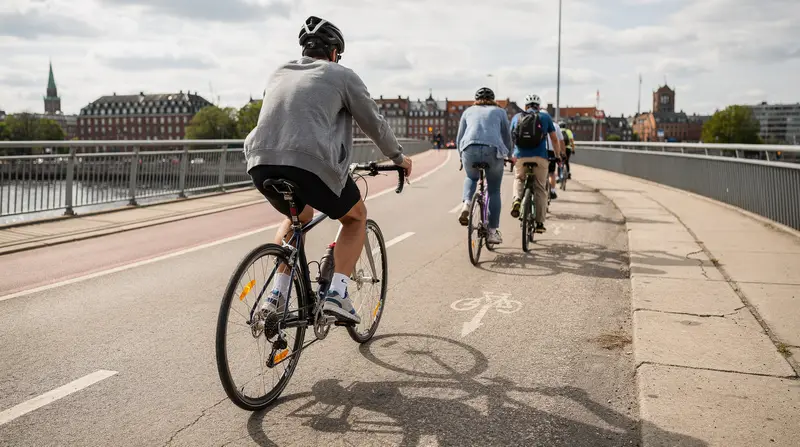
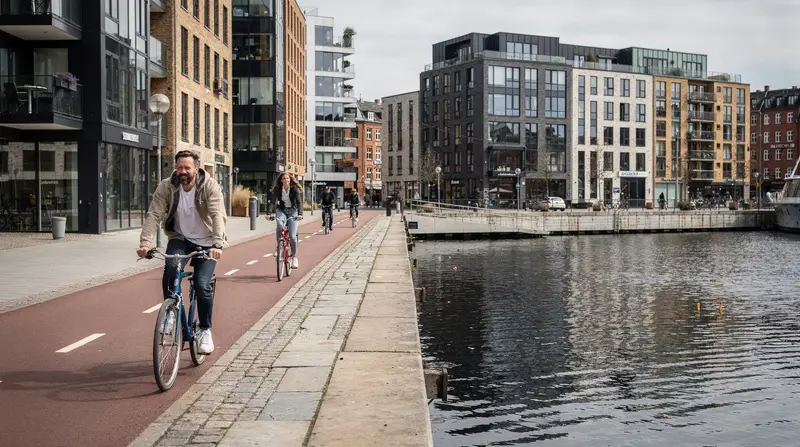
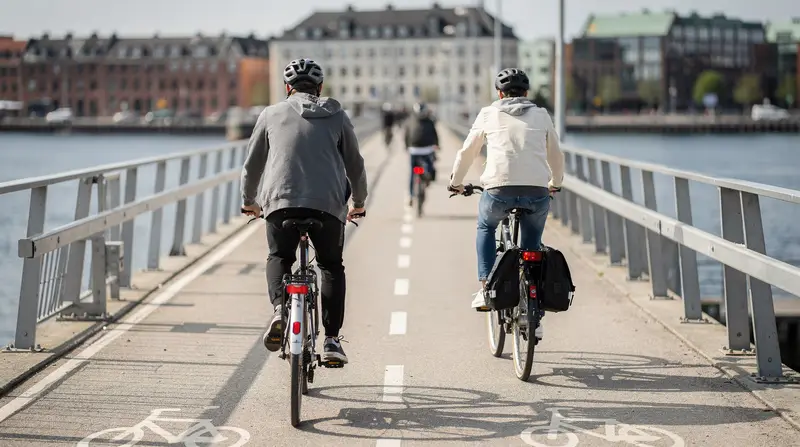
Copenhagen’s cycle tracks are not bike lanes in the way most tourists understand them. They are a separate level of infrastructure — often physically raised between the road and the pavement — with their own rules, their own right of way, and their own culture.
The cycle track (cykelsti) sits between the road and the pedestrian pavement. It is unidirectional — you ride in the same direction as the traffic on your side of the road. This sounds obvious. It is less obvious when you arrive at an intersection, get confused about which way to turn, and absent-mindedly start pushing your bike back the way you came — on the cycle track, in the wrong direction. That earns you a sharp bell ring and a look that needs no translation.
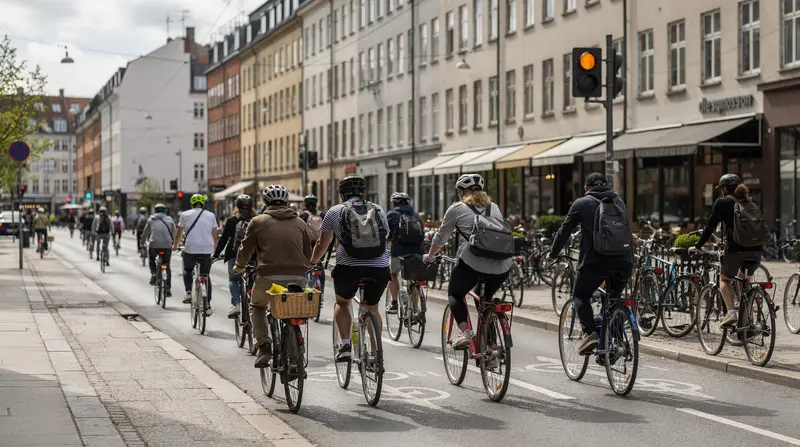
At intersections, cyclists get their own traffic light phase in many parts of the city. When the cyclist light goes green, you go. When it is red — and this is the key thing — you stop, because the pedestrian light will be green at the same time, and pedestrians will be crossing in front of you. Running a red on a cycle track is genuinely dangerous, not merely illegal.
Mistake One: The Wobbly Start
We rented bikes near Vesterbro on our second morning. Standard city bikes, three-speed, with the kind of wide handlebars that communicate stability rather than speed. The rental was 150 DKK per bike per day, perfectly reasonable.
The first ten minutes were humbling. We were slower than everyone else by a margin that felt personal. Danish cyclists travel at a consistent, purposeful pace. They are not racing, but they are not dawdling either. They signal turns. They look over their shoulder with one smooth movement, not the full-body swivel of a beginner checking for traffic.
We wobbled. We stopped too suddenly at one intersection and the woman behind us hit her brakes with an audible irritation. We pulled too far left once, edging into the lane margin where faster cyclists pass. None of this was dangerous. All of it was the adjustment tax that tourists pay on the cycle track.
By hour two, we had found the pace. By day three, we felt close to competent.
What You Actually See from a Bike
This is the reason to do it. Copenhagen is a flat city with excellent infrastructure, and cycling gives you a relationship with the neighbourhoods that walking cannot match and transit doesn’t even come close to.
We rode from Vesterbro through Frederiksberg, past the Frederiksberg Gardens and Carlsberg City, then north through Nørrebro along Nørrebrogade. An hour of cycling, no Metro stops, real neighbourhoods rather than tourist corridors. The light was different from a bike — you are in the city rather than being transported through it.
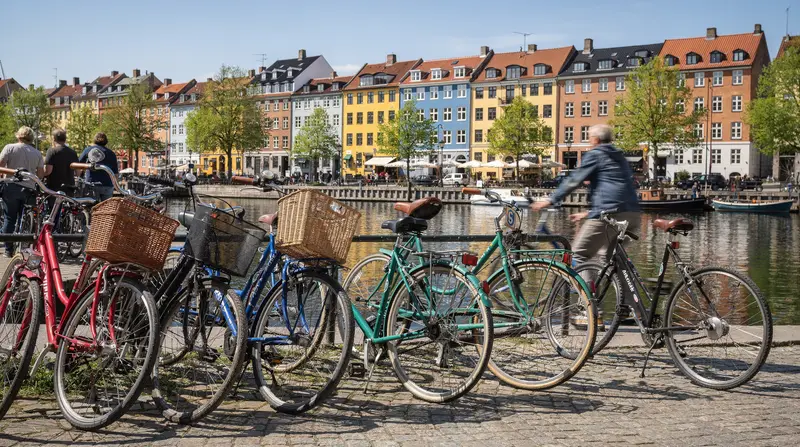
The route along the harbour front is genuinely good: south from the Black Diamond library through Christians Havn, across the Langebro bridge, and along the water on the Amager side. The harbour baths appear on your left. If it is summer, people are swimming. There is nothing particularly curated about this route. It is just how the city looks.
The best tourist cycling route, we found, is the one that starts in the old town, goes north to Nørreport Station, past Rosenborg Castle’s formal gardens (the Kongens Have), and continues toward the lakes — Peblinge Sø and Sortedams Sø — which form a long green corridor between the old city and the outer neighbourhoods. That stretch is flat, wide, and largely free of the more aggressive commuter flow.
Mistake Two: The GoBike App
Copenhagen has a public bike-share system called GoBike. The bikes are available at docking stations across the city, the first 30 minutes are free, and in theory it is an ideal solution for tourists who want flexibility without committing to a full rental.
In practice: the app set-up required a Danish payment card verification that our foreign cards would not complete in the first attempt. We spent 25 minutes outside a docking station trying four different cards before one worked. The bikes themselves are heavier than rental bikes and the gearing is more limited. They are fine for short hops between stations.
If you are doing this for more than a hour’s riding, rent a proper bike from a shop. If you want to go from one Metro stop to another to save a fare, GoBike works once you have the app set up. Set up the app at your accommodation before you leave.
Mistake Three: Cycling After Dark
Copenhagen’s cycle tracks are lit and safe at night. That is not the mistake. The mistake was that our rental shop closed at 18:00 and we did not plan to return the bikes in time. We locked them at the shop (with the rental lock they provided) and had to pay a 100 DKK late fee the next morning. Check the return hours before you leave on day one.
Guided Bike Tours: Worth Considering
We did one day independently and one morning on a guided tour. The guided option was worth it for context — the guide explained the cycling culture, pointed out things we would have cycled past without understanding, and gave us a framework for reading the city. For someone who wants to understand Copenhagen rather than just see it, a guided bike tour makes sense as an introduction before you go off alone.
The Copenhagen 3-hour highlights bike tour covers the main sights at a pace that makes cycling accessible even for people who are not confident urban cyclists.
Rental Bike vs GoBike vs Guided Tour
| Option | Best for | Cost |
|---|---|---|
| Shop rental (3-speed) | Multi-day, full flexibility | ~150 DKK/day |
| GoBike (bike-share) | Occasional short hops | Free first 30 min, then per-minute |
| Guided bike tour | First-time context, no confidence needed | Fixed tour price |
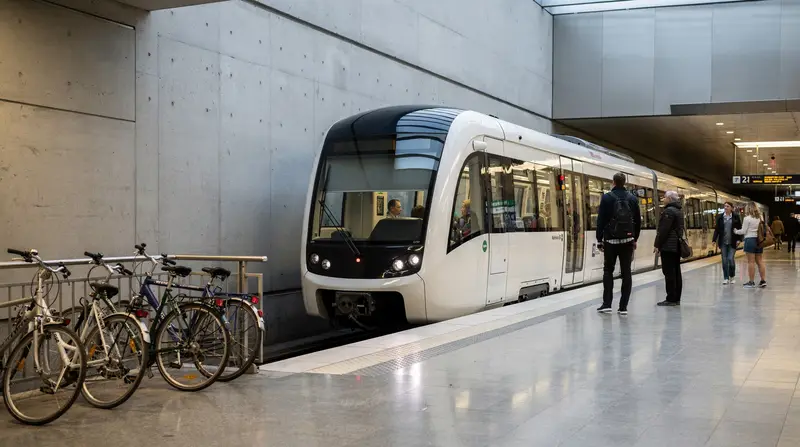
If cycling is not for you at all, the bike vs metro guide is an honest comparison of when each makes more sense — the metro is faster for a single point-to-point trip, but it shows you nothing along the way. For route ideas beyond what we describe here, the Copenhagen cycling routes guide has more options, and the broader getting around Copenhagen guide covers every transport mode side by side.
The neighbourhoods worth cycling to specifically: Nørrebro for the lakes route and the neighbourhood feel described above, and Vesterbro as a starting point with the best rental shop density.
Copenhagen must-see sights bike tourPractical Notes Before You Rent
Helmet: Not legally required for adults in Denmark, but rental shops often provide them. We wore ours.
Lock: Your rental will include a frame lock or a chain lock. Use it every time, even for five minutes. Bike theft exists.
Rain: Copenhagen rain is real. A lightweight waterproof jacket stuffed into a bag is worth carrying. Getting caught without one means wet cycling, which is miserable.
The fine for running a red: 1,000 DKK. The traffic police do enforce it.
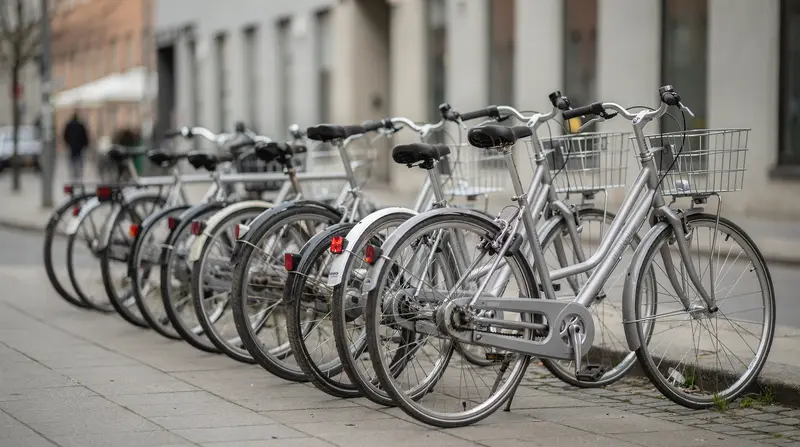
Where to park: Bike racks are everywhere. Do not lock to lamp posts or street signs in cleared zones — this is enforced, and the bike will be removed.
For full details on rental options, prices, and recommended routes, see our bike rental Copenhagen guide and the cycling rules and etiquette page.