The most photogenic spots in Copenhagen — Nyhavn, Rundetårn, CopenHill and more
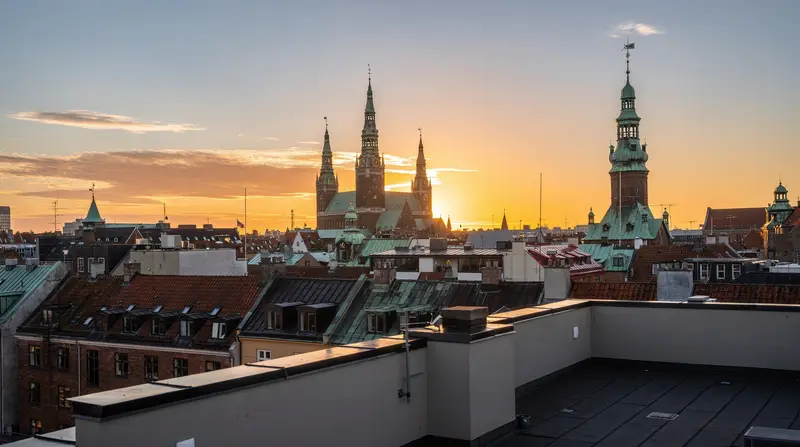
Copenhagen is one of the most photogenic cities in Northern Europe — not because of dramatic landscape or monumental architecture, but because the entire urban fabric has been built and maintained with a visual coherence that most cities lack. The canal light, the coloured facades, the cycling culture, the low Nordic sky — all of it photographs well in a way that requires some orientation but not a professional setup.
Here are the best photography spots, with honest assessments of what each delivers, best timing, and practical access information.
| Spot | Best time | Cost |
|---|---|---|
| Nyhavn | 07:00–09:00, any season | Free |
| Rundetårn | Late afternoon, spring/autumn | around 40 DKK |
| CopenHill | Late afternoon | Free (trail + terrace) |
| Christianshavn canals | Weekday mornings, 07:30–09:00 | Free |
| Frederiksstaden/Amalienborg | Morning, before noon guard change | Free |
For a broader itinerary that fits these spots around everything else worth seeing, see our things to do in Copenhagen guide.
1. Nyhavn canal — the classic view
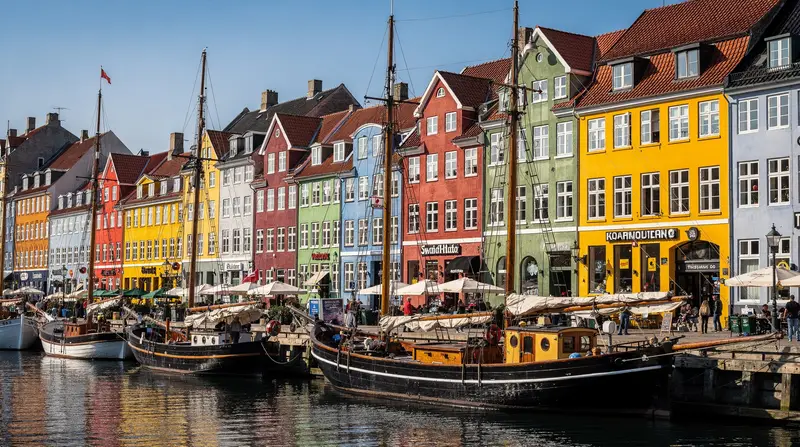
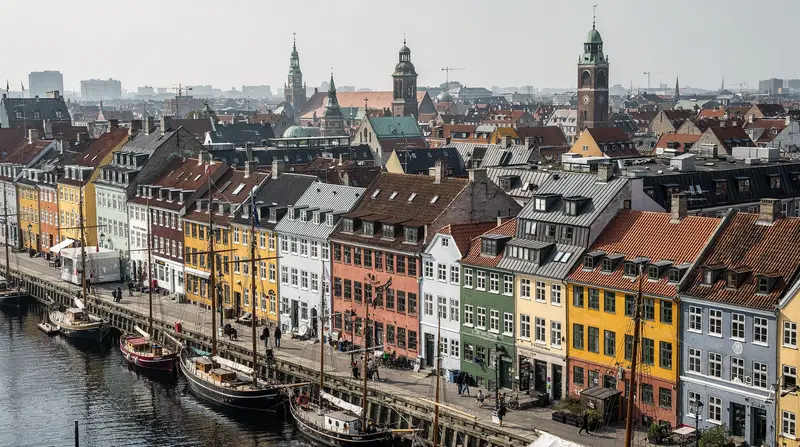
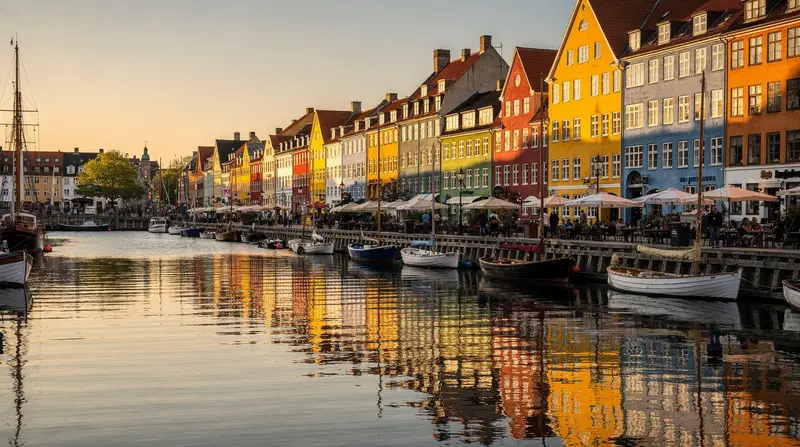
Every Copenhagen photography guide leads with Nyhavn, and that is not laziness — it is the correct choice. The row of seventeenth and eighteenth-century townhouses along the north quay, painted in ochre, red, terracotta, and blue, with the canal in front and the historic wooden boats moored alongside, is one of the most coherent and reproducible visual compositions in any European city.
Best time to photograph: Early morning (07:00-09:00) in any season. The light is better than midday, the canal is calmer, and the cruise tour crowds are absent. In summer, this window gives you warm sunrise light on the facades. In winter, the same window gives you blue-hour light that makes the colours more saturated.
The angle everyone takes: Standing at the mouth of the canal at Kongens Nytorv, shooting down the length of the canal with the boats and houses receding into the frame. This works. It is a cliché because it is the correct angle.
The angle fewer people take: Walking to the far end of the canal (toward Nyhavn 1-4) and shooting back toward Kongens Nytorv — the foreground is less crowded and you get the canal disappearing into the distance with the city beyond it.
What to avoid: Photographing Nyhavn between 11:00 and 16:00 in July-August. The canal is lined with hundreds of outdoor dining tables full of tourists, the boats are loaded, and the quayside is packed. The composition is technically the same; the atmosphere in the image is different.
2. Rundetårn (The Round Tower) — the city from above
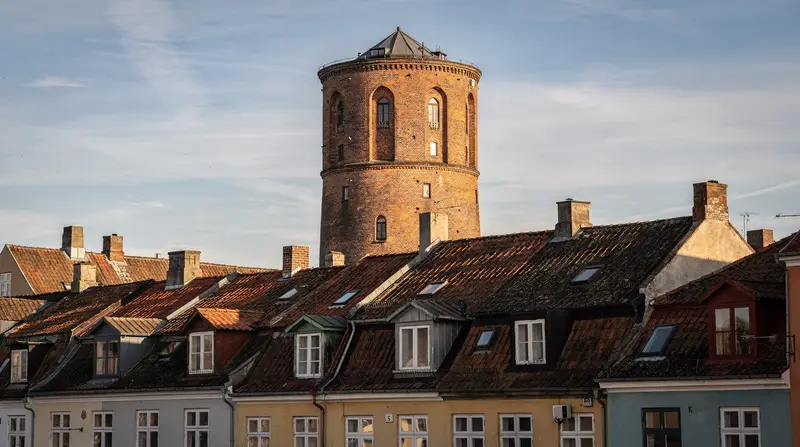
The Round Tower was built in 1642 as an astronomical observatory. You ascend via a continuous spiral ramp rather than stairs — no steps, a helical path that winds seven and a half times around the hollow core. At the top, an open parapet gives a 360-degree view of the Copenhagen roofline.
Entry: approximately 40 DKK for adults.
What the view delivers: Copenhagen’s roofscape — copper church spires, the harbour in the distance, the flat geometry of the city spreading toward Zealand. The tower’s height (35 metres at the observation platform) is modest compared to modern viewpoints, but the view is intimate rather than aerial: you see the city at the scale of its historic fabric rather than as a diagram.
Best time: Late afternoon in spring or early autumn, when the low sun catches the copper spires and turns them gold. In summer, the tower stays open until 20:00; in winter until 17:00 or 18:00.
The inside shot: The hollow core of the tower is a vertical cylinder open from the ramp all the way to the top. Looking up or down from any point on the ramp gives a circular perspective that photographs differently depending on your position. This interior shot is often more interesting than the exterior view. Our Round Tower guide has the full visiting details, including opening hours by season.
Round Tower entry with hidden secrets tour3. CopenHill — the artificial ski slope rooftop
CopenHill (Amager Bakke) is a waste-to-energy power plant in the Amager neighbourhood with an artificial ski slope on its roof, a hiking trail, a climbing wall, and — from the top — a view over Copenhagen and the Øresund strait that is one of the least-expected panoramas in any European city.
The rooftop elevation is 85 metres, making it the highest accessible outdoor viewpoint in Copenhagen proper. The view looks across the city toward Sweden.
Access: The hiking trail and external areas are accessible during operating hours. The ski slope requires a pass and equipment rental. The café and terrace at the top are accessible without a ski pass.
CopenHill ski pass and gear rentalBest time for photography: Late afternoon in any season. The building faces northwest, which means the city and harbour are in the direction of the setting sun.
The distinctive shot: The ski slope surface itself — the artificial grass/brush material that covers the slope — looks extraordinary in overhead or long-lens shots. The sight of people skiing or snowboarding with a Copenhagen skyline and the Øresund bridge visible in the background is specific to this location and photographically unlike anything else in Northern Europe.
Getting there: Bus from the city centre (lines 2A, 5C) or a 15-minute taxi ride. Not on the metro. Worth the detour for a half-day visit if you are interested in contemporary architecture or unusual viewpoints.
4. Christianshavn canals — the less obvious Nyhavn
Christianshavn, across the canal from central Copenhagen, has a network of secondary canals, drawbridges, and warehouse facades that photograph as well as Nyhavn with a fraction of the crowds.
The stretch around Wildersgade and Overgaden Neden Vandet is particularly good in the morning, when low light catches the water reflections and the old canal-side buildings. The Vor Frelsers Kirke (Church of Our Saviour) with its spiral external staircase is visible from most points in the neighbourhood and adds a distinctive skyline element.
Access: 5-minute metro ride from central Copenhagen (M1/M2 to Christianshavn station). Our Christianshavn and Christiania guide covers the neighbourhood in more depth if you want to spend a half-day here rather than a quick photo stop.
The distinctive shot: The drawbridges over the Christianshavn canals — particularly the one on Torvegade — with cyclists crossing in either direction. If you are there between 07:30 and 09:00 on a weekday, you will have cyclists passing at high frequency.
5. Frederiksstaden — Amalienborg and the dome
Frederiksstaden is the eighteenth-century royal quarter, built in the Rococo style around a central octagonal square (Amalienborg Slotsplads) with the four identical palaces and the equestrian statue of Frederick V at its centre.
The dome of Frederiks Kirke (the Marble Church) closes the visual axis from the far end of Amaliegade — a planned perspective from the late eighteenth century. The sight lines were designed to be photographed, which makes getting the composition right relatively straightforward: stand in the square facing the church, and the dome frames itself between the palace rooflines.
Best time: Morning, when the light comes from behind the Marble Church. The noon guard change (daily) gives you the added element of the changing of the guards in the square.
6. The harbour baths (Havnebadet) at Islands Brygge
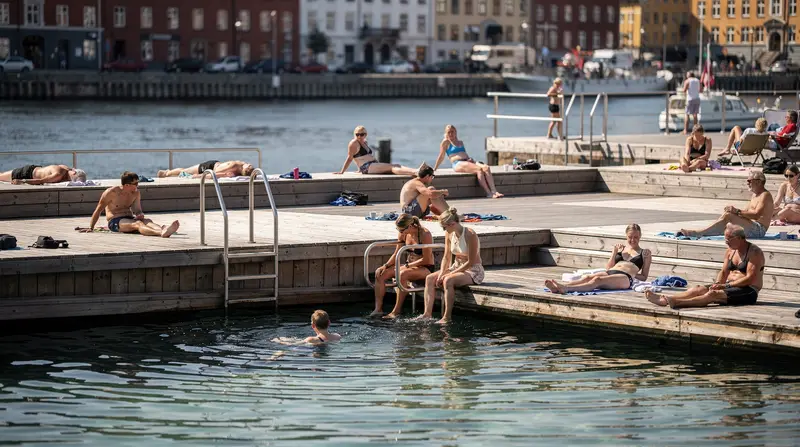
In summer (June through August), the harbour baths at Islands Brygge — five outdoor pools in the harbour, built on platforms over the water — create a visual scene that is specific to Copenhagen and widely photographed. Danes swimming in the harbour with the city skyline behind them, in water that is genuinely clean enough for regular swimming, photographs as both joyful and architecturally interesting.
Entry is free. The pools open at 07:00. Photographing from the floating dock rather than the land gives the best compositions.
There are several harbour bath locations around the city besides Islands Brygge — smaller ones at Fisketorvet and Sluseholmen — but Islands Brygge remains the most photographed because of the direct skyline backdrop across the harbour toward the city centre. Weekday mornings before the after-work crowd arrives (roughly 07:00–09:00) give you the calmest water and the fewest people in frame, if a clean composition matters more than capturing the social atmosphere.
7. Nørrebro’s side streets and Assistens Cemetery
Nørrebro is the most photographically varied neighbourhood in Copenhagen — a mix of street art, immigrant food culture, independent design shops, and the unexpected pastoral of Assistens Cemetery, where Hans Christian Andersen and Søren Kierkegaard are buried and where Copenhageners sunbathe and picnic among the graves.
The cemetery in spring (cherry blossoms along the allées in late April) is one of the most unexpected beautiful scenes in the city. See our Nørrebro guide for a fuller walking route through the neighbourhood.
The distinctive shot: A cemetery where people are actively using it as a public park — blankets, bicycles, children playing — while the gravestones of the famous are integrated into the landscape without barriers or ropes.
8. The private photographer tour option
If photography is the primary reason for your visit, a guided photography tour with a local photographer gives you access to spots, timing knowledge, and composition guidance that a map cannot provide.
private Copenhagen photography tour with a local photographerThese tours typically cover three to five locations in three hours, timed for good light, with attention to the spots that are less tourist-documented.
Practical notes for Copenhagen photography
Equipment: A 24-70mm equivalent lens covers most Copenhagen photography — the canal scenes, the rooftop views, the street shots. A longer focal length (70-200mm) is useful for compression shots of cycling traffic and for isolating architectural details of church spires and facades.
Weather: Overcast days in Copenhagen produce beautiful, soft light that works well for architecture and street photography. Bright midday sun creates harsh shadows on canal facades. The best light is at golden hour — which in summer means very early morning and late evening, and in winter occurs in the afternoon.
The cycling problem: Copenhagen cycling traffic is fast and dense. If you want sharp images of cyclists on the main cycling lanes, use a shutter speed of at least 1/400s. The main cycling thoroughfares (Nørrebrogade, Dronning Louises Bro, Torvegade) have the highest traffic volumes and the most compositionally interesting cycling scenes.
For sunset-specific spots beyond the ones covered here, see our Copenhagen sunset rooftops guide.