Copenhagen at sunset — the best rooftops and viewpoints
Copenhagen is a flat city on a flat coastline, which sounds like bad news for sunset viewpoints. It is, in the obvious sense — there are no hills, no dramatic escarpments, no natural high points. What Copenhagen has instead is a collection of carefully constructed elevated positions: towers built for astronomy, a waste-to-energy plant with a ski slope on its roof, a church with an external spiral staircase, and a handful of rooftop bars that have figured out what visitors want.
Here is what actually works for sunset, ranked by what the view delivers and what it costs.
| Best overall | CopenHill (Amager Bakke rooftop) |
| Best historic view | Rundetårn — see our Round Tower guide |
| Best without elevation | Islands Brygge harbour waterfront |
| Typical tower entry | 40–65 DKK |
| Best months for tower timing | May and September |
CopenHill — the best view in the city
CopenHill (the Amager Bakke waste-to-energy plant, completed in 2017) has an 85-metre artificial ski slope on its roof and a rooftop terrace café that is accessible without a ski pass. From the top, the view extends across the flat Copenhagen cityscape to the north, the Øresund strait and Sweden to the east, and the harbour and Christianshavn to the west.
This is the highest accessible outdoor viewpoint in Copenhagen proper. The fact that most people do not know about it means there is no queue, no timed entry, and no photograph-competition at the railing.
Sunset timing: The building faces northwest. In summer (May-August), the sun sets over the city between 21:00 and 22:00, which means the sky behind the Copenhagen skyline turns the full range of orange and pink with the city silhouetted against it. This is the most dramatic sunset view available in Copenhagen.
Access: Bus lines 2A and 5C from the city centre, or a short taxi/ride-share. The ski slope and café operate until late evening in summer. The café on the terrace serves drinks and light food; expect 80-130 DKK for a drink.
CopenHill ski pass and gearRundetårn (The Round Tower) — the city roofline
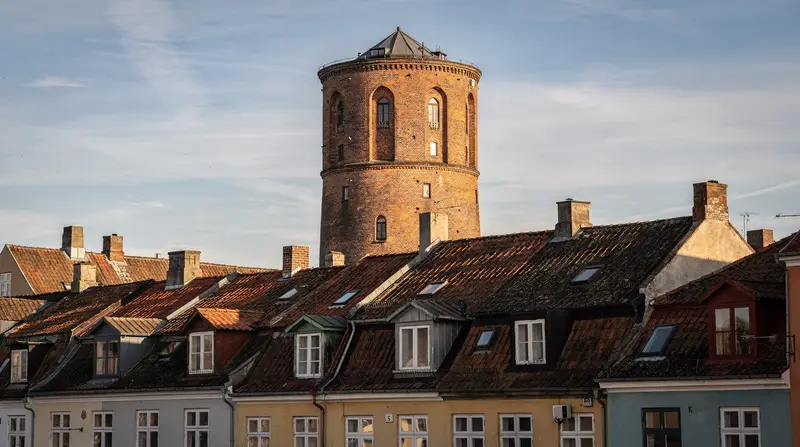
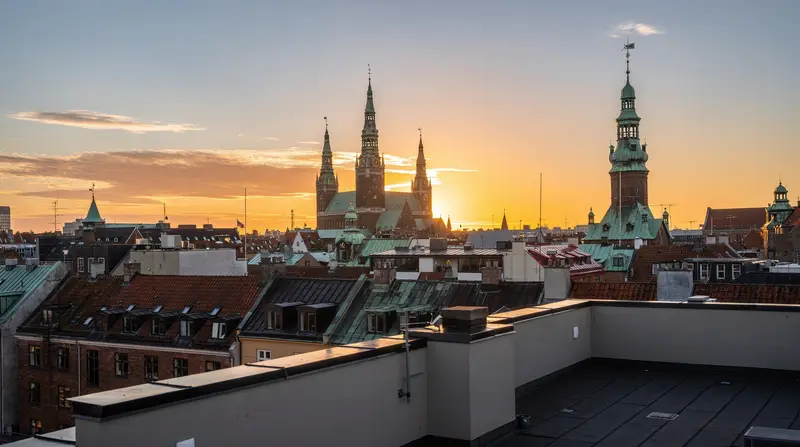
At 35 metres above street level, the Round Tower’s open observation parapet is not the highest point in Copenhagen, but it is the best positioned for the historic city roofline. From the top, you look across the copper-patinated spires of the Domkirke, Vor Frelsers Kirke, and Frederiks Kirke — the three great church towers of central Copenhagen — with the flat harbour behind them.
Entry: approximately 40 DKK.
Sunset timing: The tower faces in all directions (open parapet, 360-degree access). The best light for photographing the church spires is from the west-facing side in late afternoon. In summer, the tower stays open until 20:00 — which catches the best light in June and July but misses the actual sunset, which occurs at 21:00-22:00. In May, with sunset around 20:30-21:00, the timing is more workable.
Round Tower with guided secrets tourBest months for tower sunsets: May and late August/September, when sunset occurs earlier and aligns with the tower’s closing time.
Vor Frelsers Kirke — the external spiral staircase
The Church of Our Saviour in Christianshavn has an external gilded spiral staircase around its spire. You climb 400 steps to a small platform near the top at approximately 90 metres above street level — the highest accessible point in Copenhagen if you count this church.
Entry: approximately 65 DKK for the tower climb.
The view: Similar to Rundetårn but higher and with better views toward Christianshavn and the harbour. The external spiral staircase means the climb becomes more exposed as you ascend — the final section has no enclosed protection, which is part of the appeal and part of the deterrent for those with vertigo.
Sunset timing: The tower is open until 19:30 in summer, which catches late afternoon but not the actual sunset in June-July. In May and September, the timing aligns more closely with sunset conditions.
The distinctive image: Shooting back down the external spiral staircase, with Copenhagen spread below and the staircase curling away from you, is the most unusual architectural photography shot available at any Copenhagen viewpoint.
The harbour and Islands Brygge at sunset
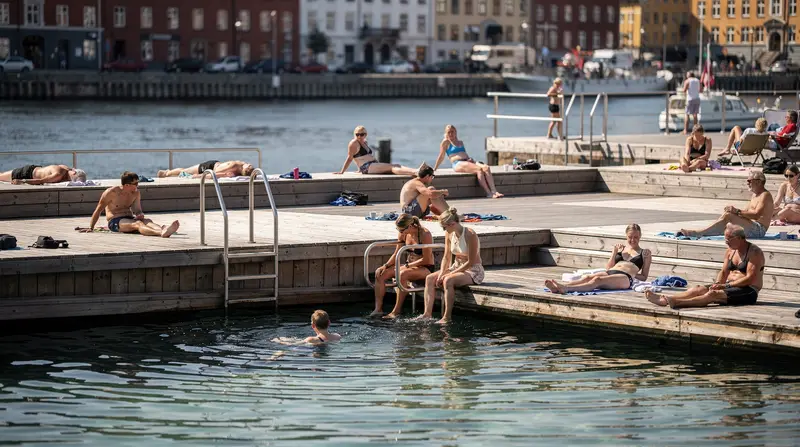
For sunset without elevation, the waterfront at Islands Brygge offers a different kind of view: the harbour bath pools (in summer), the Copenhagen skyline across the water, and the specific quality of northern evening light reflecting off the harbour surface.
The sun sets over the city from this vantage point — meaning you look west across the water and see the skyline lit from behind, which gives a different visual effect than looking at the skyline from within it.
What to look for: The silhouette of the Christianshavn area — Vor Frelsers Kirke’s spiral spire is visible — against the evening sky. In summer, the harbour baths are still in use at sunset, adding the unusual visual of swimmers in harbour water with the city behind them.
Access: 5-minute cycle from central Copenhagen, or metro to Islands Brygge station.
Langelinie and the harbour entrance
Walking north from Nyhavn along the Langelinie promenade (past the Little Mermaid and Kastellet) brings you to the harbour entrance, where the water opens toward the Øresund strait. Looking east from this point at sunset means looking toward Sweden with the low autumn or spring sun behind you catching the water surface.
This is not a dramatic viewpoint — there is no elevation — but the harbour light at sunset from Langelinie is the most reliably beautiful urban waterfront view in Copenhagen. In summer, sunset at this location comes after 21:00, which means the full evening light hits the water in the window when most visitors have stopped sightseeing.
Hotel rooftop bars
Several central Copenhagen hotels have rooftop bars with city views. These charge bar prices (130-200 DKK for a drink) but require no separate entry fee for the viewpoint. The view is secondary to the bar experience, and the elevations involved are typically five to eight floors — better than street level, not competitive with CopenHill or the church towers.
The Radisson Blu Royal Hotel (designed by Arne Jacobsen, 20 floors) is the most architecturally significant hotel viewpoint in Copenhagen. The bar is open to non-guests. The view north toward the city centre includes the Tivoli gardens below — an unusual top-down perspective on a city landmark.
Practical timing by season
| Period | Sunset time | Best viewpoint |
|---|---|---|
| June–July | 21:00–22:00 | CopenHill, harbour waterfront (towers close too early) |
| May / August | 20:00–21:00 | Rundetårn, Vor Frelsers Kirke |
| September | 19:30–20:00 | All towers, best light of the year |
| October–March | 15:30–18:00 | CopenHill (ski-slope schedule), Rundetårn late afternoon |
June-July: Sunset at 21:00-22:00. Extraordinary long-day light but most viewpoints close before the actual sunset. CopenHill and the harbour waterfront are the practical sunset options at this time of year — this is also peak season for Copenhagen’s northern summer nights, which extends the usable light well past sunset itself.
May/August: Sunset at 20:30-21:00 in May, 20:00-20:30 in August. Better alignment with opening hours of the Round Tower and church towers. The light quality is slightly more golden and directional than midsummer.
September: Sunset at 19:30-20:00. All tower viewpoints accessible before closing. The light is the most dramatic of any month — low-angle, warm, catching the copper spires of the churches from the west.
October-March: Sunset from 15:30 (December) to 18:00 (October/March). CopenHill is the most practical sunset viewpoint in winter as it operates on a ski slope schedule. The Round Tower is accessible in the late afternoon during winter.
For a broader seasonal comparison of what Copenhagen offers beyond sunset light, see Copenhagen in summer.
The summer white nights
Something that guides sometimes overlook: in June, Copenhagen does not get truly dark at night. Civil twilight (when you can see clearly outdoors without artificial light) lasts until approximately 23:00. This means the entire evening in June and early July is a form of extended golden hour — the sky cycles through sunset colours slowly, the light on canal surfaces stays extraordinary for hours, and the city operates under an atmospheric condition that has no equivalent in more southerly European destinations.
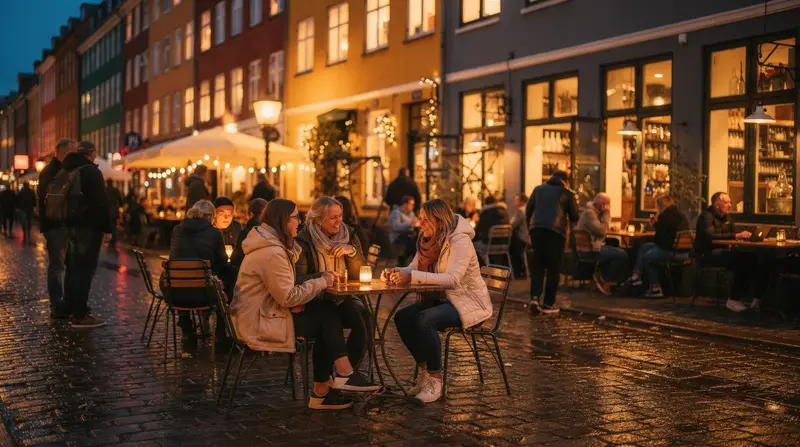
If you are visiting in June and treating it as “normal evening” from 20:00 onwards, you are missing the best light. Walk along the canals or sit at the harbour from 20:00 to 22:00 and you will understand why Copenhageners stay outside in summer until midnight.
Pairing sunset with your evening
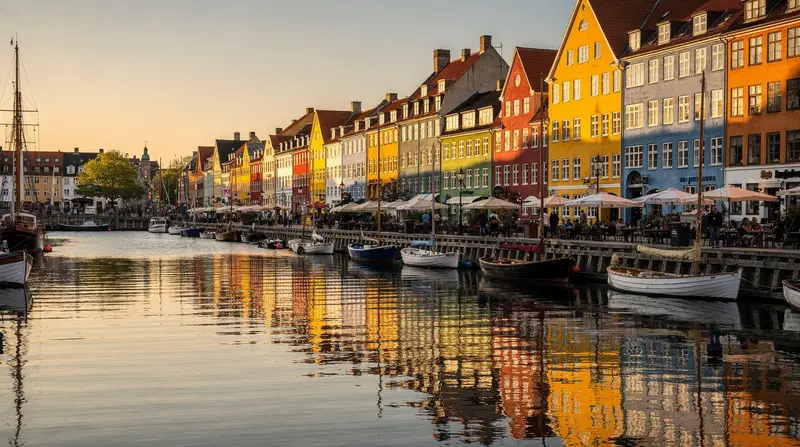
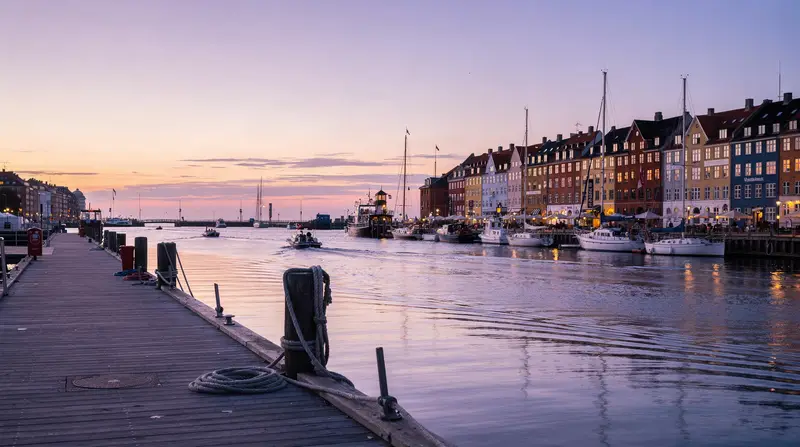
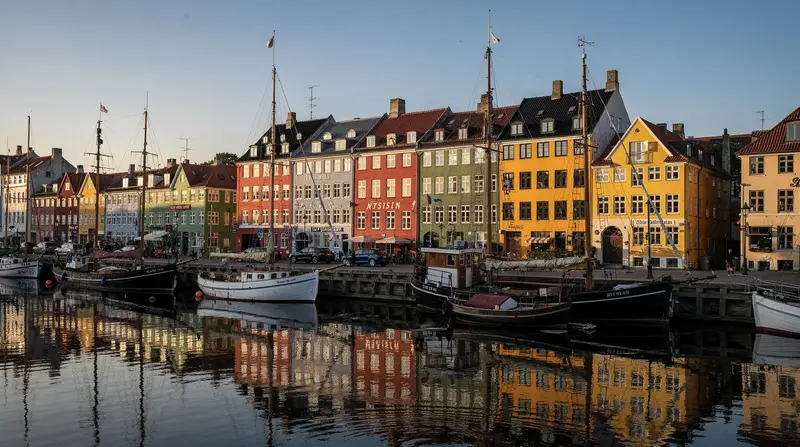
Nyhavn itself is not a sunset viewpoint by the standards of this list, but it is worth timing your visit around the light — our Nyhavn timing guide covers when the crowds thin out. After sunset, several of the neighbourhoods near these viewpoints — Vesterbro in particular — turn into the city’s best nightlife districts, so a sunset spot and a dinner or bar plan can share a single evening without much extra travel. For more photogenic corners of the city beyond the viewpoints on this list, our most Instagrammable spots in Copenhagen rounds out the visual side of a trip.