Malmö by Train from Copenhagen: What the Day Actually Looks Like
Leaving Denmark Takes Twenty Minutes
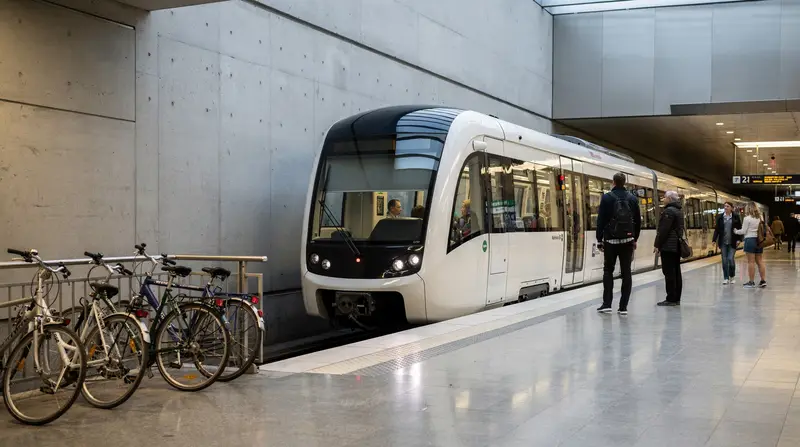
We had been told that crossing from Copenhagen to Malmö by train takes twenty minutes. We checked the clock when the train pulled out of Copenhagen H and checked it again when we arrived at Malmö Centralstation. Nineteen minutes. The Øresund crossing is genuinely that fast.
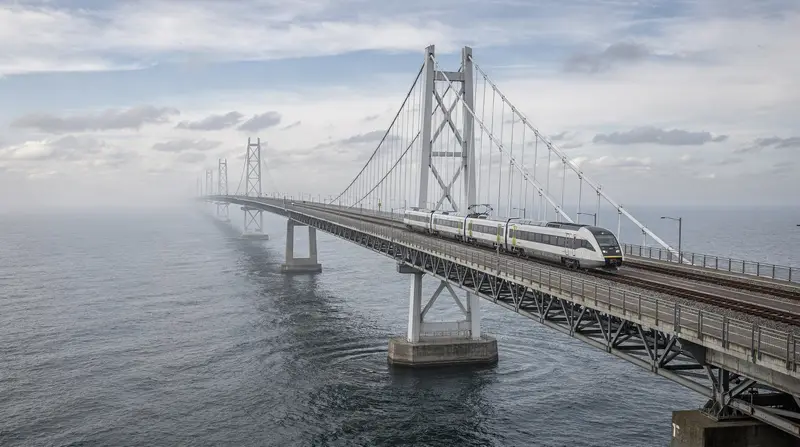
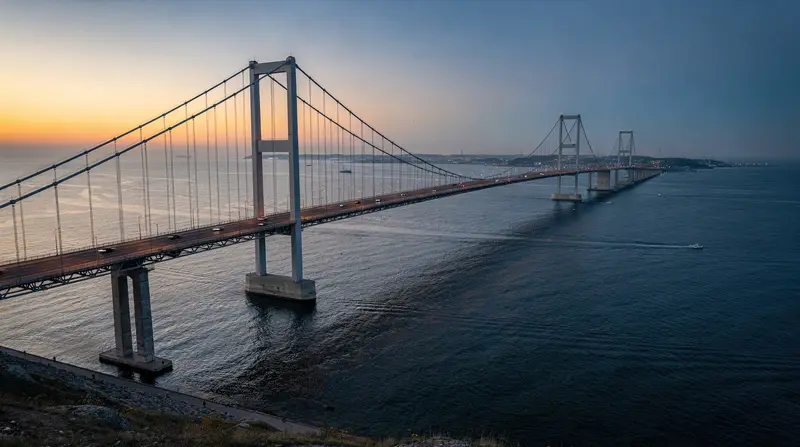
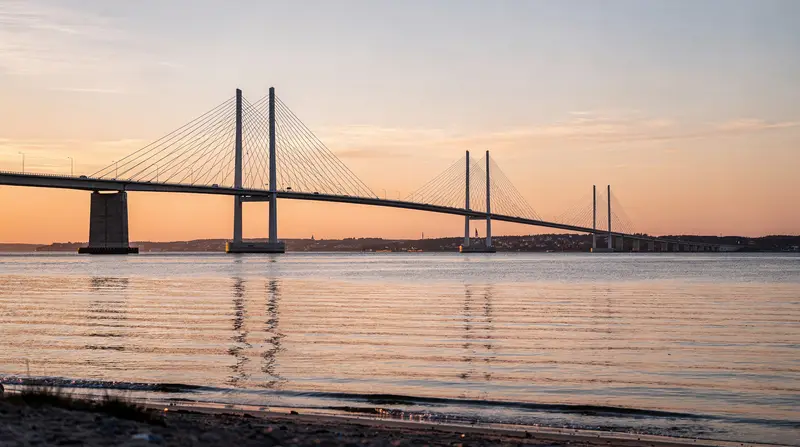
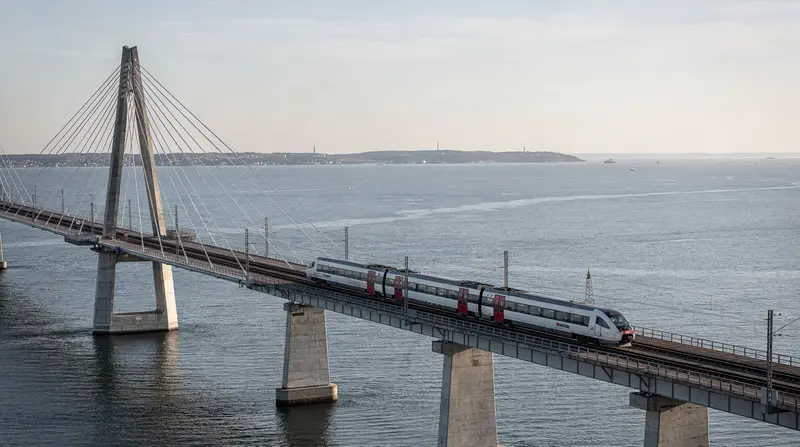
What happens in those nineteen minutes: the train leaves the central station, goes underground briefly, surfaces, and then begins the approach to the bridge. There is a moment when the train is elevated above the Øresund strait and Copenhagen is receding behind you and Sweden is ahead. The water is wide and grey-green. If the light is good, you can see boats. If you sit on the right side of the train (westward side), you get the better water view.
The bridge itself is 7.8 kilometres long. The train rides it in about eight minutes. Then an underwater tunnel section and Malmö Centralstation arrives. Two countries, four currencies (we carried both DKK and SEK), one very ordinary regional train.
| Where | Malmö, Sweden — 19 min by train from Copenhagen H |
| Cost | around 112 DKK return (Zone 1 to Malmö) |
| Time needed | Full day, or a relaxed half-day |
| Getting there | Øresund train, several departures per hour |
| Currency | Swedish krona (SEK) — cards widely accepted |
For the wider comparison of a full-day trip versus a shorter crossing, see our Malmö day trip guide and the Øresund Bridge guide on the engineering and history of the crossing itself.
The Ticket Question
The Øresund train crosses a national border and a currency boundary. This creates mild confusion about how to pay.
From the Copenhagen side: Buy a ticket from Copenhagen H to Malmö C at the DSB (Danish Railways) machines in the station. Cost: approximately 112 DKK return (Zone 1 to Malmö) as of 2026. The Copenhagen Card does not cover the Swedish section — the card is valid to the border, and from there you need a separate ticket. The machines sell the through ticket. This is the cleanest option.
From the Malmö side (on the return): The Öresundståg (Swedish side of the same train network) sells tickets in SEK. The return portion bought from Denmark will cover you. Keep your ticket.
Important: There are no border controls. You walk on, sit down, and travel. No passport check for EU/EEA citizens, though technically you have crossed an international border. Non-EU visitors should carry their passport as standard practice.
Arriving in Malmö
Malmö Centralstation is large and slightly confusing at first — it was renovated around 2020 and the passenger flow is still not quite intuitive. Exit toward the city centre (follow signs for Centrum) and you emerge onto a wide boulevard.
The city is immediately quieter than Copenhagen. Lower buildings. Less density. The pace of people on the street is noticeably slower, which sounds like a cliché about Scandinavian cities but is actually perceptible within the first ten minutes.
We had no map and no plan, which turned out to be the right approach for the first hour.
Stortorget and Gamla Stan
Ten minutes’ walk from the station brings you to Stortorget, the main square. The square is large, bordered by the city’s town hall (a red brick building with Dutch Renaissance influences) and a ring of shop fronts. In summer, outdoor seating spreads across the square and the atmosphere is genuinely pleasant.
Adjacent to Stortorget is Lilla Torg (Small Square), which is arguably more charming — surrounded by timber-framed sixteenth-century buildings, with restaurants and bars that spill outside in warm weather. We had lunch here: a Swedish open-faced sandwich (smörgås, analogous to Danish smørrebrød but lighter) with gravlax and dill, and a glass of Swedish cider. Cost: approximately 185 SEK per person, which at the current exchange rate worked out to around 160 DKK. Comparable to Copenhagen.
The Gamla Stan district surrounding these squares is dense with independent boutiques and the kind of shops that sell Swedish design objects you will regret not buying. Set aside an hour.
The Turning Torso and Western Harbour
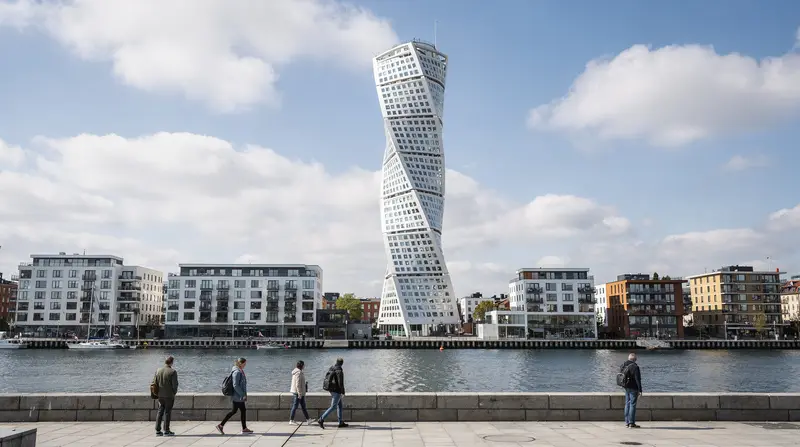
From Stortorget, it is a 25-minute walk to the Western Harbour (Västra Hamnen) — the regenerated former shipyard district and home to the Turning Torso, Santiago Calatrava’s twisting residential tower that is now the most recognisable building in the Malmö skyline.
The walk is not particularly scenic until you get there. Once at the harbour, the waterfront path is pleasant. The Turning Torso is 190 metres tall and visible from far away — up close, it is more interesting, with each section of the building rotated 1.6 degrees from the one below so the total twist from base to top is 90 degrees.
The Western Harbour has good café options — Form/Design Center has a café worth stopping in — and the water views across to Denmark are good on clear days.
Walk back via the harbour promenade for variety. The route passes the Kockums crane sculpture (a 140-metre cantilever crane left over from the shipyard era, now a cultural monument) and several pieces of public art.
What Malmö Is and Is Not
Malmö is sometimes pitched as a city that competes with Copenhagen. It does not. Malmö has a population of roughly 350,000 versus Copenhagen’s 800,000. The cultural offering is smaller. The restaurant scene, while genuinely good in parts, does not match Copenhagen’s depth.
What Malmö offers that Copenhagen does not: a different national character in close proximity. Swedish urban design feels slightly different from Danish — quieter, wider streets, less immediately hip. The food culture diverges: Swedish cuisine has its own specifics (crispbread, surströmming for the brave, IKEA aside). The commercial landscape is distinct — different shops, different chains.
For a one-day visit, Malmö is worth crossing for. As a comparison to Copenhagen over a longer trip, it is illuminating. As a substitute for Copenhagen, it is not the same thing.
The comparison is also useful for a different reason: it recalibrates what “expensive” means in Scandinavia. Travellers who find Copenhagen pricey often expect Malmö to be dramatically cheaper. It is somewhat cheaper, but not dramatically so — Sweden is not a budget escape valve from Denmark, just a slightly gentler version of the same broadly high Nordic cost of living.
Eating in Malmö: SEK Reality
Currency note: Sweden uses the Swedish krona (SEK), not DKK. At current rates, 100 SEK ≈ 85 DKK ≈ 9 EUR. Prices in Malmö are slightly lower than Copenhagen at the equivalent level — a café lunch runs 160–220 SEK (135–190 DKK). Card payment is universally accepted and preferred; many places are completely cash-free.
Lilla Torg area is the most tourist-convenient but prices reflect that. Better value in the Möllevångstorget area (a 20-minute walk from the centre), where the market and surrounding restaurants cater to Malmö’s more local, multicultural population. Budget 120–160 SEK for a good lunch there.
Falafel and Middle Eastern food: Malmö has a significant Middle Eastern population concentrated in Möllevången. The falafel here is widely cited as among the best in Scandinavia — 60–80 SEK for a wrap.
The Guided Tour Option
If you want narrative context — architecture, history, the story of the Øresund integration project, what Malmö was before the bridge — a guided day trip adds structure. The Copenhagen to Malmö private highlights trip by train covers the main sights with a guide who can explain the context. More expensive than the independent version, worth it for people who want to understand what they are seeing.
The Øresund Bridge tour to Lund and Malmö adds the university city of Lund (30 minutes further north) for a longer day covering two Swedish cities — see our Lund day trip guide if you want to plan that extension independently.
Should You Go?
Yes, if you have a spare day and the Øresund crossing interests you. The train journey alone — the bridge crossing, the speed, the country change without ceremony — is worth experiencing. Malmö as a city adds a day of pleasant walking, good food, and the specific atmosphere of a medium-sized Swedish city doing well.
No, if you are on a tight schedule and have not yet done Kronborg or Louisiana or Roskilde. Those have more concentrated sightseeing value per hour. Malmö is an addition to a Copenhagen trip, not a priority replacement. If you want to build it into a structured itinerary rather than a spontaneous day, the Copenhagen-Malmö combo itinerary lays out a full plan.
For the train logistics in detail, see our Copenhagen to Malmö train guide and the Øresund Bridge guide.