Copenhagen vs Amsterdam: An Honest Debate (With a Verdict)
The Question Is Fair But Requires Honesty
Copenhagen versus Amsterdam is one of the more common city-break comparisons asked of anyone who has spent time in northern Europe. They share obvious similarities — canals, cycling culture, compact historic centres, expensive hotels, strong food scenes. They are also meaningfully different cities, and the answer to which is “better” is almost entirely dependent on what you are looking for.
This piece is going to argue for both cities honestly and arrive at a real verdict, not the “it depends” non-answer that most comparison articles use to avoid committing to anything. So: some disclosure. The writer has spent significant time in both cities and holds views. They are presented as views, not facts.
| Category | Edge |
|---|---|
| Architecture and canal heritage | Amsterdam |
| Crowds and tourism management | Copenhagen |
| Cycling experience | Copenhagen (narrowly) |
| Budget options | Amsterdam |
| Food quality overall | Copenhagen |
| Nightlife | Amsterdam |
| Museums (single-visit weight) | Amsterdam |
| Design in the everyday | Copenhagen |
| Day trips | Copenhagen |
Full reasoning for each category is below; see also our dedicated Copenhagen vs Amsterdam guide for the more practical, logistics-focused version of this comparison.
The Canal Argument
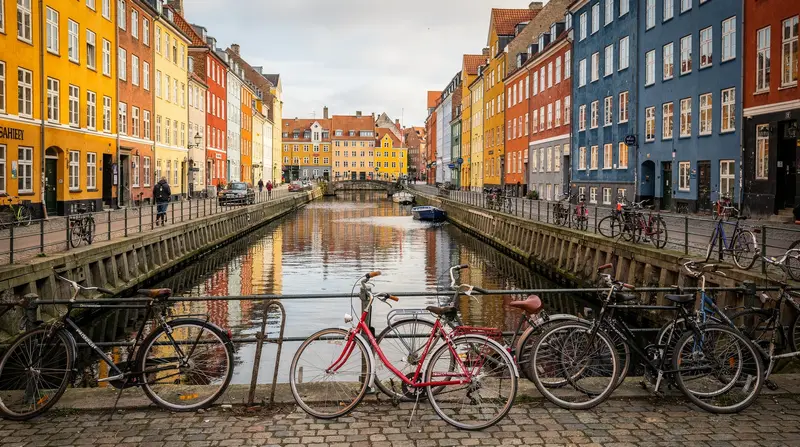
Both cities have canals at the heart of their urban identity, but the canals operate differently. Amsterdam’s canal ring is a UNESCO World Heritage Site — a carefully planned, ring-shaped system built over three centuries of Dutch Golden Age expansion, lined with narrow gabled houses that lean at various angles. The visual is iconic and the density of beautiful architecture per square metre is extraordinary.
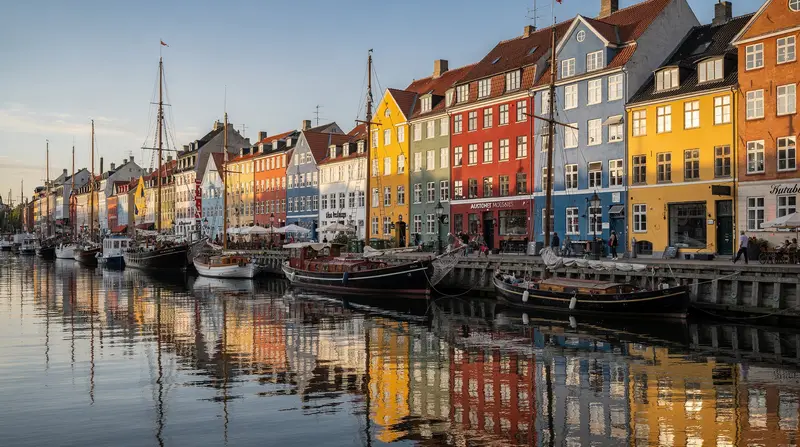
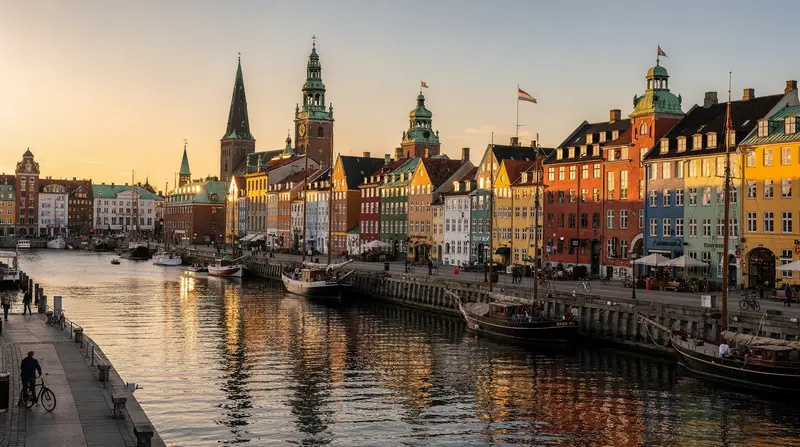
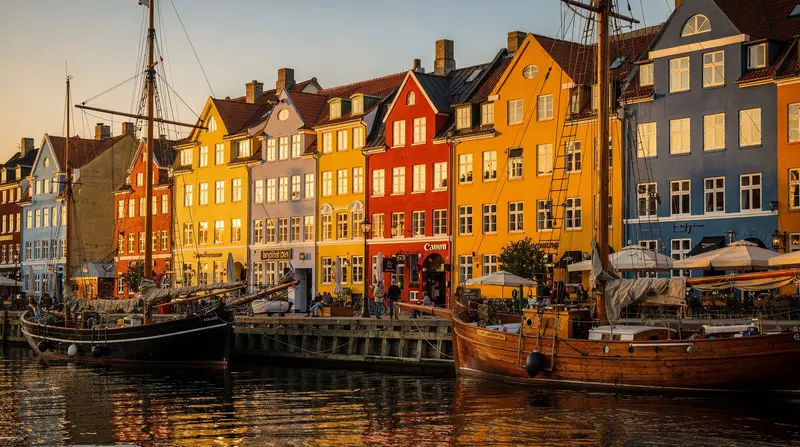
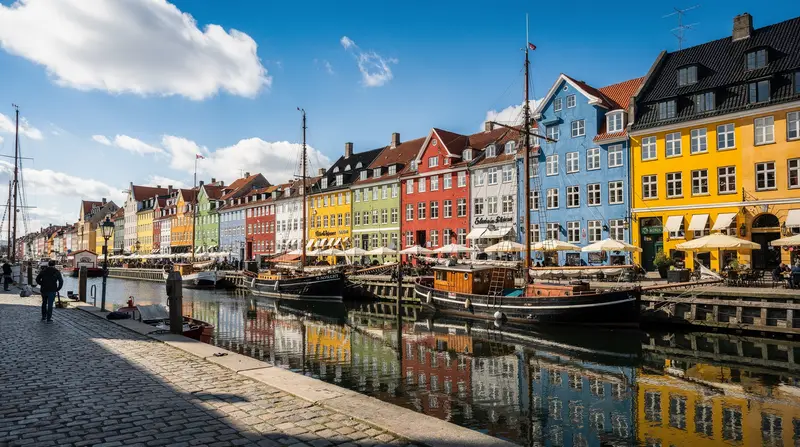
Copenhagen’s canals are younger and less architecturally overwhelming, but they are perhaps more functional as a recreational asset. People swim in Nyhavn in summer. GoBoats (self-drive electric boats) can be rented and taken through the harbour. The harbour baths at Islands Brygge are a genuine urban beach. The canal system feels lived-in in a slightly different way — less postcard, more practical.
Edge: Amsterdam for architecture and heritage. Edge: Copenhagen for recreational use and not being overwhelmingly touristic.
Crowds and Tourism Management
Amsterdam has one of the most acute overtourism problems of any European city. The historic centre — particularly the canal ring and the Red Light District — is genuinely unpleasant on a summer weekend. The city has been implementing a series of anti-overtourism measures including a ban on new hotels in the city centre, restrictions on Airbnb rentals, and campaigns explicitly discouraging certain types of tourists. These are not symbolic gestures; they reflect real infrastructure strain.
Copenhagen is crowded in summer but has not reached the same level of structural tourist saturation. Nyhavn is the obvious bottleneck — it can feel uncomfortably crowded on a peak summer Saturday — but other neighbourhoods remain functional. Nørrebro, Vesterbro, and Frederiksberg retain a genuine resident character that is increasingly hard to find in comparable Amsterdam neighbourhoods.
This distinction matters for how you experience a city. If you want to wander without feeling like you are in a managed tourist experience, Copenhagen currently offers more of this than Amsterdam.
Edge: Copenhagen, clearly and increasingly.
Cycling
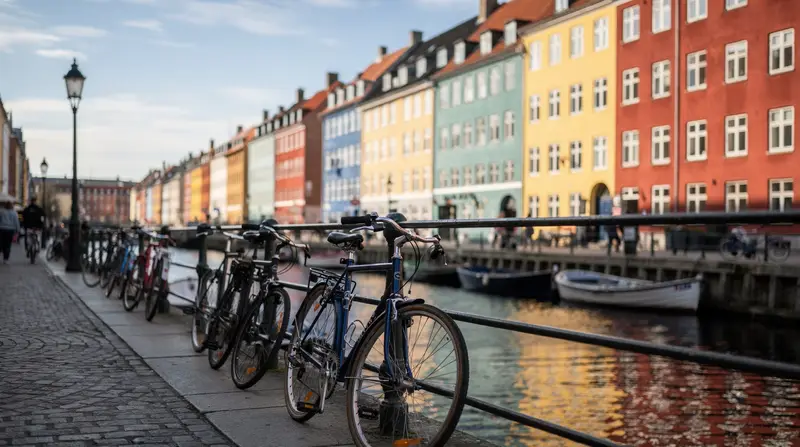
Both cities are famous for cycling. Both have extensive cycling infrastructure. Both cultures treat the bicycle as primary urban transport rather than a leisure activity.
The differences are real but small. Amsterdam’s cycling infrastructure is denser in the absolute centre but chaotic in a way that can surprise tourists who cycle into tram tracks or one-way systems without warning. Copenhagen’s cycling infrastructure is more recently built and more logically organised in many parts of the city — the segregated lanes are wider, the signalling is clearer, and the traffic management is arguably more coherent.
For a tourist who wants to rent a bike and cycle the city for a day, both cities work well. The experience on Copenhagen’s flatter, more recently planned infrastructure is marginally more pleasant. Amsterdam’s historical street network was not designed for modern cycling volumes and it shows.
Edge: Copenhagen, narrowly.
Cost
Both cities are expensive. Neither is cheap. But the comparison is instructive.
In Amsterdam, accommodation in the historic centre has become extremely expensive partly because the city has restricted new hotel supply. A decent central hotel on a weekend runs €150–250 per room. Food in tourist-area restaurants is expensive and often mediocre. The city has pricing structures built for very high visitor volumes.
In Copenhagen, accommodation is also expensive — sometimes more so — but the food-to-price ratio in the better restaurants and cafés is significantly higher. You pay more for a good dinner in Copenhagen than in Amsterdam, but the dinner is more likely to actually be good. The café culture is more consistent. The coffee is better. Our is Copenhagen expensive guide breaks down exactly where the money goes if you want the full picture before booking.
If you are on a tight budget, neither city is a good choice, and if you must pick one, Amsterdam has more low-cost options in terms of cheap eats (particularly Indonesian food, one of Amsterdam’s genuine pleasures). If you are willing to spend, Copenhagen rewards the spending more consistently.
Edge: Amsterdam on budget options. Edge: Copenhagen on value at mid-to-upper spend.
Food
Copenhagen’s food scene has been globally significant for approximately 15 years since Noma’s influence began reshaping what fine dining could be. The New Nordic movement is real, it has spread beyond expensive restaurants into everyday food culture, and the result is a city where the baseline quality of ingredients and preparation is genuinely high.
Amsterdam’s food scene is interesting but inconsistent. The Dutch food tradition is not particularly celebrated — it is hearty and practical rather than refined. The city makes up for this with excellent Indonesian cuisine (Rijsttafel in Amsterdam is some of the best outside Southeast Asia) and a strong café culture. But the restaurant scene at the mid-range level is more variable than Copenhagen’s.
For a food-focused trip, Copenhagen is the stronger choice. For Indonesian food specifically, Amsterdam wins and it is not close.
Edge: Copenhagen for overall food quality. Edge: Amsterdam for specific cuisines (Indonesian, international).
Nightlife
Amsterdam has more of it, louder, later. The club scene is internationally significant — Shelter, De School before it closed, Melkweg, the Bitterzoet. The coffeeshop culture remains a draw for a specific kind of visitor. The nightlife economy is large and established.
Copenhagen’s nightlife is real but more contained. Meatpacking District (Kødbyen) in Vesterbro is the main cluster of bars and clubs and it is good — creative, young, interesting — but it does not compare to Amsterdam in volume or in the kind of late-night experimentation that has made Amsterdam famous in that context.
Edge: Amsterdam, by a significant margin, if nightlife is a priority.
Cultural Institutions
Copenhagen’s museum offering is strong without being globally dominant. The National Museum, SMK (National Gallery), Glyptoteket, Designmuseum Danmark, and Louisiana (technically a day trip to Humlebæk but extraordinary) constitute an excellent week of cultural visits. The architecture of the Black Diamond library and the Opera House are worth seeing.
Amsterdam’s major museums are world-class in a more globally recognisable way. The Rijksmuseum alone — with the Night Watch, the Vermeers, the entire scope of the Dutch Golden Age collection — is one of the great museum visits in Europe. The Van Gogh Museum is among the world’s most significant single-artist collections. The Anne Frank House is a different kind of experience, historically irreplaceable.
Edge: Amsterdam, on museum weight alone.
Design and Architecture
This is a category where the comparison is closer than the museums alone suggest. Copenhagen has a legitimate claim to being the world’s most design-literate city in terms of how design thinking has permeated everyday life — public transport design, urban furniture, the architecture of residential buildings, the visual identity of shops and cafés. The Designmuseum Danmark is one of the best design museums in Europe, and the tradition it documents (Danish modern, from Jacobsen and Wegner forward) is globally influential.
Amsterdam’s design scene is serious and internationally relevant — the Dutch design tradition, including Droog and more recent waves from the Design Academy Eindhoven, is among the strongest in the world. But it expresses itself less in the everyday fabric of the city and more in dedicated cultural institutions and the studio scene.
For visitors who care specifically about design — architecture, furniture, urban planning as a practice — Copenhagen is the more impressive city to walk around. The evidence is in the street furniture, the bike infrastructure design, the buildings. Amsterdam shows you Dutch design in museums; Copenhagen shows you Danish design in its actual operating environment.
Edge: Copenhagen for design in the everyday. Edge: Netherlands broadly for design education and studio practice.
Day Trips
Amsterdam has excellent day trip options — Haarlem and Leiden within 30 minutes, Delft and Rotterdam within an hour, the tulip fields of the Bollenstreek in spring. The Dutch rail network is efficient and extensive.
Copenhagen’s day trips are arguably more dramatic in individual terms. Kronborg Castle (Hamlet’s castle) at Helsingør is 45 minutes north. Roskilde with its Viking Ship Museum is 25 minutes west. The cliffs of Møns Klint are 1.5 hours away. The Louisiana Museum of Modern Art in Humlebæk is one of the finest in the world and 40 minutes by train. And then there is Malmö — a different country entirely, reachable in 35 minutes by train, adding a genuine Sweden experience to a Copenhagen trip.
Edge: Copenhagen for day trip variety and the unique Scandinavia-plus-Sweden dimension.
The Verdict
If you are visiting once: Amsterdam for the architecture, the museums, and the uniqueness of the canal experience. The tourist management problems are real but navigable if you visit in shoulder season (April, September, October) and stay in a neighbourhood rather than the absolute centre.
If you have already done Amsterdam: Copenhagen is the better choice for a second Scandinavian visit, and arguably the more interesting city for a repeat visit. The food is better, the overtourism is less acute, the cycling infrastructure is cleaner, and the city rewards unhurried exploration in a way that Amsterdam’s tourist saturation increasingly makes difficult.
If you care primarily about food: Copenhagen without hesitation.
If you care primarily about nightlife: Amsterdam without hesitation.
If you are visiting with a young family: Copenhagen is more manageable. The museums are more child-friendly by design, the cycling is safer, and the overall tourist density is lower.
Both cities are worth visiting. The choice between them on a single trip is less important than which one fits what you are actually looking for — and being honest with yourself about what that is.
One more practical factor worth weighing: timing. Amsterdam’s overtourism problems are most acute in peak summer; Copenhagen is more forgiving year-round but still has a distinct high season. Check the best time to visit Copenhagen before you lock in dates, especially if you are choosing Copenhagen partly to escape Amsterdam’s summer crowds.
For more on planning a Copenhagen trip, see the Copenhagen travel guide, first-time Copenhagen guide, or the Copenhagen vs Stockholm comparison. The Copenhagen vs Amsterdam guide covers the comparison in more practical detail.