Copenhagen on a rainy day — what to do when it is grey and wet
Copenhagen gets about 600 millimetres of rain per year, distributed across most months. July is actually wetter than December. If you are visiting for more than two days, there will be rain. The question is not whether it rains but whether you have a plan for it.
The good news: Copenhagen handles rainy days better than most European cities of its size. The concentration of world-class museums, covered markets, good cafés, and indoor cultural attractions within a compact area means that a rainy day is not a ruined day — it is a different kind of good day.
Here is what I do when I arrive and it is grey and wet.
| Best single stop | The Glyptotek winter garden |
| Best free option | Nationalmuseet (free since 2023) |
| Best with kids | Den Blå Planet aquarium |
| Typical museum entry | 120–180 DKK |
| Get around dry | Metro (M1–M4), fully underground |
Our best museums in Copenhagen guide is the wider list if you want more options beyond the rainy-day favourites below.
The Ny Carlsberg Glyptotek — the rainy day temple
The Glyptotek is the correct answer to “where do I go when it rains in Copenhagen?” It is not widely enough known outside Denmark, which means it is not crowded in the way that the National Museum can be.
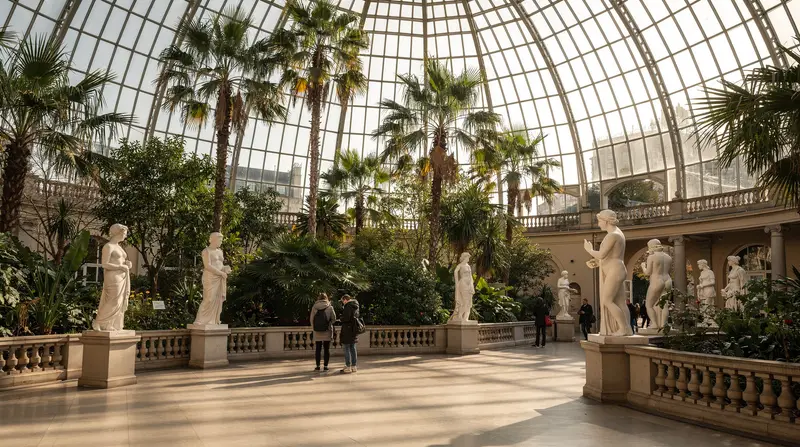
The collection occupies a late nineteenth-century building near Tivoli and covers Egyptian, Greek, Etruscan, and Roman antiquities alongside French and Danish nineteenth-century sculpture and painting. The centrepiece is a glass-roofed winter garden — a tropical garden inside the museum, with palm trees, fountains, and seating — that is the most pleasant indoor space in Copenhagen on a wet day.
Entry: approximately 120 DKK for adults. Free on the first Sunday of the month.
Allow two to three hours. The café in the winter garden serves good coffee (55 DKK) and light lunch (90-150 DKK). On a rainy afternoon, sitting in the Glyptotek’s winter garden with a coffee and the palms overhead and the rain on the glass ceiling is as close to the ideal Copenhagen indoor experience as I have found. Our full Glyptotek guide covers the collection room by room if you want to plan your visit in more depth.
SMK — Statens Museum for Kunst (The National Gallery)
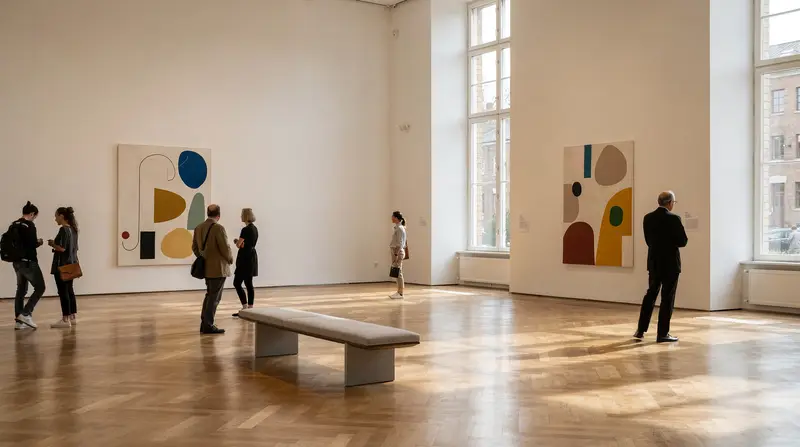
The SMK is Denmark’s largest art museum, in a building on the edge of the Botanical Garden. The collection spans seven centuries of European and Danish art, including the most comprehensive collection of Danish Golden Age painting outside private collections.
Entry: 120 DKK for adults (free for under-27s, which is an unusually generous policy). Free on Wednesdays.
The building connects a nineteenth-century neoclassical structure with a 1998 modernist extension — the passage between them is architecturally interesting in itself. The Danish collection — Eckersberg, Hammershøi, Krøyer — is the reason to come. Vilhelm Hammershøi’s grey interiors of Copenhagen apartments, painted in the 1900s, look particularly appropriate when it is raining outside.
Allow three hours for a thorough visit; two hours for the Danish collection plus the current temporary exhibition.
Nationalmuseet (The National Museum of Denmark)
The National Museum covers Danish history from the Stone Age through the twentieth century, plus a substantial world cultures collection. It is housed in a former royal palace near Christiansborg.
Entry: free since 2023. This makes it the most significant free attraction in Copenhagen — the collection is genuinely excellent and the building is magnificent.
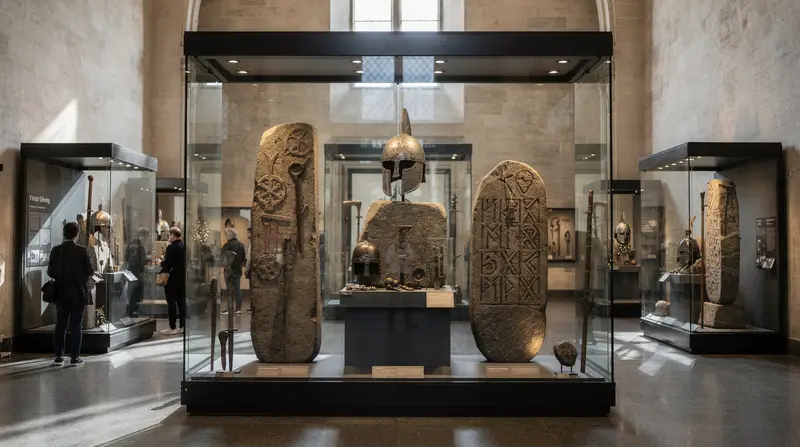
What to see in three hours if you cannot do more: The Danish Prehistory collection (Stone Age, Bronze Age, Iron Age — the Golden Horns, the Trundholm Sun Chariot, the Gundestrup Cauldron are among the most important archaeological objects in Northern Europe), the Viking Age section, and the Danish Middle Ages floor.
The Children’s Museum in the basement is one of the best-designed children’s museum spaces I have seen in any European national museum — interactive, well-resourced, and genuinely engaging for children aged 4-12.
Rainy day practical note: the museum’s café is average. Eat at Torvehallerne (10-minute walk) before or after. See our National Museum of Denmark guide for a fuller room-by-room plan.
Torvehallerne — the covered market
The covered market at Nørreport (two glass-and-steel halls) is the most functional rainy-day food destination in Copenhagen. Two hundred stalls and vendors under cover, selling everything from smørrebrød components to freshly baked pastries, coffee, fresh produce, cheese, charcuterie, and prepared food.
This is not a food court — it is a proper market with serious vendors. The smørrebrød at the Hallernes Smørrebrød counter is among the best in the city: a plate of three open sandwiches (pickled herring, smoked salmon, and pork belly with remoulade) runs approximately 180-220 DKK. The coffee at the Coffee Collective stand is excellent (55-65 DKK).
The market is covered and heated. On a rainy day, it functions as both lunch destination and an hour of unhurried browsing. Combine with the SMK or the National Museum for a full indoor morning. Our Torvehallerne market guide lists the individual stalls worth seeking out.
Designmuseum Danmark
The Designmuseum occupies an eighteenth-century hospital building in Frederiksstaden. The collection covers Danish and international design from the industrial revolution through the present — industrial design, fashion, graphic design, furniture, applied arts.
Entry: approximately 145 DKK.
The permanent collection includes the canonical objects of Danish design: the Wegner Wishbone Chair, the Jacobsen Egg and Swan chairs, the PH lamp series, the Bodum cylinda coffee pot. For anyone interested in twentieth-century design, this is one of the most concentrated and well-presented collections in Europe.
Rainy day benefit: The museum is not large — you can cover the permanent collection in ninety minutes to two hours — which makes it a good option for a half-day rainy afternoon rather than a full day.
Den Blå Planet (The Blue Planet National Aquarium)
The national aquarium is in Kastrup, a 10-minute metro ride from Copenhagen Central (direction Airport, exit Den Blå Planet station). The building is designed by 3XN and is architecturally significant — a spiral of radiating wings, each covered in diamond-shaped aluminium panels.
Entry: approximately 180 DKK for adults, 100 DKK for children (3-11).
Den Blå Planet aquarium ticketsThe aquarium is genuinely excellent by international standards — not just “good for a Danish aquarium.” The Amazon River section, the shark tunnel, the touch pools, and the Nordic fish section cover the range from tropical to temperate marine environments. Allow two to three hours.
This is the best rainy-day option if you are travelling with children. Combine with the metro journey (straightforward, under 10 minutes from the city centre) for a complete morning or afternoon.
The best cafés for a rainy afternoon
Copenhagen has more excellent cafés per capita than almost any European city outside Vienna. A rainy afternoon spent moving between one or two of them is not wasted time — it is the city working as intended.
Democratic Coffee (Krystalgade, Indre By): Third-wave coffee, good pastries, consistently excellent flat whites (55 DKK). Often recommended but for good reason.
La Glace (Skoubogade): Copenhagen’s oldest confectionery, founded in 1870. The cakes are formal Danish patisserie — layer cakes (lagkage), cream cakes, the famous Sportsmanscake. Sitting at a marble table at La Glace on a rainy afternoon with a cake and a coffee costs approximately 120-160 DKK and is a specific experience not reproducible elsewhere.
The coffee crawl option: If you have a full rainy day and café culture appeals, the best Copenhagen coffee guide covers the neighbourhoods and what each one offers, from Vesterbro’s specialty roasters to Nørrebro’s neighbourhood cafés. A walk between four or five good cafés covers ground while staying largely dry.
Practical rainy-day logistics
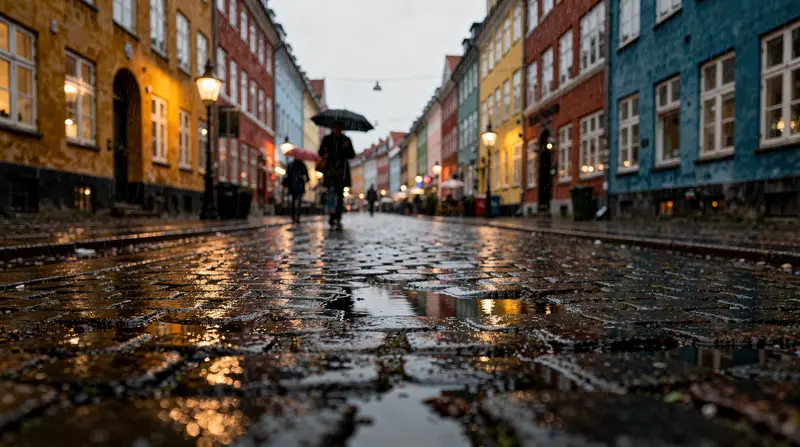
Waterproof footwear matters more than a umbrella: Copenhagen’s streets are paved stone and brick in many areas, which becomes slippery when wet. An umbrella in a cycling city is nearly useless — the cycle lanes run directly adjacent to the pavements, and a cyclist at speed will take out your umbrella. Waterproof shoes or boots are more useful.
The metro is your friend: All four metro lines (M1-M4) are underground and immune to rain. On a wet day, planning your itinerary around metro connections — airport to city to Nørreport to Christianshavn to Islands Brygge — keeps the outdoor walking minimal. A day pass costs approximately 160 DKK, or the Copenhagen Card covers transport.
Book museum tickets online: The National Museum (free) needs no booking. The SMK, Glyptotek, and Designmuseum benefit from online booking on rainy days when visitor numbers are higher than usual — queuing in the rain is avoidable.
The honest truth about Copenhagen rain
It is rarely torrential. Copenhagen rain is usually a steady drizzle rather than a downpour — the kind of rain that is more inconvenient than severe. The city’s café culture means there are places to stop every 200 metres. The museum concentration in the city centre means you rarely need to walk more than 15 minutes between indoor destinations.
I have had excellent Copenhagen days when it rained from morning to evening. The Glyptotek, lunch at Torvehallerne, SMK for the afternoon, a café in the late afternoon, dinner in Vesterbro — that is a full and good day, and it happens to be exactly what a rainy Copenhagen day looks like if you are prepared for it.
Rain and hygge, connected
There is a reason rainy Copenhagen days do not feel like wasted days: they map almost exactly onto what hygge actually is. A candle-lit café, no schedule pressure, warm light against grey weather outside — a rainy afternoon is, if anything, better suited to it than a bright one. Our best cafés for hygge guide is worth pairing with this list; several of the cafés it recommends double as good rain shelters between museum stops.