Copenhagen on 50 Euros a Day: What We Actually Spent
The Number Everyone Asks About
People see Copenhagen at the top of “world’s most expensive cities” lists and panic. We did too, briefly. Then we spent four days there on a strict 370 DKK per person per day — roughly 50 euros at current rates — and while it wasn’t always comfortable, it was absolutely doable. This is the honest breakdown.
One important caveat upfront: this figure covers food, activities, and local transport only. It does not include accommodation or the flights. If you stay in a hostel dorm (roughly 200–300 DKK per night) and cook the math differently, you can get your total daily spend much lower. We are treating 370 DKK as the spending money envelope once you are in the city.
| Daily target | Around 370 DKK/person (food, activities, local transport) |
| Not included | Accommodation, flights |
| Biggest risk | Nyhavn waterfront cafés, taxi rides |
| Best value move | Free museums + one paid splurge, not several |
| Full budget breakdown | See our Copenhagen on a budget guide |
Day One: Arriving Without a Plan (and Overspending)
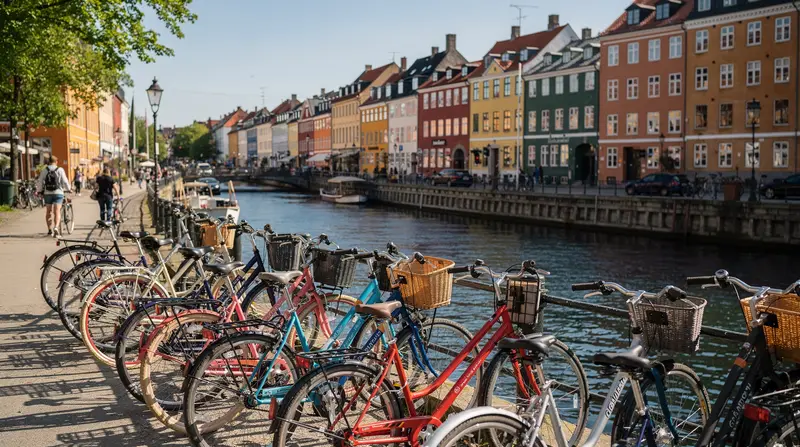
We landed on a Tuesday, took the Metro from CPH Airport to the city centre — 36 DKK each with a single-ride ticket on the Rejsekort card we loaded at the machine — and immediately made our first mistake. We were hungry and tired, and we walked into a Nyhavn café and ordered two open sandwiches and two beers. Total: 320 DKK for two people. That was not a smørrebrød lunch. That was a tourist-markup waterfront lunch, and we knew it as we paid.
Lesson one of Copenhagen on a budget: Nyhavn is for looking, not for eating. Walk past the coloured houses, admire the boats, take the photograph, then go around the corner to get actual food at actual prices.
We saved the afternoon by walking — the old town costs nothing. Kongens Nytorv, the long pedestrian street Strøget, the courtyard at Gammel Torv. Copenhagen’s architecture is good enough that wandering freely has real value. We also discovered that most of the city’s main church interiors are free. Vor Frue Kirke (the Cathedral), the Marble Church — both free entry, both worth ten minutes.
Day one total: 356 DKK per person. Slightly over because of that lunch. It happens.
What a Realistic Food Budget Looks Like
Let’s be concrete. Here is what 370 DKK per day needs to cover in terms of eating.
Breakfast: 35–60 DKK. A good rye bread with toppings from a Netto or Føtex supermarket costs almost nothing. If you want a bakery pastry — and you should have at least one proper wienerbrød — budget 30–45 DKK for that and a coffee. The chains Lagkagehuset and Ole & Steen have branches across the city, and a morning pastry plus filter coffee runs about 55 DKK. Worth it.
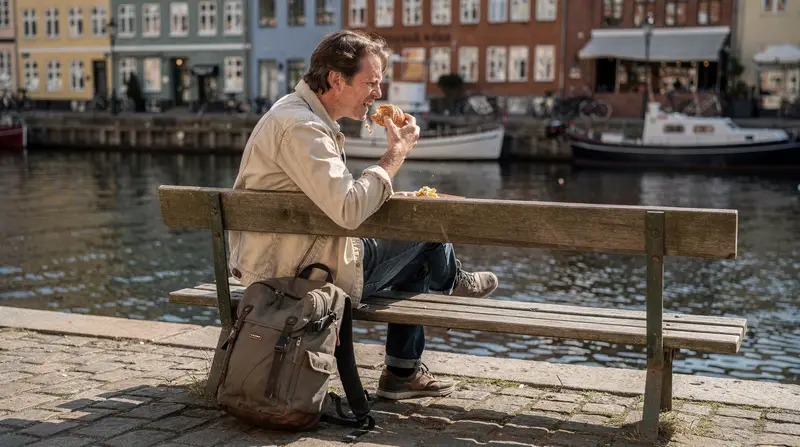
Lunch: 80–120 DKK. This is where Copenhagen surprises people. Hot dog stands — the classic Danish pølsevogn — serve a røde pølse (red hot dog with remoulade and fried onions) for 35–55 DKK. They are genuinely good, and Danes eat them. The central station area and near Rådhuspladsen have several. Alternatively, Torvehallerne market has a mix of price points. Not everything there is budget-friendly, but the Grød porridge bar (around 95 DKK for a filling bowl) and the coffee-and-a-sandwich combos from Hallernes Smørrebrød (around 110 DKK for two open sandwiches) are reasonable.
Dinner: 130–180 DKK. This is tight. Genuinely tight. The options are: cook in your hostel kitchen, Reffen street food market in summer (most dishes 80–130 DKK, no sit-down surcharge), ethnic restaurants in Nørrebro, or pizza. Kebab and falafel places on Nørrebrogade run 75–100 DKK for a filling meal. That is the honest Copenhagen budget dinner.
If you budget 250 DKK daily for food, you can eat decently without suffering. Leave 120 DKK for everything else.
The Free Things That Are Actually Good
Copenhagen is unusual among expensive European capitals in that its free attractions are genuinely worthwhile, not just consolation prizes.
Superkilen in Nørrebro is a public park designed to represent all the nationalities living in the neighbourhood — there are objects imported from 57 countries embedded in the space. It is strange, colourful, and excellent. Free.
The National Museum of Denmark (Nationalmuseet) is free. It covers Danish history from the Stone Age through to the twentieth century, with a notable section on the Viking Age. Allow two to three hours.
SMK (Statens Museum for Kunst) is free for the permanent collection. The permanent collection includes European old masters and a strong Danish Golden Age section. The temporary exhibitions cost extra.
Assistens Cemetery in Nørrebro is where Hans Christian Andersen and Søren Kierkegaard are buried. It functions as a public park — locals jog through it and eat lunch on the grass. Free, and genuinely pleasant.
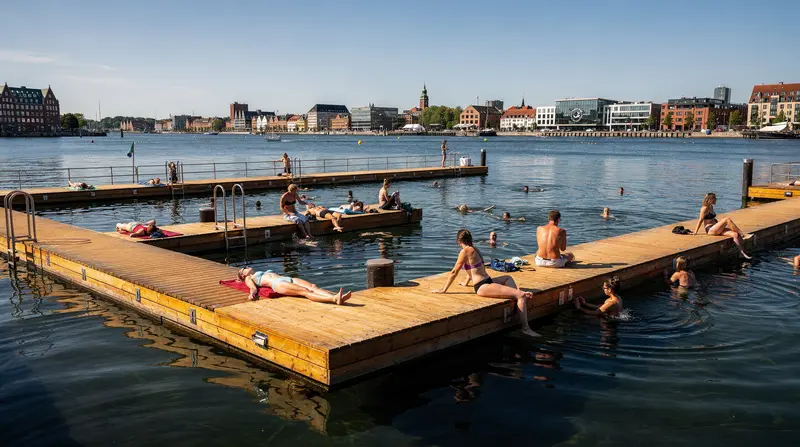
The harbour waterfront from Islands Brygge to the Black Diamond library is a long walk with good architecture, free harbour baths in summer, and no entrance fees at any point.
Activities That Fit the Budget
We had 120 DKK per day left after food. Here is how we used it across four days.
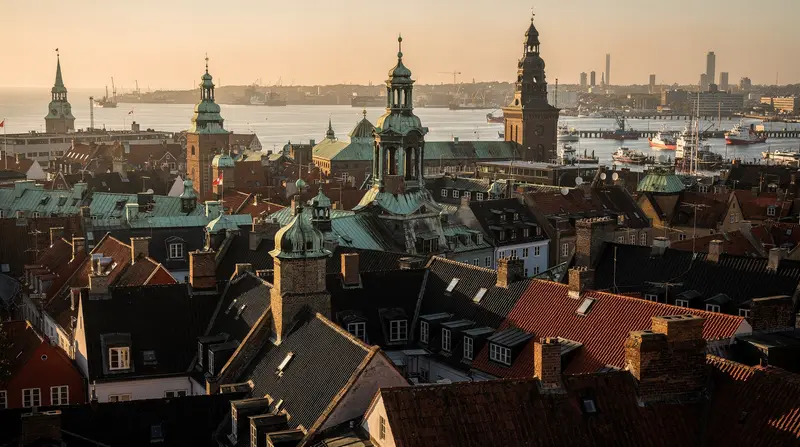
Rundetårn (the Round Tower): 40 DKK. Worth it for the view from the top and the spiral ramp that runs through the interior — it was built so the astronomer’s heavy equipment could be hauled up by horse and cart. Twenty minutes, great view.
Christiania: Free to walk through. You can spend money at the cafés and market stalls, but entry is free. We had a coffee at Café Nemoland (around 45 DKK) and walked the main drag. The atmosphere is singular and unlike any other neighbourhood in Copenhagen.
Rosenborg Castle: 130 DKK. This was over our daily activity budget, so we moved some numbers around. Worth it — the Crown Jewels are genuinely impressive, and the castle itself is a coherent example of Dutch Renaissance architecture. We used this as our splurge on day three.
Harbour swimming at Islands Brygge: Free. In summer, the harbour baths are open and the water quality is consistently good enough to swim in. This is one of the genuinely unusual things about Copenhagen — you can swim in the harbour of a major capital city.
The 750 DKK Warning
We cannot write about Copenhagen on a budget without mentioning the metro fine. The Copenhagen metro operates on an honour system — you must have a valid ticket or card, but there are no barriers. Inspectors operate regularly and the fine for riding without a valid ticket is 750 DKK. On a 370 DKK daily budget, that is two days of spending gone in one moment. Tap in and tap out every time.
What We Gave Up
Honesty matters. Here is what we did not do because it did not fit the budget.
Tivoli Gardens: entry from 135 DKK, unlimited rides from 320 DKK. Beautiful, genuinely good, not free. We walked along the outside at night and saw the lights through the fence. It is not the same, but it costs nothing.
Canal boat tours: typically 95–130 DKK for a one-hour cruise. We did one on day four when we had budget surplus from a cheaper-than-expected dinner.
Organised food tours: 350–600 DKK. Skip on a tight budget. You can eat your way through Torvehallerne and Reffen for much less.
The Actual Numbers
Four days, two people, 370 DKK per person per day target:
| Day | Actual spend per person |
|---|---|
| Day 1 | 356 DKK |
| Day 2 | 342 DKK |
| Day 3 | 398 DKK (Rosenborg + one café splurge) |
| Day 4 | 361 DKK |
| Average | 364 DKK |
We came in under 370 DKK on average. Copenhagen is expensive by European standards, and 370 DKK is a real constraint — but it is a real number, not a fantasy. You eat well enough, you see the city, you swim in the harbour, and you go home having spent less than the people who assumed the trip was impossible.
Practical Tips Before You Go
Keep a Rejsekort card loaded with enough credit to avoid the 750 DKK fine. Eat breakfast from supermarkets and save your food budget for one good lunch. Nørrebro and Vesterbro have the best value restaurants — wander away from the main tourist corridors. Buy your wine or beer at a supermarket in the evening — a bottle of Danish wine runs 60–90 DKK, compared to 90 DKK for a single glass in a bar.
Copenhagen is expensive. But it is not as expensive as the reputation suggests if you approach it with a plan.
For more context on the actual cost of specific activities, see our Copenhagen trip cost guide and our breakdown of free things to do in Copenhagen.
Does the Copenhagen Card Make Sense Here?
We looked at the Copenhagen Card before the trip and decided against it. The card bundles transport and entry to a long list of paid attractions, and it pays off if you are moving through three or four ticketed sights a day. Our itinerary leaned on free museums, free neighbourhoods, and one paid splurge (Rosenborg) across four days — the math simply did not favour the card at our pace. If your plan looks different, run your own numbers against the full budget breakdown before deciding.
Is Copenhagen Really as Expensive as People Say?
Our four days suggest the reputation is only half right. Copenhagen’s reputation for being expensive is earned on accommodation, alcohol in bars, and restaurant dinners — all things we minimised. It is not earned on museums (many are free), on the harbour and parks (all free), or on the specific budget food culture the city has quietly built around hot dog stands, bakery chains, and Torvehallerne. If your idea of Copenhagen is only the tasting-menu, cocktail-bar version, the city will feel unaffordable. If you eat the way locals actually eat day-to-day, it is a different city entirely. Our Copenhagen food bucket list covers the cheap-eats side of that in more detail.
Self-guided Copenhagen audio walking tour