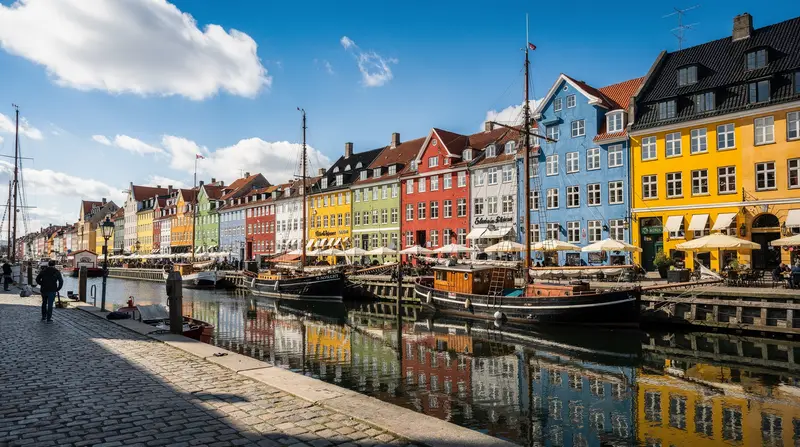
The best month to visit Copenhagen — my honest take after multiple trips
Every travel guide says “it depends on what you want.” That is technically true, but it is also a way to avoid giving a useful answer. After visiting Copenhagen across multiple seasons, my opinion is straightforward: May is the best single month to visit Copenhagen, and September is a close second. Here is the full argument, with the evidence.
| Best month | May |
| Runner-up | September |
| Avoid if crowd-averse | July |
| Avoid if daylight matters | December-January |
| Cheapest months | January-February (around 600-900 DKK/night mid-range) |
The case for May
May in Copenhagen is the seasonal sweet spot. Here is what you actually get:
Weather: Daytime temperatures average 13-17°C — cool by Mediterranean standards, genuinely pleasant for a city that is best experienced outdoors and on foot. Rain probability is moderate but not dominant (Copenhagen gets about 44mm of precipitation in May versus 64mm in July — the counterintuitive reality is that summer is wetter). Daylight runs from around 5:15am to 9:30pm, giving you roughly 16 hours of usable light.
Crowds: Tourism peaks in July and August. May sits before that curve. You will wait five minutes at Rosenborg Castle instead of twenty-five. You will find a seat at Torvehallerne at noon. You will reach the base of the Round Tower (Rundetårn) without queuing.
Prices: Hotel rates in May are noticeably lower than July-August. A mid-range hotel in the city centre (Vesterbro, Nørreport area) that runs 1,400-1,800 DKK per night in peak summer typically costs 900-1,300 DKK in May. Flights from most European cities follow a similar curve.
Tivoli: The summer season at Tivoli opens in mid-April and runs through late September. In May the gardens are in full bloom and the park is not yet at summer capacity. Entry is approximately 180-200 DKK for adults; the experience-to-crowd ratio is at its best.
What you give up: Cherry blossoms are largely over by mid-May (they peak in late April, particularly in Bispebjerg Cemetery and the parks around Frederiksberg). If that specific experience is your reason for visiting, the last week of April is the window. By May, you have fresh leaves and tulips instead — which is still excellent.
The case for September
September is the better argument for those who want summer light with slightly improved crowd and price conditions.
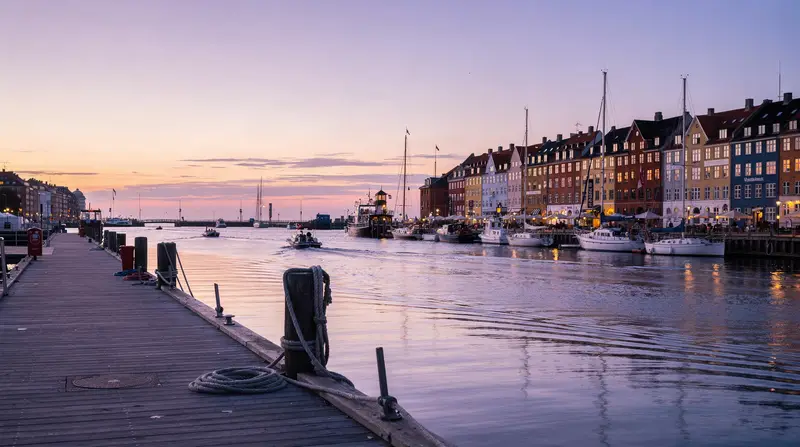
Weather: Temperatures hold at 14-17°C through most of September, dropping to 11-13°C toward the end of the month. It is effectively an extension of summer conditions, with the added benefit of golden-hour light arriving earlier in the evening — September sunsets in Copenhagen are around 7:30-8:00pm, producing that low Nordic light that photographers chase.
Crowds: The city empties perceptibly after mid-August as Danes return from holidays and school resumes. By September, you are in a city that feels inhabited rather than overrun. Canal tours run without requiring advance booking. Restaurant tables are available.
Prices: Similar to May — below July-August peaks. Hotel availability improves markedly.
What you gain over May: Reffen, the outdoor street food market on Refshaleøen, is typically open through September (it closes for the season around October). In September you can combine the market with a harbourside evening in conditions that are still warm enough to eat outside.
What you give up: September is past the solstice. The extraordinary long days of June (sunrise at 4:30am, sunset at 10:00pm) are gone. By late September, you have about 13 hours of daylight — still good, but not the white-night experience.
Month by month: the honest breakdown
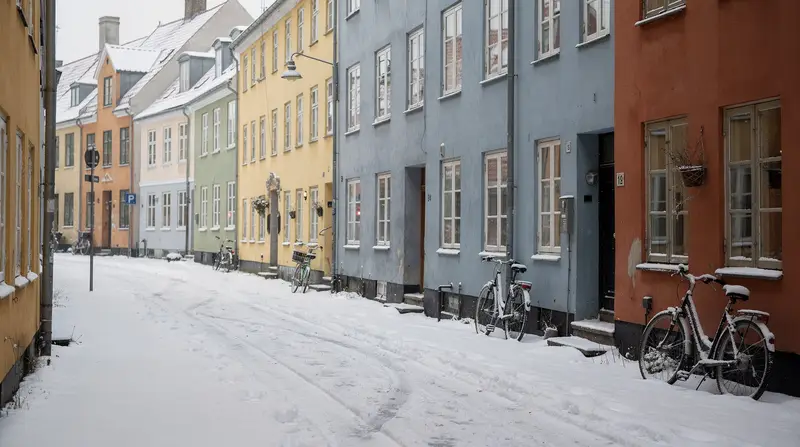
January-February: Cold (average 2-4°C), grey, and quiet. Hotel prices are at annual lows — often 600-900 DKK per night for mid-range. Good for museum-heavy itineraries (SMK, Nationalmuseet, Glyptotek are all uncrowded). The hygge experience is at its most authentic because Copenhageners are actually doing it rather than performing it for tourists. If cold and darkness do not bother you and you are primarily interested in food and design, winter works.
March: Still cold but with the first signs of change. Daylight increases noticeably — by the end of March, sunset is past 7pm. Still low-season prices. Not a compelling standalone choice over April-May.
April: The transition month. Weather is unpredictable — I have had brilliant 18°C days in April and 4°C rain. Cherry blossoms in late April are genuinely beautiful. Tivoli summer season opens (mid-April). Worth considering, with the caveat that weather is genuinely variable.
May: Best month (see above).
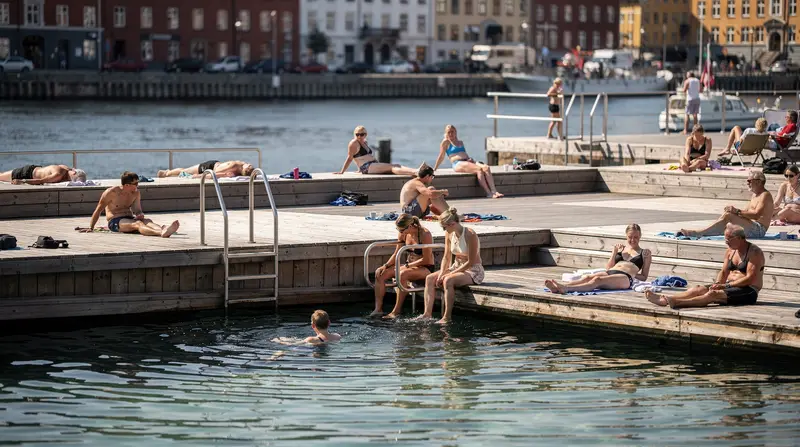
June: Excellent conditions. The longest days, warmest weather, Tivoli at its most active. The beginning of the tourist season means prices start climbing. If budget is less of a concern and you want maximum daylight, June is a strong choice.
July: Peak season — and peak crowds, peak prices, peak wait times. If you have no choice but July, go early in the month and book everything in advance. The city is not ruined by summer — it is genuinely lovely — but you will share it with a lot of other people.
August: Marginally less crowded than July, but still summer peak. Prices drop slightly in the second half of August as Scandinavian families return from holiday. Prices for the last week of August can be 15-20% lower than early August.
September: Second-best month (see above).
October: The autumn shoulder. Weather becomes more variable; rain increases. Tivoli closes (usually mid-September for summer, then reopens in mid-November for Christmas). October is an underrated month for a Copenhagen visit — the canal light in October is extraordinary, the crowds are gone, and prices are low. The catch: some seasonal businesses (boat tours, outdoor markets) operate reduced hours or close.
November-December: Darker, colder, but not without appeal. Tivoli’s Christmas edition from mid-November is the city’s best winter offering. A December visit centred on Tivoli Christmas, good restaurants, and the canal light makes sense — just price in that hotels get expensive around the Christmas markets.
Month by month at a glance
| Month | Avg. temp | Crowds | Hotel price level |
|---|---|---|---|
| Jan-Feb | 2-4°C | Low | Lowest |
| March | 3-7°C | Low | Low |
| April | 6-11°C | Low-medium | Low-medium |
| May | 13-17°C | Medium | Medium |
| June | 16-20°C | Medium-high | Medium-high |
| July | 17-21°C | Peak | Peak |
| August | 17-20°C | Peak | High, easing late month |
| September | 14-17°C | Medium | Medium |
| October | 9-13°C | Low-medium | Low-medium |
| Nov-Dec | 3-7°C | Low, rising for Christmas markets | Low, rising near Christmas |
If your dates are fixed rather than flexible, our season-specific guides go deeper than the month-by-month summary above: Copenhagen in summer, Copenhagen in spring and autumn, and Copenhagen in winter each cover what to pack, what closes seasonally, and which attractions are worth prioritising in that window. For the long-daylight extreme, see Copenhagen’s northern summer nights, and for the festive end of the calendar, Tivoli Christmas is worth planning around specifically rather than treating as a December afterthought.
Tivoli Gardens entry ticketA note about the “Copenhagen Card” and timing
The Copenhagen Card becomes more cost-effective in May and September because the attractions you want to visit (Rosenborg, the Round Tower, the harbour cruise, the Louisiana Museum day trip) are all accessible without the queuing and capacity constraints that affect them in peak summer. If you are planning to use the card, May and September are the months when it delivers its full value.
The answer, without hedging
Visit in May if you are planning from scratch and can be flexible. The weather, crowd, and price combination is optimal. Visit in September if May does not work for your calendar — the conditions are nearly as good with the added benefit of a city returning to its non-tourist rhythm.
The worst months on balance are July (crowds, prices) and January (cold, limited daylight, some seasonal closures). Neither is a disaster — Copenhagen is a functional, liveable city year-round — but if you have a choice, the shoulder seasons are not just marginally better, they are substantially better.
Any travel guide that tells you “summer is best” is prioritising warmth over the full picture. Copenhagen is a cool-weather city. May is its finest month.