Dragør: Copenhagen's Yellow Fishing Village Near the Airport
Dragør's yellow fishermen's houses and harbour, 30 min from Copenhagen. Honest guide on getting there by bus, what to do in 2–3 hours, and what to skip.
Copenhagen Card: Access 80+ Attractions and Transportation
Quick facts
- Distance from Copenhagen
- 15 km south — 30 min by bus or 20 min by car
- Bus from Copenhagen
- Bus 350S from Islands Brygge or Sundbyvester
- Entry cost
- Free to walk around; Dragør Museum ~60 DKK
- Best for
- A half-afternoon of slow walking, harbour cafes, and yellow houses
Quick answer: Dragør is a small, beautifully preserved fishing village 15 km south of Copenhagen, near the airport. The yellow-ochre houses, cobbled lanes, and working harbour make it one of the most photogenic spots within easy reach of the city. It’s a half-day at most — a slow 2–3 hours of wandering, lunch at the harbour, and a look at the local museum. Best visited as a late-afternoon add-on rather than a dedicated day trip.
| Where | Amager island, 15 km south of central Copenhagen |
| Getting there | Bus 350S, ~30 min, or 50-min bike ride via the coastal path |
| Cost | Free to walk around; Dragør Museum ~60 DKK |
| Time needed | 2–3 hours; half-day if combined with the museum and fort |
| Best visited | Late afternoon, or as a stop before an evening flight |
What Dragør actually is
Dragør isn’t a destination in the same league as Roskilde or Stevns Klint. There are no major museums, no UNESCO sites, no Viking ships. What it has is something rarer in the Copenhagen area: an intact 18th-century streetscape that has survived without significant modernisation, and a working harbour that still functions as a harbour rather than a tourist backdrop.
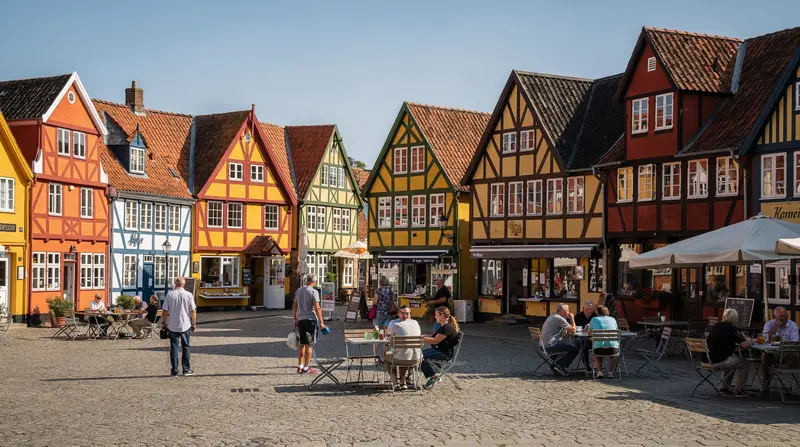
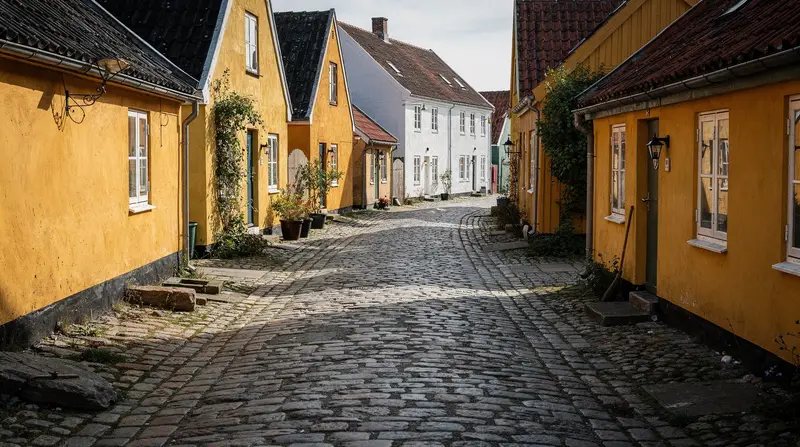
The village was settled by Dutch fishermen in the 16th century, brought over by Frederik II to help establish a herring trade. The Dutch community remained distinct and prosperous for several generations — they had their own church services, their own community organisation, and their own architectural traditions. Their influence shows clearly in the buildings: the low yellow-ochre houses with red-tiled roofs and distinctive dormer windows are unmistakably Dutch-influenced in character, quite different from the timber-framed buildings you see in Køge or the brick merchants’ houses of Roskilde.
Around 70 of these houses survive, most of them protected by preservation orders as listed buildings. The preservation is unusually comprehensive — in many Danish small towns, protected status applies to façades while interiors are modernised beyond recognition. In Dragør, the overall settlement pattern, the narrow lanes, and the relationship between the houses and the harbour have been maintained as an ensemble rather than just individual structures.
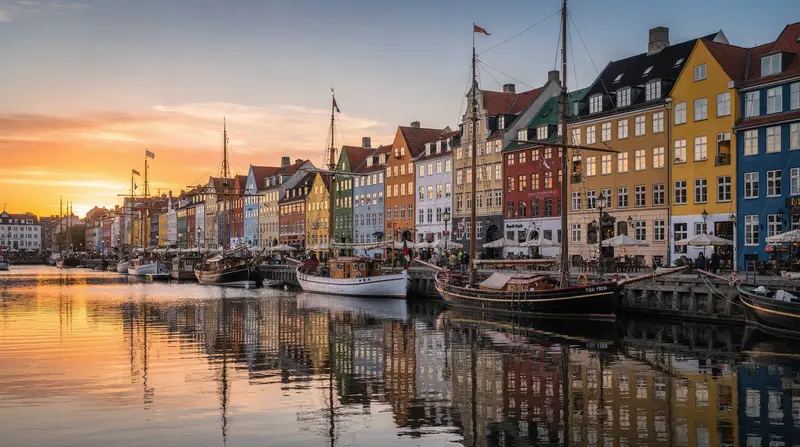
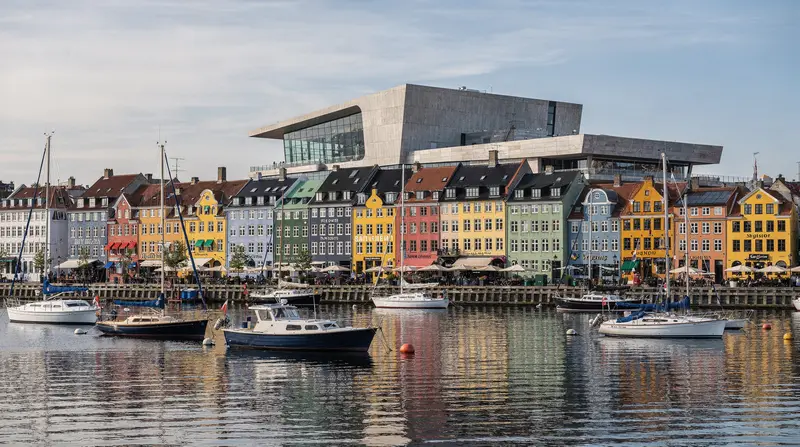
The harbour is still active, with small fishing boats alongside pleasure craft. On summer mornings you can watch the catch being brought in — herring, cod, and flatfish depending on the season. In the afternoon, the harbour café tables fill up and the mood shifts from working village to something more relaxed. The contrast between the two atmospheres within the same few hours is part of what makes the visit worthwhile.
Getting to Dragør from Copenhagen
By bus: The most practical option without a car. Take bus 350S from Islands Brygge metro station or from Sundbyøster Plads. The journey takes approximately 30 minutes and costs the same as a standard Copenhagen transit ticket (zone 2 from the city centre). Buses run every 15–20 minutes throughout the day.
By car: About 20 minutes from central Copenhagen via Amager Boulevard and Route 2A south. Parking in the village is limited — use the signed car park near the harbour approach and walk from there.
By bike: Dragør is about 15 km from central Copenhagen via the Amager coastal path — a flat, pleasant ride of about 50 minutes. The cycling route from Amagerbrogade south to Dragør is well-marked and mostly separated from traffic.
The Copenhagen Card covers the bus journey. It does not add specific value in Dragør itself beyond transport, since there are no included attractions in the village.
What to do in Dragør
Walk the streets: The core of the village is roughly 800 metres across. Dragør Strandgade runs along the seafront; the lanes immediately behind it (Magistervej, Badstuevælen, Dr. Dichs Plads) contain the best concentration of preserved houses. There’s no fixed route — the village is small enough that getting mildly lost for 30 minutes is a feature, not a problem. The lanes are narrow, most are pedestrianised or very low-traffic, and almost every corner has a visual detail worth stopping for.
A useful starting point is the small open square near the old town pump (close to the church) — from there you can see several of the best-preserved house clusters and orient yourself relative to the harbour. The yellow-ochre colour that characterises the village was traditionally made from ochre pigment mixed with linseed oil, and the slight variation in shade between houses reflects their different ages and the frequency with which they’ve been repainted.
Dragør Harbour: The working harbour is the social centre of the village. On a summer afternoon, the café tables outside Café Dragør are usually occupied by a mix of locals, cyclists who’ve made the trip from Copenhagen, and occasional tourists who’ve come down from the airport area. The harbour view — small fishing boats and sailing vessels, the Øresund visible in the distance, the old warehouse buildings and their reflections in the water — is worth the bus journey on its own.
The old harbour warehouses (pakhusene) along the southern edge of the harbour are from the 18th and 19th centuries. Several have been converted to residential or studio use; the exterior character is preserved. The harbour master’s house at the harbour entrance is a particularly good example of the Dutch-influenced style — compact, practical, well-proportioned.
Dragør Museum: Housed in an old merchant’s warehouse near the harbour, the museum covers the Dutch fishing settlers, the herring trade, and local maritime history across several centuries. It’s compact — allow 45–60 minutes. The exhibits on the Dutch community’s social organisation (they maintained their own cultural identity well into the 18th century) are more interesting than the fishing history section. Admission is approximately 60 DKK. Skip if maritime history isn’t something you’d seek out; the village itself tells the story adequately without it.
Dragør Fort and the coast: North of the harbour, the old Dragør Fort (Batteriet) sits on the coastline and is freely accessible as a public park. The defensive structures date from various periods — some earthworks are from the Napoleonic era, some later — and the site offers unobstructed views across Øresund toward Sweden. On clear days you can see the Malmö skyline and the Øresund Bridge arching northward. A coastal path connects the fort back to the harbour along the shoreline (about 20 minutes walking).
Amager Nature Park (Naturpark Amager): The flat coastal wetlands immediately north of Dragør are a protected nature reserve — grasslands, shallow lagoons, and reed beds managed for biodiversity. The park is popular with birdwatchers in spring and autumn when migratory species pass through. Access is free; there are marked walking paths. This is an add-on if you have more time or if birdwatching is a specific interest — it doesn’t compete with the village visit but extends a half-day pleasantly.
Dragør’s Dutch settlers: the fuller story
The Dutch fishing community that shaped Dragør’s character arrived under fairly specific circumstances worth knowing before you walk the lanes. Frederik II, keen to develop Denmark’s herring trade in the late 16th century, actively recruited experienced Dutch fishermen and their families to settle at Dragør, granting them privileges (exemption from certain taxes, the right to their own church services) that were unusual for foreign settlers at the time. The Dutch community remained culturally distinct for generations, maintaining their own language in daily use well into the 18th century and their own guild-like fishing organisation independent of the Danish town structures around them.
This is part of why Dragør’s architecture looks the way it does: the Dutch settlers built in the style they knew, and the resulting low houses with dormer windows and steep-pitched roofs owe more to Dutch coastal vernacular than to conventional Danish rural building traditions of the same period. The distinctive ochre-yellow colour, too, has a practical Dutch origin — the pigment was cheap, durable against salt air, and widely used across Dutch fishing communities of the era, not a decision made for tourist photogenicity centuries later.
By the 19th century, the distinct Dutch identity had largely assimilated into mainstream Danish culture, but the built environment survived because Dragør’s fishing economy declined gently rather than collapsing suddenly — there was never the economic pressure to demolish and rebuild that reshaped so many other small Danish harbour towns during industrialisation. The village you see today is, in that sense, an accident of economic stagnation as much as deliberate preservation, though the more recent heritage protections have ensured it stays that way going forward.
Photography in Dragør
The village is one of the most photographically rewarding spots within reach of Copenhagen. The combination of yellow houses, cobbled lanes, blue harbour water, and clear Scandinavian light in summer makes it productive even for casual photographers.
The best time for photographs is early morning (before 09:00 in summer) when the light is soft and the lanes are quiet, or late afternoon when the low sun creates long shadows along the narrow streets. The harbour in morning light, with mist off the water and fishing boats returning, is exceptional.
The yellow houses photograph better in overcast conditions or shade than in direct midday sun — the reflective surfaces blow out easily. The lanes are narrow enough that you need a moderate wide angle to include a house façade without extreme distortion.
Looking south from Batteriet fort toward the harbour gives a skyline view with the airport control tower visible in the background — an odd juxtaposition that captures the peculiarity of the village’s location.
The honest assessment
Dragør is worth visiting if you’re already spending time on Amager (Copenhagen’s large island neighbour) or if you have a free afternoon near the airport. It is not worth reorganising a Copenhagen itinerary around. The village is beautiful in an understated way, the harbour café is good, and an hour of slow walking through the lanes is genuinely pleasant — but there’s no headline experience that demands a trip.
What it does uniquely well: it’s the only place within 30 minutes of Copenhagen that looks completely unlike Copenhagen. The Dutch-influenced architecture, the working harbour, and the absence of tourist infrastructure (no souvenir shops, no audio guide kiosks) make it feel authentically like a place people actually live, rather than a staged visitor experience.
Eating and drinking in Dragør
Café Dragør at the harbour is the main option and is solid — good coffee, fish of the day, Danish pastries. In summer, book or arrive before 12:30 to get a harbour-side table. Budget 120–150 DKK for lunch with a beer.
Dragør Røgeri (the smokehouse, when operating) sells smoked fish direct from the harbour — a bag of smoked herring or eel to eat on a bench by the water is the best-value meal option in the village.
There are no chain restaurants in Dragør. This is a feature.
Dragør near the airport: practical note
Copenhagen Airport (Kastrup) is 5 minutes by car and about 15 minutes by bus from Dragør. If you have an early evening flight and arrive from elsewhere in Denmark or Scandinavia during the day, Dragør makes a genuinely pleasant way to spend 2–3 hours before heading to the airport. Leave by bus or taxi with at least 90 minutes before departure.
What to skip
The beaches immediately south of the village: Not spectacular — flat, pebbly shoreline without the drama of the cliff destinations further south. Fine for a walk, not worth building plans around.
Renting a rowing boat in the harbour: This occasionally appears on tourist suggestion lists. The harbour is a working space, not a pleasure lake — this suggestion is misleading.
Driving: Traffic and parking in Dragør are more frustrating than the bus. Bus 350S drops you at the harbour approach, which is exactly where you want to be.
Dragør vs Køge vs Stevns Klint: three ways to leave Amager and central Zealand
Dragør is one of several quieter options south of Copenhagen, and each rewards a different kind of visitor.
| Dragør | Køge | Stevns Klint | |
|---|---|---|---|
| Character | Dutch-influenced fishing village | Medieval merchant town | UNESCO fossil cliffs |
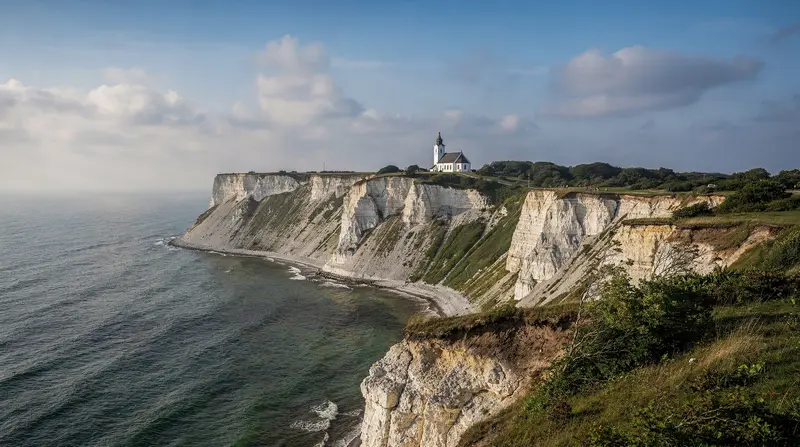
| Distance | 15 km, ~30 min by bus | ~40 min by train | ~1h by car (poor transit) |
| Best for | A short, photogenic wander | Half-timbered old town, harbour | Coastal walk, geology |
| Time needed | 2–3 hours | Half-day | Half-day to full day |
If you’re relying on public transport rather than a car, Dragør is the easiest of the three to reach and combine with a Copenhagen day. Køge and Stevns Klint are better suited to visitors with a car or willing to commit a full day, since the connections between them and Dragør itself are weak. For a broader sense of how a village visit like this fits against the city’s headline free attractions, see the free things to do in Copenhagen guide, and the best time to visit Copenhagen guide for how weather affects the photography conditions described above.
If you’re building out a full week of day trips rather than a single add-on afternoon, the day trips week itinerary shows where Dragør fits relative to the North Zealand castles and Sweden options, and the getting around Copenhagen guide covers how the zone-based bus ticketing works for a trip like this one.
Copenhagen hop-on hop-off sightseeing bus is a reasonable way to cover central Copenhagen efficiently on the same day as a Dragør afternoon, if you’re short on time and want to see the city centre highlights before or after the bus ride south.
Combining Dragør with other destinations
Dragør sits 15 km south of central Copenhagen on the island of Amager. The same direction (continuing further south across the Amager Motorway Bridge to Zealand) leads eventually to Køge and Stevns Klint. However, this routing only makes sense by car — the public transport connections between Dragør and the Zealand south destinations are poor.
A practical Copenhagen day that includes Dragør: Spend the morning in the Nørreport/city centre area, take the afternoon bus to Dragør, spend 2–3 hours, return by bus in time for dinner. The Copenhagen 4-day itinerary shows how to fit Dragør into a broader trip.
Frequently asked questions about Dragør
Is Dragør worth visiting from Copenhagen?
Yes, if you have a free afternoon and want a different pace. It’s not a full-day destination, but as a 2–3 hour half-day excursion it’s one of the more atmospheric spots near the city. The yellow Dutch-influenced houses and working harbour are genuinely charming.
How do you get to Dragør from Copenhagen?
The easiest option is bus 350S from Islands Brygge or Sundbyvester metro station in Copenhagen. The journey takes about 30 minutes and uses a standard zone 2 transit ticket. By bike it’s about 50 minutes via the Amager coastal path.
What are Dragør’s yellow houses?
The characteristic yellow-ochre houses date primarily from the 18th and early 19th centuries and reflect the Dutch influence from the fishing settlers brought to the area by Frederik II in the 16th century. Around 70 original houses survive, most protected by heritage preservation orders.
Is Dragør close to Copenhagen Airport?
Yes — Dragør is approximately 5 minutes by car from Copenhagen Airport (Kastrup) and 15 minutes by bus. It’s a practical stop if you have time to kill before an evening flight and want to avoid the airport itself.
What can you do in Dragør in 2 hours?
Walk the main lanes (Strandgade, Magdalene Vej), visit the harbour, have a coffee or lunch at Café Dragør, and walk out to the Batteriet fort for the Øresund views. Two hours is enough for a satisfying visit; three hours allows for the museum or a longer coastal walk.
Is there a beach at Dragør?
There’s a shoreline, but it’s not a typical beach in the swimming sense — flat, rocky, and tidal. Locals do swim here in summer but it’s not comparable to Amager Beach (Amager Strandpark) north of the airport, which is a better choice if swimming is the goal.
What is the Dragør Museum about?
The museum covers the history of Dragør as a fishing port, focusing on the Dutch settlers, the herring trade, and the maritime life of the village from the 16th century onward. It’s housed in an original merchant warehouse and takes about 45–60 minutes to see properly.
Top experiences
Bookable activities with verified prices and instant confirmation on GetYourGuide.