Køge Day Trip from Copenhagen: Medieval Town & Gateway to Stevns Klint
Køge medieval centre and half-timbered houses, 35 min by train from Copenhagen. Honest guide with Stevns Klint combination tips, costs, and transport.
Heritage Tour to Stevns Klint & Vikingborg Fort UNESCO Sites
Quick facts
- Distance from Copenhagen
- 45 km south — 35 minutes by train
- Train cost
- ~90 DKK return (zone 3)
- Town centre
- Compact and walkable from the train station
- Best pairing
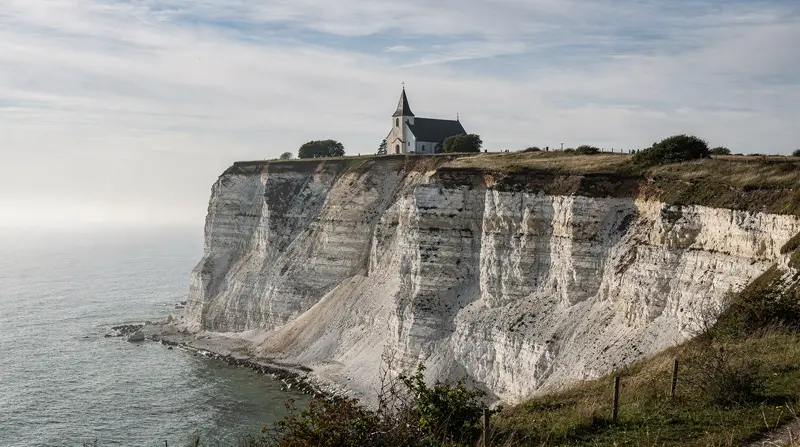
- Combine with Stevns Klint (20 km further south)
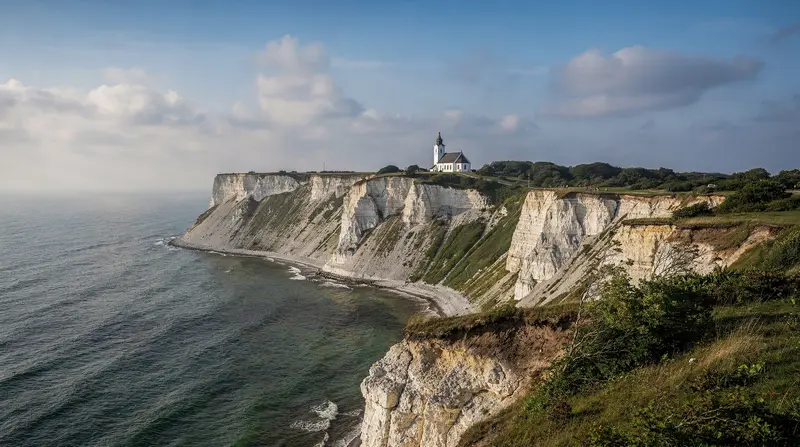
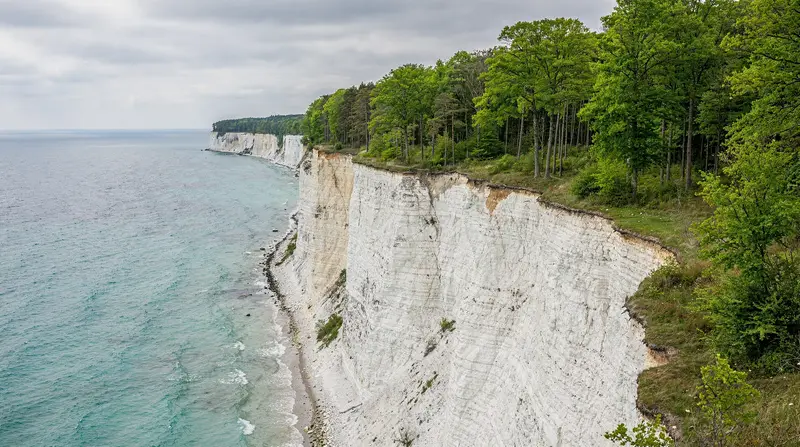
Quick answer: Køge is a well-preserved medieval market town 35 minutes south of Copenhagen by direct train. Its historic centre is compact, largely free to explore, and sees far fewer tourists than Roskilde or Helsingør. It works best as a morning stop combined with an afternoon at Stevns Klint — the UNESCO chalk cliffs are 20 km further south. On its own, Køge fills a pleasant 2–3 hours.
| Where | Køge, 45 km south of Copenhagen |
| Cost | Free to walk; ~90 DKK return train; church tower ~20 DKK |
| Time needed | 2–3 hours alone; full day paired with Stevns Klint |
| Getting there | Direct train from Copenhagen H, 33–38 min |
| Best time | Wednesday or Saturday morning for the market |
What Køge actually offers
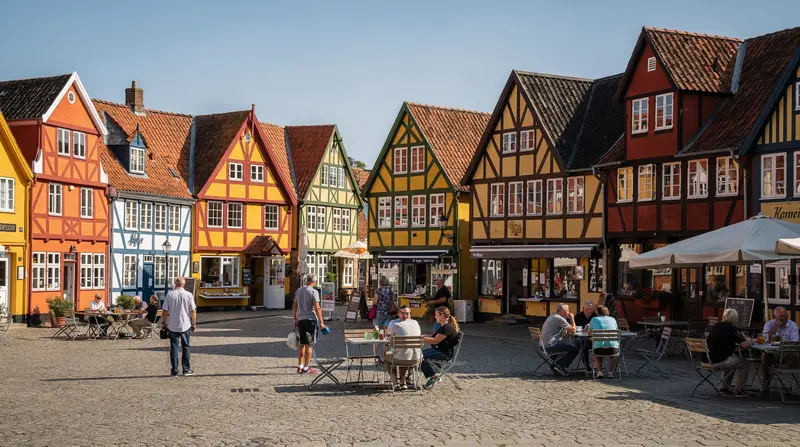
Køge’s main street, Kirkestræde, and the market square (Torvet) contain some of the best-preserved half-timbered merchant houses in Denmark, several dating to the early 17th century. House number Kirkestræde 20 is often cited as the oldest dated half-timbered house in Denmark — inscribed 1527 on the beam. Most visitors walk past it without knowing what they’re looking at. A small plaque marks it, but you need to be looking for it.
The town square also hosts a large market on Wednesday and Saturday mornings (year-round), which turns the otherwise quiet centre into something livelier. The Wednesday market in particular has a pleasantly unreconstructed quality — it serves local shoppers more than tourists, and the stalls sell ordinary things like cheese, bread, and flowers alongside the seasonal produce.
Køge has a maritime history that shaped its development. The town sits at the head of Køge Bay and was an important Baltic trading port from the medieval period through the 17th century. The 1677 Battle of Køge Bay, in which the Danish-Dutch fleet under Admiral Niels Juel defeated a Swedish fleet, was one of the most significant naval battles in Danish history and secured control of the western Baltic. A monument to Niels Juel stands in the town square.
This is not a spectacular destination in the way Møns Klint is. It’s a solid, honest medieval town that rewards slow walking and looking at details rather than hitting a list of attractions. For visitors who have already done Roskilde and Helsingør, Køge offers a different register — quieter, more domestic in scale, and without the weight of a major UNESCO site pressing every visit into a particular shape.
Getting to Køge from Copenhagen
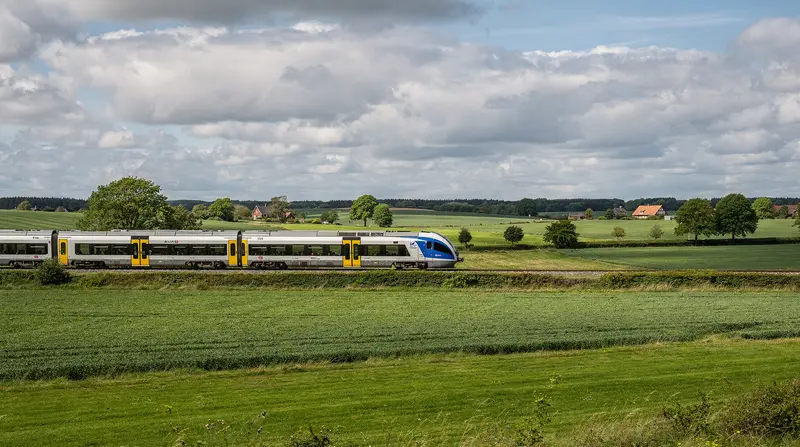
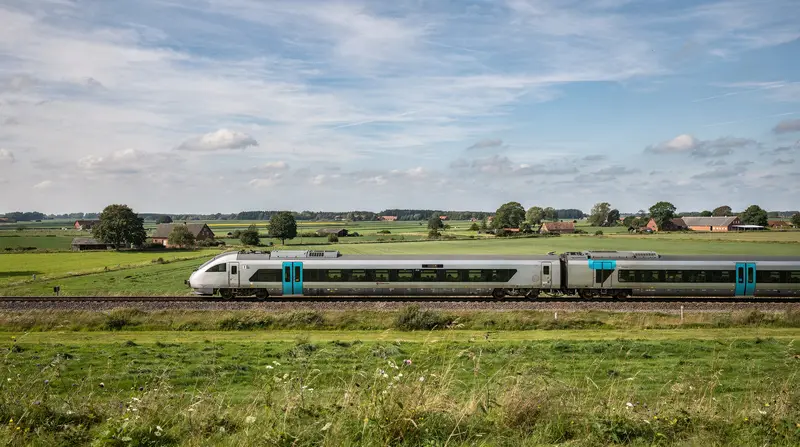
The direct train from Copenhagen H (central station) runs frequently throughout the day and takes 33–38 minutes. Return tickets cost approximately 90 DKK in zone 3. Trains run every 20 minutes on most of the day.
The train station is a 5-minute walk from the market square (Torvet). The entire historic centre is walkable from there.
If you’re combining with Stevns Klint, you can continue by bus from Køge station (bus 261 toward Rødvig) — total journey from Køge to Højerup is about 45–50 minutes. Alternatively, rent a bike in Køge and cycle the 20 km to the cliff on the marked cycling route — flat terrain, mostly country roads.
What to see in Køge
Torvet (the market square): The central square is surrounded by historic buildings and is the social centre of the town. The arcaded merchant house at Torvet 1, with its covered ground-floor arcade, is now a café and one of the more photographically rewarding corners of the town. Look also at the inn on the north side of the square — it’s been a place for travellers to eat and sleep since the 17th century and still functions as one. The square itself is large by Danish small-town standards, a scale that reflects Køge’s importance as a regional trading centre.
Køge Church (Sankt Nicolai Kirke): A red-brick Gothic church dating from the 14th century, with later additions. Entry is free. The tower offers a view over the town and the surrounding countryside and bay — the climb involves a steep, narrow staircase, but the view is worth it. A small fee applies for the tower (approximately 20 DKK). The church is typically open Monday–Friday 10:00–16:00 and weekend afternoons.
Kirkestræde: The pedestrian street connecting the square to the church has the highest concentration of half-timbered buildings. Walk slowly and look at the beams — many carry dates and names carved into the wood. The craftsmanship varies considerably; some of the earlier examples show a level of decorative carving that was standard practice in prosperous 16th- and 17th-century merchant buildings. Look for the carved figures (often animals or faces) at the junctions of the main beams.
Køge Museum: Located just off Torvet, the local history museum covers Køge’s maritime past, the Battle of Køge Bay, and everyday life in the town across several centuries. There’s also a display on the town’s unusual medieval history — Køge was the site of one of the largest witch trials in Danish history in 1612, when a series of accusations spread through the town with lethal results. Admission around 60 DKK. Worth 45 minutes if you’re interested in Danish history; skip if you’re short on time.
Køge Bay (Køge Bugt): The old harbour area has been partially redeveloped but retains some working boat character. The beach north of the harbour (Søndre Strand and continuing north as Køge Bugt Strandpark) is one of the most popular swimming beaches for Copenhagen residents who can’t face the city beaches in summer — long, sandy, shallow water, and reasonably clean. If you’re combining Køge with Stevns Klint on a hot day, this is a reasonable swimming stop before or after the cliff.
The Witches’ Cellar (Heksekælderen): A small, somewhat obscure attraction in the basement of an old building off Kirkestræde, this space relates to the 1612 witch trials. It’s atmospheric rather than informative — worth 20 minutes if you’re curious about the darker aspects of local history.
What to eat in Køge
The options around Torvet are solid and fairly priced by Danish standards. Café Torvet handles the standard café menu well. For a proper smørrebrød lunch, look for places displaying the open-sandwich format — expect to pay 120–160 DKK for lunch with a beer.
The market (Wednesday and Saturday mornings) sells excellent bread and cheese — if you’re heading straight to Stevns Klint from Køge, picking up provisions at the market is a sensible and cheap option. A bag of market bread, some local cheese, and a bottle of water makes a good cliff-top lunch for considerably less than café prices.
The honest assessment
Køge doesn’t have a headline attraction. What it has is a well-maintained medieval streetscape that most Danish towns have lost to post-war development, fire, and economic modernisation. If you’ve spent several days in Copenhagen and want to see what a Danish market town looked like before the 20th century changed everything, Køge delivers that clearly and without the tourist infrastructure (meaning: no queues, cheaper cafes, and the possibility of being the only non-local in a restaurant).
The town’s relative lack of tourist development is itself part of the experience. The pedestrian zone exists for residents, not visitors. The market on Wednesday and Saturday is a working market. The café on Torvet serves Danish lunches because that’s what the local office workers eat. There’s something genuinely restful about a historic town that hasn’t been entirely reorientated toward tourism.
The town works best as part of a broader day: morning in Køge’s market square, afternoon at Stevns Klint, return to Copenhagen for dinner. This heritage day tour covers Stevns Klint and Viking heritage sites in the same area, departing from Køge — useful context if you want a guide for the second part of the day.
Eating and drinking in Køge
The café scene around Torvet is solid without being exciting. Café Torvet is reliable for a smørrebrød lunch (120–150 DKK). For coffee, there are several independent cafes on Kirkestræde. The Wednesday and Saturday markets sell fresh produce, bread, and cheese — bring a bag if you’re passing through.
Avoid the chain restaurants around the train station. Five minutes of walking puts you in better territory.
If you’re driving
This car-based day trip runs from Copenhagen to Stevns Klint efficiently and can be extended to include Køge at the start or end. If you’re renting a car for a Zealand day, the sequence Copenhagen–Køge–Stevns Klint–Copenhagen is logistically clean and covers the main sights in this part of the island.
Parking in Køge town centre: use the multi-storey car park on Nyportstræde (free for first 2 hours on weekdays, paid on weekends).
Combining Køge with other destinations
Køge sits on the main train line between Copenhagen and the south of Zealand. This makes it an efficient stop on longer day trips rather than a destination that demands its own dedicated day.
Day trips that make logical use of Køge’s position:
- Køge + Stevns Klint: The classic pairing. Train to Køge (35 min), bus 261 or car to Stevns Klint (40–50 min), return from Rødvig or back through Køge. See the Stevns Klint page for the full logistics.
- Køge alone: Good for a half-day combined with a Copenhagen neighbourhood afternoon. Arrive at 10:00, leave at 13:30, back in Copenhagen for the afternoon.
- Multi-stop Zealand south day: Copenhagen – Køge – Stevns Klint requires a car and a full day but covers an impressive range — medieval town in the morning, UNESCO cliff in the afternoon. The Copenhagen day trips itinerary shows how this fits into a broader week.
- Køge + Roskilde: These two sit on different train lines so combining by train requires returning to Copenhagen between them. By car, Roskilde is 30 km northwest of Køge — manageable if you want to pair medieval town history with Viking history in a single day.
See the day trips from Copenhagen guide for how to sequence a week of day trips across Zealand without excessive backtracking.
Køge Bugt Strandpark in more detail
The beach park stretching north from Køge harbour is one of the larger stretches of managed coastline near Copenhagen — roughly 7 km of sand, dunes, and shallow water running toward Greve and Hundige. It was created through a large-scale land reclamation project in the 1970s and remains popular with families from the wider Copenhagen suburbs, not just Køge itself. Facilities are basic (a handful of kiosks in summer, limited shade), but the water is shallow enough for small children and the sand is genuinely clean compared to some harbour-adjacent beaches closer to the capital. If you’re travelling with children and combining Køge with Stevns Klint on a warm day, a stop here on the way back breaks up the journey well.
Køge’s Renaissance and later history
Beyond the medieval merchant houses, Køge’s later history is worth a mention because it shapes what you see today. The town largely escaped the industrial-era redevelopment that erased historic centres in many other Danish provincial towns — partly because Køge’s harbour lost commercial importance to larger ports in the 19th century, which paradoxically preserved the old town by starving it of redevelopment money. What looks today like careful heritage preservation was, for long stretches of the 20th century, simply economic stagnation. The town has since leaned into this history deliberately, with conservation rules protecting the half-timbered core since the 1970s.
Practical information for Køge
Train from Copenhagen: Direct trains from Copenhagen H every 20 minutes, 33–38 minutes, zone 3 ticket approximately 90 DKK return. Buy at the station or via the DSB app.
Car: Køge is 45 km south of Copenhagen via the E20/E47 motorway. Parking in the centre: multi-storey car park on Nyportstræde (first 2 hours free on weekdays, charged on weekends; 10 DKK/hour thereafter).
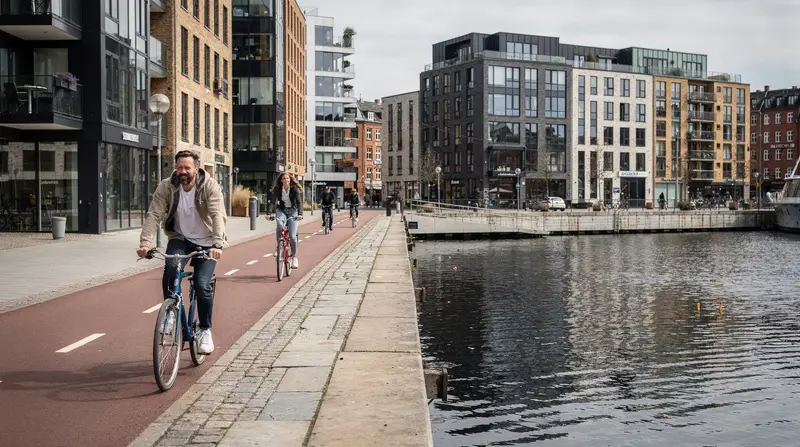
Bike hire: A few rental points operate in Køge town centre in summer — useful if you want to cycle south toward Stevns Klint on the marked cycle route.
When to visit: Wednesday and Saturday mornings for the market. Avoid Sunday mornings when the church and many cafes are on reduced hours. The town is pleasant year-round; rain doesn’t meaningfully diminish the experience since the main interest is the street architecture rather than outdoor scenery.
Frequently asked questions about Køge
Is Køge worth visiting from Copenhagen?
Yes, particularly if you’re combining with Stevns Klint or want to see a less-touristed medieval Danish town. On its own, Køge is a half-day at most. Paired with the UNESCO cliff site, it makes a satisfying full-day itinerary.
How do you get from Copenhagen to Køge?
Direct trains from Copenhagen Central Station (København H) run every 20 minutes and take 33–38 minutes. Return tickets cost approximately 90 DKK. The train station is a 5-minute walk from the medieval town centre.
What is Køge known for?
Køge is known for its medieval market square and some of the best-preserved half-timbered buildings in Denmark. It’s also historically significant as the site of the 1677 Battle of Køge Bay, a decisive Danish naval victory. In modern times it’s the main transport hub for the Stevns Klint area.
Can you walk from Køge to Stevns Klint?
The distance is approximately 20 km — walkable but a full day’s undertaking on its own. Most visitors take the bus (261) or cycle on the marked cycling route. By bus, the journey takes 45–50 minutes.
Are there good restaurants in Køge?
The town has a solid but unexceptional dining scene. Good options cluster around Torvet (the market square). For a proper Danish lunch, look for smørrebrød on the menu and expect to pay 100–150 DKK. Avoid the chain options near the train station.
What’s the best day to visit Køge?
Wednesday or Saturday morning, when the market runs on Torvet. The market transforms an otherwise quiet square into a lively local scene that gives you a more authentic sense of the town than a weekday visit.
Top experiences
Bookable activities with verified prices and instant confirmation on GetYourGuide.