Copenhagen or Stockholm first — the honest comparison for Scandinavian first-timers
If you are planning a first Scandinavian trip and have both Copenhagen and Stockholm on the list, the order matters more than people realise. Not because one city “sets the tone” in some abstract sense, but because they are substantially different experiences, and one of them is better at onboarding you into Scandinavian travel than the other.
My view: visit Copenhagen first.
Here is the full argument.
| My recommendation | Copenhagen first, Stockholm second |
| Why | Easier arrival, more legible city, natural Malmö bridge to Sweden |
| Copenhagen time | 3–4 days (see our 3-day Copenhagen itinerary) |
| Train between cities | ~5 hours via Malmö, 350–600 DKK/SEK booked in advance |
| Exception | Fly-in city determines order if flights are fixed |
What Copenhagen does better
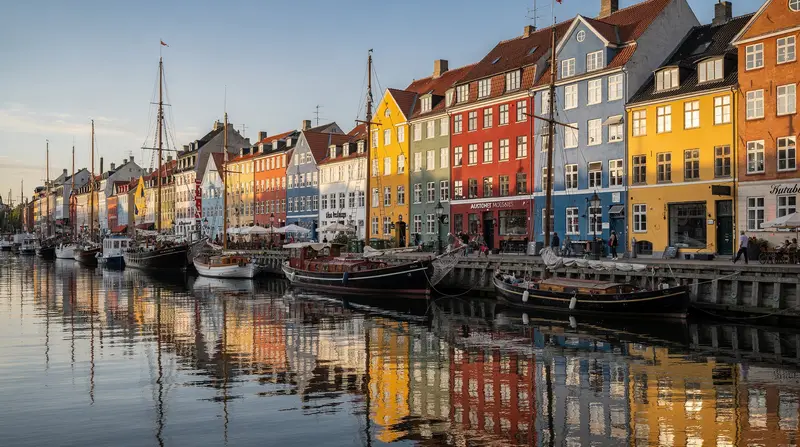
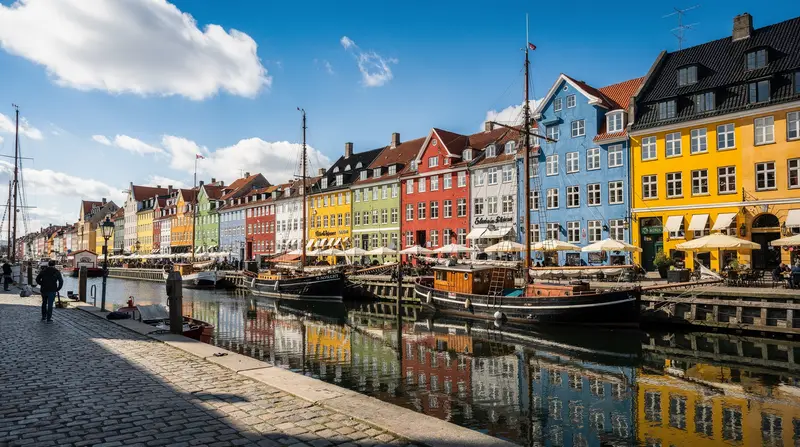
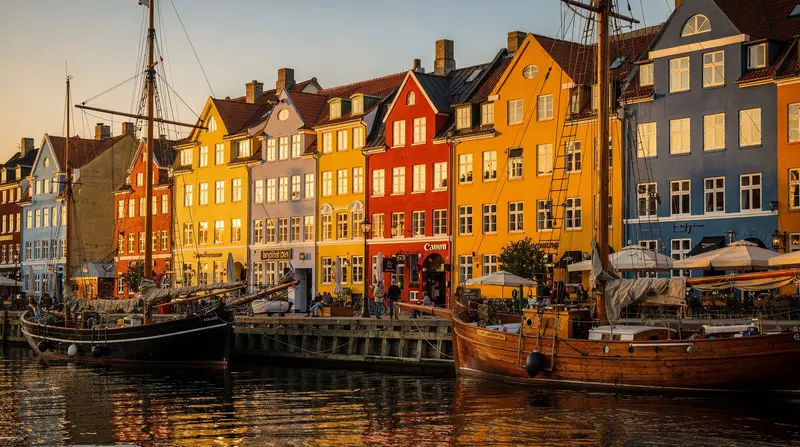
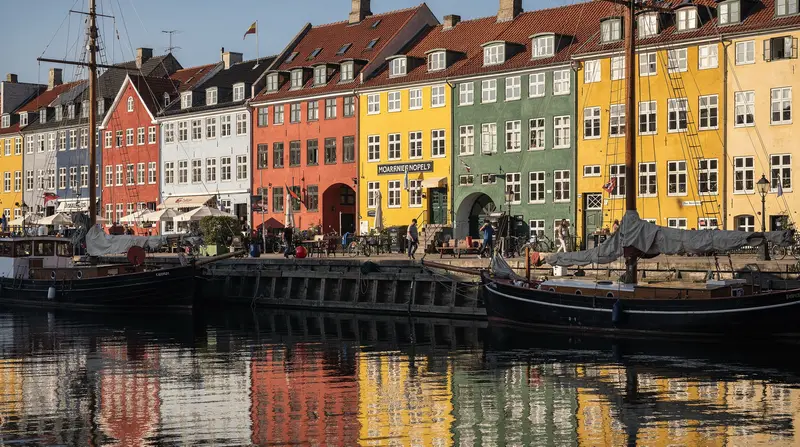
It is more walkable and immediately legible. Copenhagen’s central districts — Indre By, Christianshavn, Nyhavn, Vesterbro, Frederiksstaden — are compact and interconnected. You can orient yourself within a day. The canal system provides a geographical logic: you always know where you are relative to the water. Stockholm’s Old Town (Gamla Stan) is also walkable, but the city is spread across fourteen islands, which means the mental map takes longer to build.
The cycling infrastructure changes how you experience the city. Copenhagen is genuinely a cycling city, not one with token cycle lanes. As a tourist, you can rent a bike and operate within the actual transport network — not on a separate tourist track. This creates a qualitatively different experience of city space. Stockholm has cycling infrastructure but it is not as embedded in the city’s functioning.
Entry is via the EU (Schengen), which is the same for Sweden. There is no particular administrative advantage to either entry point. For 2026 non-EU visitors applying for ETIAS, your authorisation covers both countries (Sweden is also Schengen). Currency is the relevant difference: Denmark uses DKK, Sweden uses SEK. If you are arriving from continental Europe, having your first Scandinavian experience be the slightly more internationally connected Copenhagen (major hub for flights from Europe and North America) makes logistical sense.
The food scene has a stronger international reference point. Copenhagen’s New Nordic cuisine movement — the aftermath of Noma, the concentration of Michelin-starred restaurants relative to city size, the bakery culture — is one of the most influential in the world right now. Stockholm has excellent food, but Copenhagen’s restaurant scene is more distinctively its own thing, harder to approximate elsewhere. Experiencing it first, before you have Stockholm’s excellent but slightly different restaurant culture to compare it to, means you take it on its own terms.
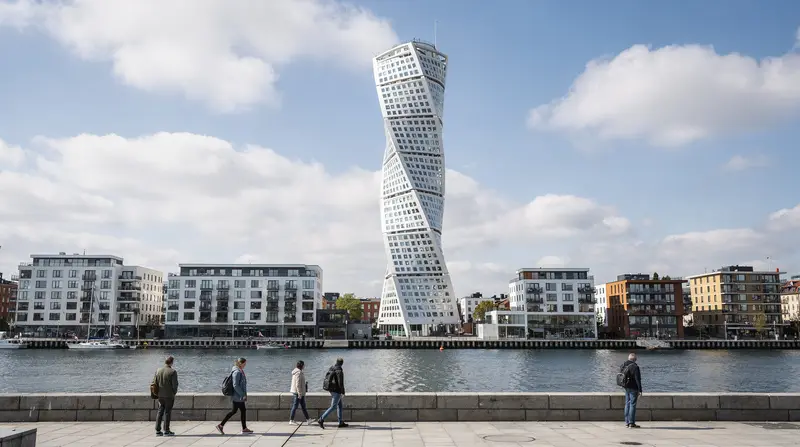
Malmö is a bonus day trip that bridges the two countries. If you visit Copenhagen first, a day trip to Malmö via the Øresund Bridge (35 minutes by train, approximately 130-150 DKK return) gives you a genuine taste of Sweden before you commit to a separate Stockholm stay. This is a natural progression: Copenhagen → Malmö day trip → Stockholm. It also means you arrive in Stockholm having already understood what is distinctively Danish versus Swedish, which sharpens the experience.
What Stockholm does better
Fairness requires acknowledging what Stockholm offers that Copenhagen cannot match:
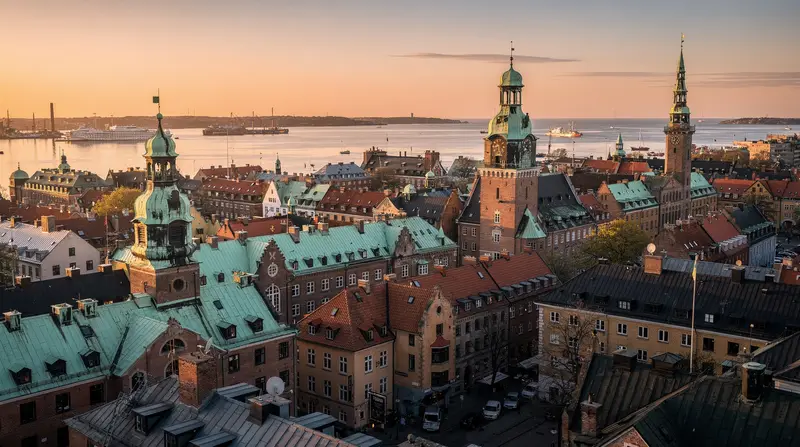
Scale and archipelago: Stockholm’s position across fourteen islands, with the archipelago extending 80 kilometres into the Baltic, is a fundamentally different geography. The boat trip through the archipelago is one of the great city experiences in Northern Europe — it has no equivalent in Copenhagen. If archipelago landscapes are your primary interest, Stockholm’s version is more dramatic.
History layers: Gamla Stan (the Old Town) has narrower medieval streets and older architecture than anything in Copenhagen’s centre. The Vasa Museum — a warship from 1628 that sank in Stockholm harbour and was raised in 1961, almost perfectly preserved — is one of the most astonishing museum exhibits I have encountered anywhere. Copenhagen’s museums are excellent; the Vasa is in a different category.
Size: Stockholm is significantly larger and has a more complex neighbourhood map. This is both an advantage (more to discover) and a disadvantage (more disorienting on arrival).
The order argument in practical terms
Here is why Copenhagen-first is the better travel structure:
1. Easier arrival: Copenhagen Airport (CPH) is one of the most efficiently designed airports in Europe. The metro runs directly to the city centre in 15 minutes. Stockholm Arlanda is 40-45 minutes by train from central Stockholm (or 20 minutes by high-speed Arlanda Express at higher cost, approximately 320 SEK). First-time Scandinavian visitors are typically less frazzled arriving in Copenhagen.
2. The Malmö bridge provides narrative continuity: Travelling Copenhagen → Malmö → Stockholm (if going overland, the Copenhagen-to-Stockholm train is approximately 5.5 hours and passes through Malmö) creates a logical arc. You cross the Øresund Bridge, which is a genuinely dramatic structure, and arrive in Sweden before the main Stockholm experience.
3. Copenhagen is better at explaining itself to newcomers. The canal tours, the walking infrastructure, the compact historic centre — these are effective at communicating what the city is about quickly. Stockholm requires more time to disassemble before it reveals itself. If your time is limited, Copenhagen-first means you have the best chance of feeling like you understood at least one of the cities properly.
4. Stockholm as the culminating experience. If Stockholm is the more epic, more scenically dramatic city (and I think it is, in terms of sheer landscape), it functions better as the trip’s conclusion. You arrive in Stockholm with your Scandinavian literacy established by Copenhagen, and the archipelago and the Vasa hit harder.
The counter-argument for Stockholm-first
The main case for Stockholm-first is if you are arriving by direct flight to Stockholm from a non-European hub, and Copenhagen is your departure point. In that case, the geography determines the order. There is no merit in rearranging your flights to achieve Copenhagen-first if Stockholm is where your plane lands.
The second case for Stockholm-first is if your primary interest is history and landscape rather than food and urban design. In that case, start with the Vasa and the archipelago, and let Copenhagen’s bakeries and canals be your gentle landing before departure.
The logistics of doing both in one trip
If you are combining both cities in 10-14 days:
Copenhagen: 3-4 days (including one day trip to either Kronborg/Helsingør or Malmö preview) Stockholm: 3-4 days (including one archipelago day trip)
The train between the cities (via Malmö) takes approximately 5 hours and runs multiple times daily. Fares booked in advance cost approximately 350-600 DKK / 350-600 SEK depending on timing; flexible fares are significantly more. Book train tickets on the SJ (Swedish Railways) or Oresundstag website as soon as your dates are confirmed — early booking yields the best prices.
The bottom line
If you are doing both cities, do Copenhagen first. The city is more immediately rewarding for first-time Scandinavian visitors, the infrastructure for arrivals is more straightforward, and the Malmö bridge transition provides a natural narrative link to Sweden. Stockholm then functions as the dramatic finale of the trip — bigger, wilder in landscape, and experienced with enough Scandinavian context to appreciate what is distinctively Swedish rather than generically Northern European.
If you can only do one city, that is a different question. But if you are doing both, the order matters, and Copenhagen is the right starting point.
Feature-by-feature: which city wins what
If the general argument above is too abstract, here is the same comparison broken down by category. Our full Copenhagen vs Stockholm guide goes deeper on each point.
| Category | Winner |
|---|---|
| Ease of arrival | Copenhagen |
| Walkability for first-timers | Copenhagen |
| Food scene | Copenhagen |
| Archipelago and scenery | Stockholm |
| Museum-going (single exhibit) | Stockholm (Vasa) |
| Old town character | Stockholm (Gamla Stan) |
| Day-trip bonus country | Copenhagen (Malmö) |
Getting the logistics right
Whichever order you choose, the transport planning is straightforward once you know the options. Our getting around Copenhagen guide covers the metro and bike infrastructure you will use daily, and the timing of your trip matters too — check the best time to visit Copenhagen before booking, since long summer daylight changes how much you can fit into an evening in either city. If Copenhagen is genuinely your first Scandinavian stop, our first-time Copenhagen guide is the companion piece to this one — it covers the practical basics this article assumes you already have sorted.
The Malmö detour, in more detail
Because it keeps coming up above: the Malmö day trip from Copenhagen deserves its own mention. It is a 35-minute train ride across the Øresund Bridge, and it functions as a genuine preview of Sweden — a different language on the signage, a different currency, a noticeably different pace to the city centre — without committing a full day of your Stockholm allocation. Most first-time Scandinavian visitors who do this find it sharpens rather than dilutes the eventual Stockholm experience, because they arrive already able to spot what is distinctively Danish versus distinctively Swedish.