Copenhagen Coffee Crawl: Coffee Collective, Prolog, La Cabra and the Rest
Before We Start: Why Copenhagen Coffee is Worth a Crawl
Copenhagen has, by any reasonable measure, one of the strongest specialty coffee scenes in Europe. This is not marketing copy. The city has produced roasters that have won World Barista Championships and influenced how third-wave coffee operates globally. Coffee Collective, in particular, trained a generation of baristas who went on to open their own places, which is why the standards across the city are remarkably consistent.
The result is a city where a bad coffee is genuinely hard to find if you stay away from tourist traps — and where a great coffee is often a short walk from wherever you are. Prices are predictable: an espresso runs 35–45 DKK, a flat white or cortado 45–55 DKK, a filter coffee 40–55 DKK. Specialty coffee in Copenhagen is not dramatically more expensive than a chain — sometimes less.
This is a crawl designed to cover a half-day: late morning into early afternoon, three to four stops, two neighbourhoods. You will drink well. You may also get a clearer picture of how Copenhagen moves on a weekday morning, which is its own reward.
Or explore Copenhagen with a local guideCopenhagen coffee crawl at a glance
| Detail | Plan on |
|---|---|
| Duration | Half a day — three to four stops, two neighbourhoods |
| Best days | Tuesday to Friday, late morning into early afternoon |
| Route | Nørrebro → Vesterbro → Torvehallerne (roughly 5 km) |
| Espresso | Around 35–45 DKK |
| Flat white / cortado | Around 45–55 DKK |
| Filter coffee | Around 40–55 DKK |
| Pastry | Around 22–40 DKK (a kanelsnegl is the cheap classic) |
These are typical specialty-café prices; a tourist-facing café near Nyhavn will charge more for less.
Stop One: Coffee Collective — Jægersborggade, Nørrebro
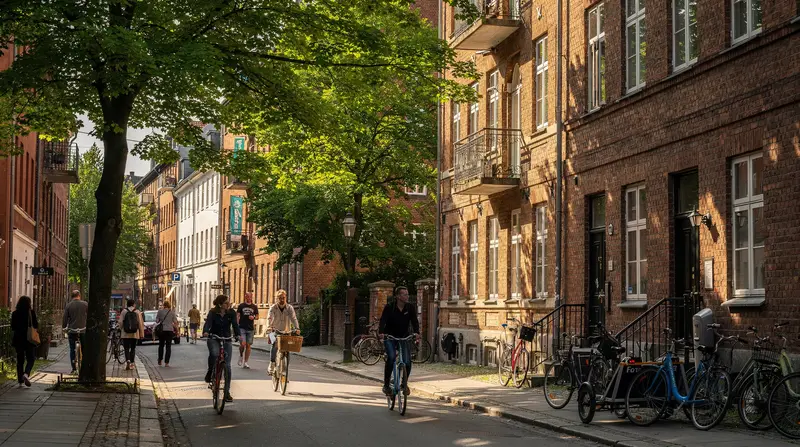
Start in Nørrebro, specifically on Jægersborggade — one of those streets that somehow managed to become a destination while still feeling like a real neighbourhood. Coffee Collective’s Nørrebro outpost is at the northern end, a small space with a handful of seats and serious coffee.
Coffee Collective was founded in 2007 and built their reputation on direct trade, sourcing single-origin beans and publishing exactly what they pay for them. This transparency was unusual at the time and remains meaningful — you are not just paying for good coffee, you are paying for a model that returns more money to farmers. Whether or not you find that compelling, the result in the cup is consistently excellent.
Order a filter coffee here rather than espresso if you want to understand what they are doing with a particular origin — the pour-overs show off the sourcing work. The baristas are knowledgeable but not evangelical. Ask questions; they will answer them without making you feel like you should already know.
Jægersborggade itself is worth ten minutes of walking — ceramics studios, natural wine shops, a good cheese counter, a bakery. It is not undiscovered, but it has not been entirely consumed by its own reputation either.
Typical spend: Filter coffee, 45–55 DKK. Pastry if you need something to eat, 30–40 DKK.
Stop Two: Prolog — Vesterbro
From Nørrebro, take the bus or cycle south across the lakes into Vesterbro. Prolog is in the meatpacking district area — Halmtorvet or the surrounding streets — which has transitioned from its industrial past into one of the more interesting parts of the city for food and drink.
Prolog is quieter than the Coffee Collective, more neighbourhood in feel. They roast their own beans and the espresso-based drinks are well-calibrated — good acidity, clean finish. The space tends to attract a mix of freelancers, young locals, and the occasional tourist who knows what they are looking for. There is usually room to sit, which matters if you are doing a proper crawl and need to pace yourself.
One thing to note: Prolog is a serious coffee bar, not a café in the sense of food-forward. They may have a pastry or two, but if you arrive hungry, eat something before you arrive or after. The coffee is the point.
Typical spend: Flat white, 50–55 DKK.
Stop Three: La Cabra — multiple locations
La Cabra is a Danish roaster with origins in Aarhus that expanded to Copenhagen — they now have several locations in the city, including a shop near Torvehallerne that works well as a third stop on this crawl. They are known for their filter coffees and for a roasting style that is lighter than many Europeans are used to: bright, fruit-forward, sometimes almost tea-like in its delicacy.
If you have only had espresso-forward coffee — the kind that tastes predominantly of chocolate and caramel — La Cabra’s filter offerings can be a mild surprise. The approach is to let the inherent characteristics of the bean express themselves, which means a Yirgacheffe might genuinely taste of blueberries, a Kenyan of red currant. This is not universally appealing, but it is interesting.
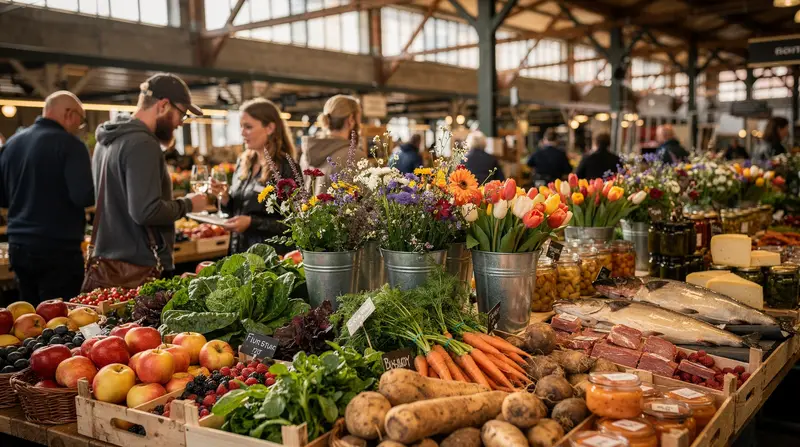
The Torvehallerne location means you can eat something properly here — the market has excellent food vendors, from smørrebrød to fresh produce to Nordic pastries. After two coffees, something to eat is probably welcome.
Typical spend: Filter coffee, 45–55 DKK. Budget 80–150 DKK for food at Torvehallerne.
Optional Stop Four: Café Petersborg or a neighbourhood bakery
By this point, you have had three coffees and covered significant ground across the city. If you want a fourth stop that takes you somewhere different in tone — less specialty, more atmospheric — consider a traditional café in the old town or Nørreport area.
Café Petersborg, one of Copenhagen’s oldest cafés, is on Bredgade and serves as a reminder that Copenhagen had excellent coffee culture before the third wave arrived. It is not a specialty shop, but the coffee is perfectly good and the setting — dark wood panelling, regulars reading newspapers — is the kind of place where hygge happens without anyone announcing it.
Alternatively, find a neighbourhood bakery in whichever area you end up in and order a kanelsnegl (cinnamon swirl) with a coffee. The Danish bakery tradition runs parallel to the specialty coffee movement but intersects at the best possible moments. A good cardamom bun at a scruffy neighbourhood bakery for 22 DKK, eaten standing at a counter, is one of Copenhagen’s better experiences.
Doing the Crawl in Practice
Best timing: Tuesday to Friday, late morning (10:00–12:00) to early afternoon. Weekends bring queues to the more famous spots. Monday mornings can be slower at some places.
Transport between stops: The Nørrebro to Vesterbro to Torvehallerne route works well on foot (it is long but doable, roughly 5 km total) or by bike if you are comfortable cycling in Copenhagen. The bus system also connects these neighbourhoods efficiently — no metro needed.
Pacing: Do not rush. Give yourself 20–30 minutes at each stop minimum. Coffee is not something to consume while moving in this context. Sit, if there is room. Watch how the city operates on a normal Tuesday.
Bring cash: Most Copenhagen cafés accept card, including contactless, without issue. But for tiny purchases — a pastry, a bottle of water — it is useful to have a few 100 DKK notes.
A Note on the Roasters: What Makes Copenhagen Different
The reason the specialty coffee scene in Copenhagen is as strong as it is comes down to a few structural factors that are worth understanding.
First, Denmark taxes coffee very lightly compared to other food imports. This makes the economics of speciality roasting more viable. Second, the Danish coffee-drinking culture already valued quality — the tradition of a good coffee with a pastry, taken slowly, is old in Denmark. Third, and perhaps most significantly, the small population of the country means that reputation travels quickly. A roaster who does excellent work becomes known across the industry fast.
The result is a city where the standards have been raised over two decades of competition between genuinely skilled operators, and where the market for mediocre coffee has significantly contracted. You can get a bad coffee in Copenhagen — in airports, in tourist-area bakeries, from certain chain operators — but it requires something close to active effort.
What you get at the good places is not just a well-executed drink. It is a cup that someone has thought about from source to roast to extraction parameters. Whether or not you can taste the difference between a coffee extracted at 93°C and one at 92°C (you probably cannot, consciously), you can taste the cumulative effect of that level of attention. It is noticeable.
What Else to Drink
A coffee crawl does not have to be exclusively coffee. Copenhagen has also developed a strong natural wine scene over the same period as the specialty coffee boom, and several of the neighbourhood natural wine bars operate out of small spaces that function as café-bars during the day: coffee in the morning, wine from late afternoon. Nørrebro has several of these. If you happen to be finishing the crawl in the late afternoon and a glass of something natural sounds appealing, the neighbourhood will provide.
There is also a strong fermented beverage tradition in Denmark more broadly — the craft beer scene centred on Mikkeller and a handful of other brewers, but also increasingly kombucha and other fermented drinks. A coffee crawl that ends with a craft beer in Vesterbro’s Meatpacking District is entirely coherent as a half-day arc.
What to Skip
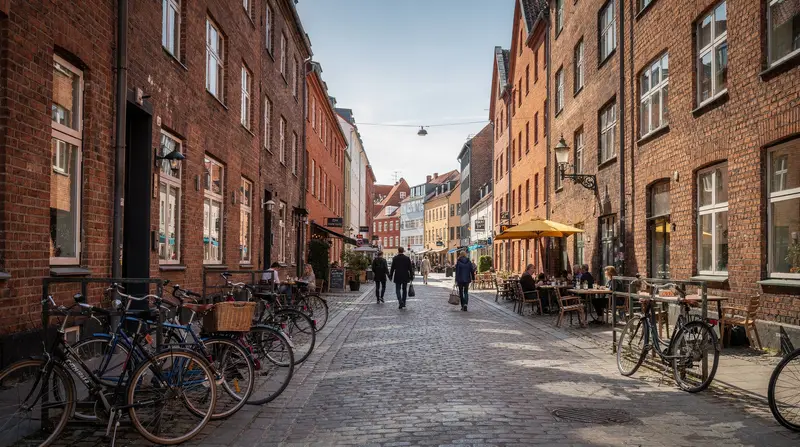
The coffee at most tourist-facing cafés near Nyhavn and the main pedestrian streets is predictably mediocre and overpriced. You will pay 65–75 DKK for a flat white that would cost 50 DKK and taste better in Nørrebro. The famous postcard backdrops have their appeal, but drink your coffee elsewhere first.
Also, do not attempt this crawl on a Sunday if you are planning to start before 11:00. Sunday mornings are slow in Copenhagen. Many specialty cafés open late; some close early. Check hours before you go.
The Bottom Line
Copenhagen’s coffee scene is genuinely worth dedicating a half-day to, not as a gimmick but because it reflects something real about how the city operates: with care, attention, and a quiet seriousness about doing things properly. Three stops, two neighbourhoods, a few hours in the late morning — it is one of the better ways to get a feel for the city beyond the usual attractions.
For a broader food view, see the best food in Copenhagen guide or the Torvehallerne market guide. The Nørrebro guide and Vesterbro guide cover both neighbourhoods in more depth.
Where the crawl fits into a Copenhagen day
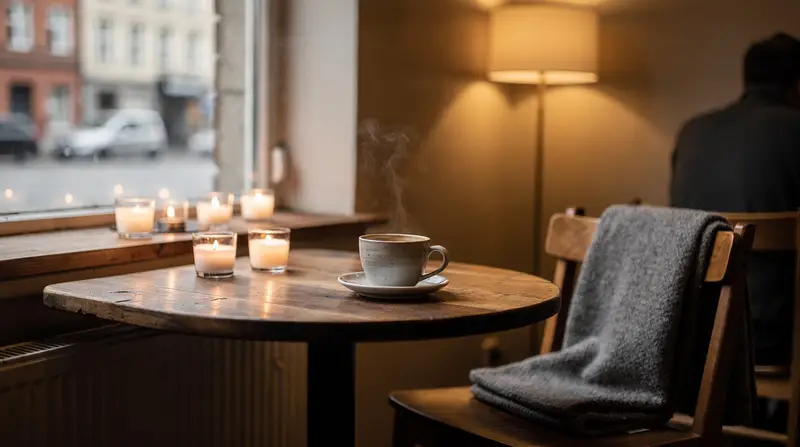
Coffee is one thread of a broader Danish habit of taking things slowly and well. If you want to understand why the cafés feel the way they do, the what is hygge guide and our roundup of the best cafés for hygge explain the low-light, no-rush culture that specialty coffee slots into perfectly. The pastry side deserves its own attention too — the Copenhagen bakeries and pastry guide covers where to find the best wienerbrød to go with your filter coffee.
For a wider curated view of the roasters, the best coffee in Copenhagen guide ranks the city’s cafés, and if you would rather have someone else lead, the best food tours in Copenhagen include options that fold coffee and pastry into a guided morning. The neighbourhoods themselves are worth reading up on before you wander — the Nørrebro destination page and Vesterbro destination page set the scene beyond the café doors. And if the crawl leaves you hungry for more of the city’s eating, our Copenhagen food bucket list is the natural next stop.
Frequently asked questions about the Copenhagen coffee crawl
How much does a coffee cost in Copenhagen?
At a specialty café, expect around 35–45 DKK for an espresso, 45–55 DKK for a flat white or filter coffee, and 22–40 DKK for a pastry. That is expensive by most European standards but not dramatically more than a chain — and the quality gap is large. Tourist-facing cafés near Nyhavn charge 65–75 DKK for a worse flat white, so walk to Nørrebro or Vesterbro instead.
Do I need to book anything for a coffee crawl?
No. This is a walk-in, self-guided activity — you pay at each café as you go. The only planning worth doing is checking opening hours (some specialty cafés open late, especially on Sundays) and going Tuesday to Friday to avoid weekend queues at the more famous roasters. For a guided alternative, the best food tours in Copenhagen include options that cover coffee and pastry.