Skagen — Where Two Seas Meet
Skagen: Denmark's northernmost tip where two seas meet. Grenen, painters' light, the Buried Church — and why you should plan an overnight, not a day trip.
Best of Aalborg: Private Walking Tour with a Local
Quick facts
- From Copenhagen
- ~5h30 by train + bus (via Aalborg), or ~5h by car
- Train price
- ~DKK 400–650 return (DSB to Aalborg + local bus/train)
- Currency
- DKK (Danish krone)
- Best for
- Grenen cape, painters' light, coastal dunes, Buried Church
- Nearest city
- Aalborg (1h north by bus or train)
Quick answer: Skagen is remarkable — but it’s 5.5 hours from Copenhagen and getting there without a car is cumbersome. Most visitors who go love it. Most visitors who try to do it as a day trip from Copenhagen spend more time in transit than in Skagen. This is genuinely an overnight destination (or part of a Jutland road trip), not a casual day out.
| Where | Denmark’s northernmost tip, Jutland peninsula |
| Cost | ~DKK 400–650 return by train/bus; museum DKK 130 |
| Time needed | 2 days minimum, including travel |
| Getting there | ~5h30 by train + bus via Aalborg, or ~5h by car |
| Best time | June–August for the light; late May for fewer crowds |
What Skagen Is
Skagen (pronounced roughly “Skayn” in Danish) is the northernmost town in Denmark, sitting at the very tip of the Jutland peninsula where the Kattegat (the sea between Denmark and Sweden) and the Skagerrak (the sea between Norway and Denmark) meet. The peninsula narrows to a point at Grenen — a curved spit of sand that extends into the water, where the two seas visibly collide with converging wave patterns.
The point where they meet can be reached on foot from the Grenen parking area (about 20 minutes’ walk across the sand), or via the tourist tractor-bus (Sandormen) that runs seasonally. Standing at the tip — one foot conceptually in each sea — is an experience that defies easy description. The wave patterns, the light, the sense of being at an edge all combine into something more visceral than the logistics suggest.
Swimming at Grenen is prohibited. The converging currents create dangerous rip tides. People ignore this and get into serious trouble. Don’t swim here.
The Skagen Light and the Painters’ Colony
Skagen’s particular quality of light has been documented and discussed since the late 19th century, when a group of Scandinavian artists established a colony here and spent decades painting the dunes, the fishermen, and each other in the northern coastal light. The Skagen Painters — Peder Severin Krøyer, Anna and Michael Ancher, Laurits Tuxen, and others — created a body of work that made Skagen’s name internationally known in art circles before mass tourism made it nationally famous.
The light really is different. Skagen sits far enough north that summer evenings produce an extended golden hour that lasts hours rather than minutes. The combination of reflected light off the sea on two sides, low summer sun angles, and the white and yellow colours of the local houses and dune grasses creates something that photographers seek out specifically. The Skagen Museum (Skagens Kunstmuseer) holds the largest collection of Skagen Painters’ works, making it one of the most important Danish art museums outside Copenhagen.
The Skagen Museum costs DKK 130 for adults (2026, verify before visiting). The main building is in Skagen town; annexes include the Anchers Hus (the home studio of Anna and Michael Ancher) and Drachmanns Hus, both within the town.
The Buried Church (Den Tilsandede Kirke)
One of Skagen’s more unusual sites is the tower of Skt. Laurentii Kirke, a church that was gradually buried by sand dunes in the late 17th and early 18th century. The congregation battled the encroaching sand for decades, removing tonnes of it from the interior after each storm, until the effort became impossible and the church was deconsecrated in 1795. The nave was demolished and only the tower preserved as a landmark. It now stands in the dunes at a slightly tilted angle, surrounded by drift sand, looking exactly like a church that lost a battle with geography.
Entry to the site costs DKK 50 (small fee, check current prices). It’s about 2 kilometres south of central Skagen — walkable or a short cycle.
The Dunes and the Wandering Dune
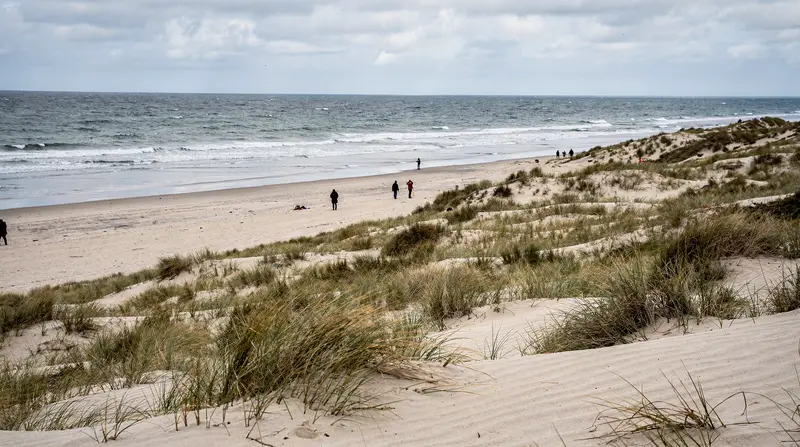
South of Skagen, the Råbjerg Mile is Denmark’s largest migrating sand dune — a plateau of loose sand about 40 metres high and 1 square kilometre in area that moves north at approximately 15 metres per year, gradually burying whatever is in its path. It’s a remarkable piece of natural geography that looks nothing like most people’s idea of Denmark (flat farmland, neatly managed) and everything like a coastal desert. Access is free; it’s about 20 kilometres south of Skagen town by car.
The coastal paths along Skagen’s western and eastern shores connect the town to the dunes and the Grenen point across variable terrain — some flat beach walking, some through planted dune forest, some over open sand. This is the landscape that drew the painters and that still draws people who want to experience something genuinely remote within a technically accessible country.
Getting to Skagen
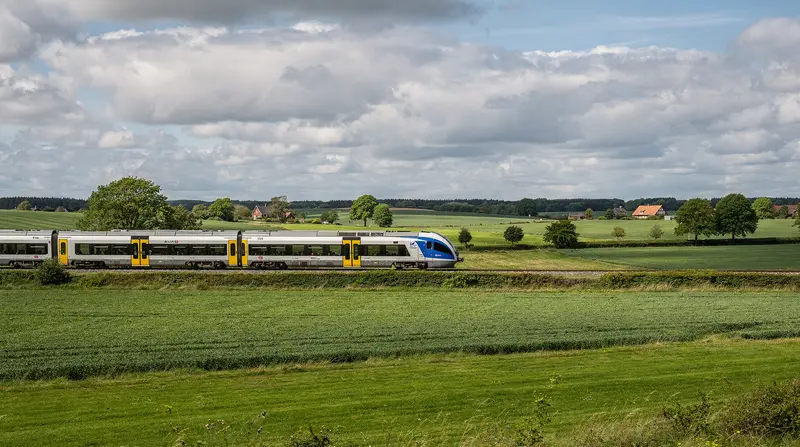
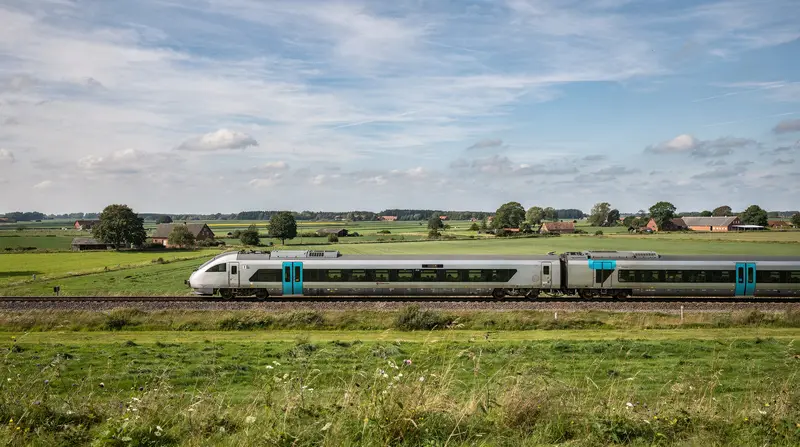
By train and bus: From Copenhagen Central, take the InterCity train to Aalborg (approximately 4–4h30). From Aalborg, the regional train to Frederikshavn takes about 1 hour; from Frederikshavn, a final bus or local train reaches Skagen in about 30 minutes. Total: approximately 5h30 minimum. Connections are not always perfectly timed.
By car: Copenhagen to Skagen via the E45 motorway takes approximately 5 hours in normal traffic, though summer weekends bring significant congestion north of Aalborg. A car is by far the more flexible option and allows stops at Lindholm Høje in Aalborg and Råbjerg Mile along the way.
Accommodation: Skagen has hotels, holiday apartments, and camping options. Summer bookings fill early — the town is extremely popular with Danish domestic tourists and increasingly with German, Dutch, and Swedish visitors. Book accommodation months ahead if visiting between late June and mid-August.
Is Skagen Worth the Journey from Copenhagen?
For a dedicated traveller who wants natural and historical atmosphere, genuinely: yes. Skagen offers something qualitatively different from any other destination in this guide — a coastal extremity, an artistic heritage woven into the physical landscape, and a quality of light that isn’t marketing language but genuine geography. The dunes, the Buried Church, and Grenen are things that don’t exist anywhere else in Denmark at this scale.
The honest catch is the distance. You need 2 days minimum to make the journey worthwhile: one for travel and Skagen town, one for Grenen and the dunes. Three days allows Skagen plus Aalborg, which together form a coherent North Jutland visit.
For visitors with only 3–4 days total in the Copenhagen area: Skagen should probably wait for a second trip. For visitors with 6–7 days who want to go beyond the capital: include it.
Skagen Town Itself
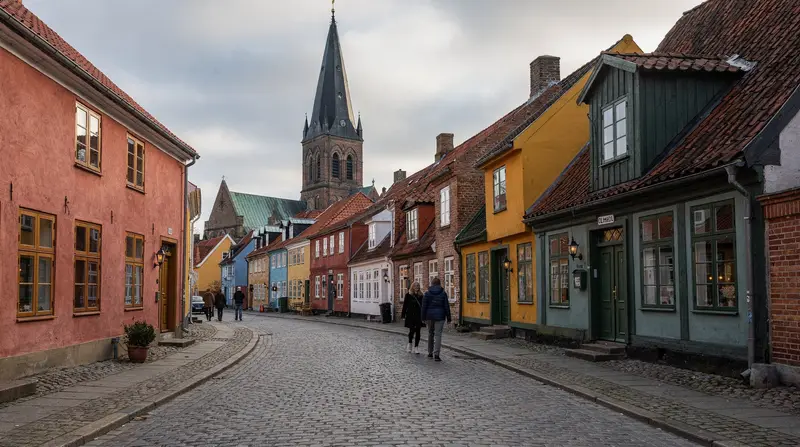
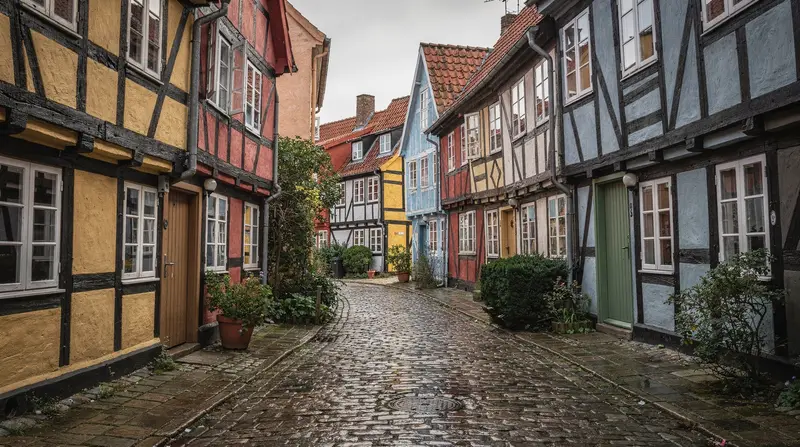
Skagen town is small — around 8,000 permanent residents — and shaped entirely by its fishing heritage and the later influx of artists and tourists. The characteristic local architecture (yellow-painted houses with red tile roofs) gives the town a coherence that feels genuine rather than constructed: these houses look this way because local sand gave the mortar its yellow tinge, not because a tourism board decided on a colour scheme.
The main street (Østre Strandvej and Vestre Strandvej, running east and west along the respective coasts) is where most shops, restaurants, and galleries concentrate. In summer this is busy with Scandinavian domestic tourists; in spring and autumn it’s much quieter. The harbour (Skagen Havn) is still a working fishing harbour — one of the most significant in Denmark — and the morning fish market, when active, shows the town as it actually operates rather than as it performs for tourists.
There are several independent galleries selling work by contemporary artists in the Skagen tradition — the quality varies significantly, from excellent to purely commercial. The connection between art and place is real enough that even the commercial end of it has more substance than equivalent art-market towns elsewhere.
The Skagen Museum (Skagens Kunstmuseer)
The museum dedicated to the Skagen Painters is one of the best regional art museums in Denmark. The collection spans the work of the colony’s main figures — Krøyer’s large-format paintings of the beach at blue hour, Anna Ancher’s intimate interior scenes, Michael Ancher’s fishermen portraits — and places them in the biographical and geographical context that makes them meaningful. Understanding who these people were and why they came here adds considerably to the experience of looking at the work.
The museum has several locations: the main building near the town centre, the Anchers Hus (Anna and Michael Ancher’s home and studio, preserved with period furnishings), and the Drachmanns Hus (home of the poet Holger Drachmann). A combined ticket covers all three. The buildings themselves are part of the experience — the Anchers Hus in particular shows how the colony lived and worked, not just what they produced.
Entry to the Skagen Museum main building costs DKK 130 for adults; combined tickets with the historic houses cost more. Check the museum website for current prices and seasonal opening hours, as they vary significantly between summer and winter.
Seasonal Considerations
| Season | Light & weather | Crowds | Verdict |
|---|---|---|---|
| June–August | Long golden evenings, peak painters’ light | Maximum, book early | Best light, worst crowds |
| Late May–early June | Still excellent light | Thin, before peak season | Best overall balance |
| September–October | Softening light, more storms | Quiet | Good for photography, some closures begin |
| November–March | Severe, dramatic, cold | Minimal | Wild, but most tourist infrastructure closed |
Summer (June–August): Long golden evenings, the peak of the Skagen Painters’ light, full services open, maximum crowds. The beach towns are packed; book everything early. The payoff is real.
Spring and autumn: The light is still good, the crowds significantly thinner, many restaurants and services still open. Late May and early June are particularly good — the worst of the summer crowds haven’t yet arrived.
Winter: Most tourist infrastructure closes from November to March. The town has a skeleton crew of year-round residents and a few open cafés. The dunes in winter have a particular severity that appeals to some visitors precisely because it’s not the postcard version. If you’re driving and don’t mind the cold, this is when Skagen is most wild.
Combining Skagen with the rest of North Jutland
Skagen rarely works as an isolated trip from Copenhagen given the distance, which is why most visitors who make it work fold it into a longer North Jutland loop. Aalborg, an hour south by bus or train, is the natural base — it has its own worthwhile old town and is where most Skagen-bound public transport connects.
Travellers continuing further south sometimes add Aarhus for Denmark’s second city and a very different urban register from either Copenhagen or Skagen. If you’re building a longer Denmark itinerary rather than a Copenhagen-only trip, the day trips from Copenhagen guide explains where Skagen fits relative to the closer, easier options like Roskilde or Helsingør.
A craft beer walking tour of Aalborg is a good way to spend an evening in the natural gateway city before or after the trip north to Skagen.
Practical Information
Food: Skagen’s food scene runs from excellent fish restaurants (the harbour area has fresh catch straight from local boats) to the usual tourist-town spectrum of mid-range and overpriced. The best fish is genuinely good. The tourist traps are genuinely bad. Ask locals or check recent reviews rather than picking by location.
Cycling: The flat coastal landscape around Skagen is ideal for cycling. Hire a bike in town and you can reach Grenen, the Buried Church, and the dune forest without needing a car or bus.
The Skagen Card: A local discount card covering museum entry and some attractions; worth calculating if you’re visiting multiple sites.
See also: The Aalborg guide covers the nearest large city and the most natural base for reaching Skagen by public transport. The day trips guide places Skagen in context among all Copenhagen day trip options.
Frequently asked questions about Skagen
Is Skagen worth visiting from Copenhagen?
Yes, but plan for at least two days including travel. The journey is approximately 5.5 hours each way — making a proper day trip brutal. Skagen’s combination of coastal drama (Grenen, the dunes, the Buried Church) and artistic heritage (the Skagen Painters’ Museum) justifies the effort for travellers who want more than a city visit.
Where do the two seas meet at Skagen?
At Grenen, the curved spit of sand extending from Denmark’s northernmost point. The Kattegat (east, toward Sweden) and the Skagerrak (west, toward Norway) meet here. The converging wave patterns are visible on calm days; on windy days they’re dramatic. It’s a 20-minute walk from the Grenen parking area across the sand.
Can you swim where the two seas meet?
No. Swimming is prohibited at Grenen due to dangerous rip currents created by the converging seas. People have drowned here despite the prohibition. The beaches to the south and east of Skagen town are safe for swimming.
What is the Buried Church at Skagen?
The tower of Skt. Laurentii Kirke, a 15th-century church buried by encroaching sand dunes over the 17th and 18th centuries. The congregation struggled to keep the interior clear until 1795, when the effort was abandoned, the church deconsecrated, and the nave demolished. The tower remains, partly buried, in the dune landscape south of Skagen. Entry costs approximately DKK 50.
Who were the Skagen Painters?
A group of Scandinavian (primarily Danish) artists who settled in Skagen in the late 19th century, attracted by the distinctive northern light. Key figures included Peder Severin Krøyer, Anna Ancher, Michael Ancher, and Laurits Tuxen. Their work documented Skagen’s fishing community and each other in a social-realist style notable for its attention to light. The Skagen Museum (Skagens Kunstmuseer) holds the main collection and is one of Denmark’s best regional art museums.
How long should I spend in Skagen?
A minimum of 2 days allows you to cover the essentials: Grenen, the Buried Church, the Skagen Museum, and the town itself. Three days allows you to add Råbjerg Mile and a more relaxed pace. Fewer than 2 days is workable if you’re driving directly from nearby (e.g., from Aalborg) rather than coming from Copenhagen.
Is it better to base yourself in Aalborg or Skagen itself?
For a single overnight, stay in Skagen town — it puts you close to Grenen for early or late light and saves the extra hour of transit each way. For a longer North Jutland trip covering Aalborg and possibly Aarhus too, basing in Aalborg and day-tripping to Skagen works well and gives you more accommodation choice and lower prices.
Top experiences
Bookable activities with verified prices and instant confirmation on GetYourGuide.