Møns Klint Day Trip from Copenhagen: White Cliffs & GeoCenter
Møns Klint day trip from Copenhagen: 2 hours by car or bus, white chalk cliffs, fossils, GeoCenter, and the Forest Tower. Costs, transport, and honest
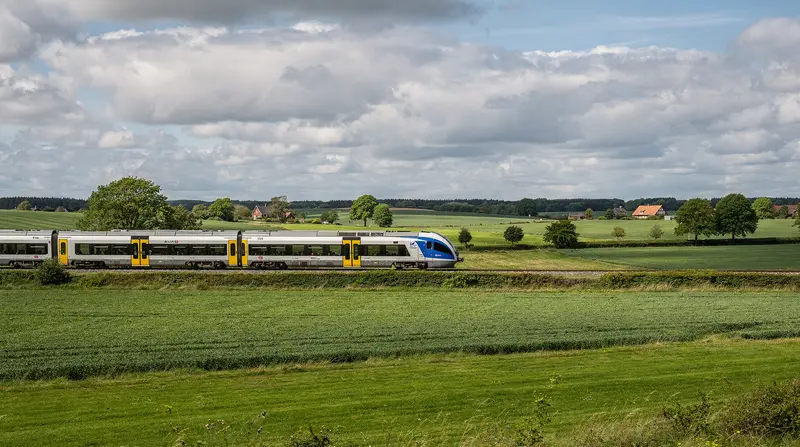
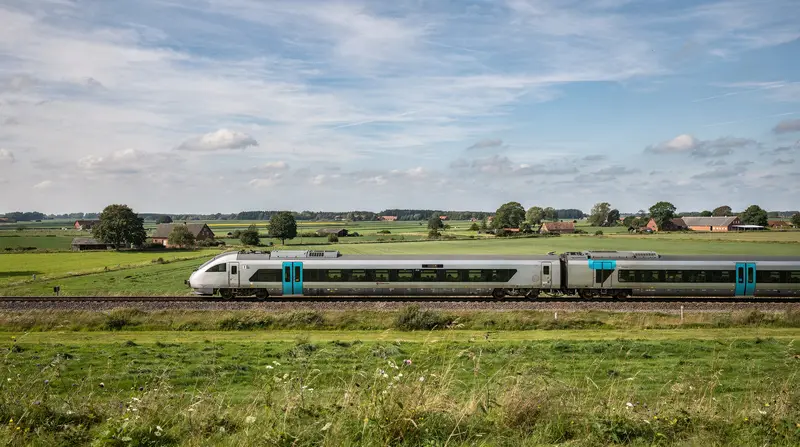
From Copenhagen: Round-Trip to Møns Klint and Forest Tower
Duration: 8 hours
Quick facts
- Distance from Copenhagen
- 130 km south-east — approx. 2 hours by car
- Public transport
- Train to Vordingborg or Stege + local bus (2.5–3 hours total)
- GeoCenter admission
- 195 DKK adults / 95 DKK children (3–14)
- Cliff access
- Free (no admission to the cliff path itself)
- Best months
- May–September for cliff path; GeoCenter open year-round
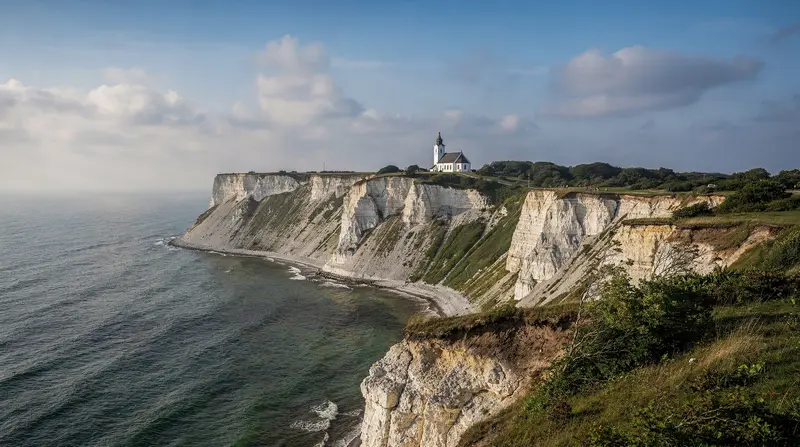
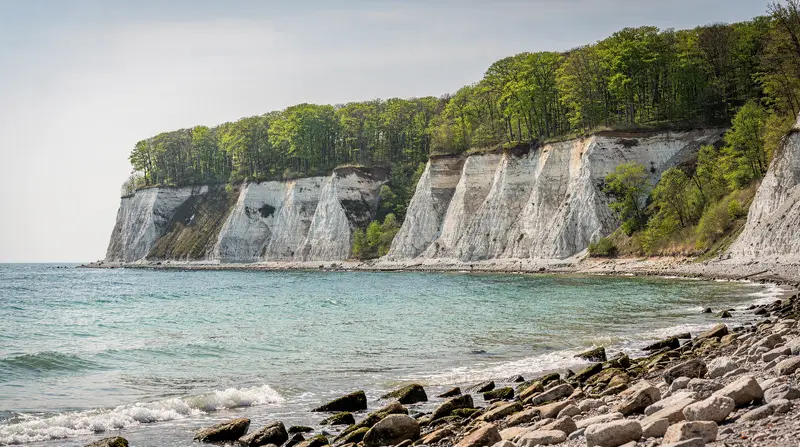
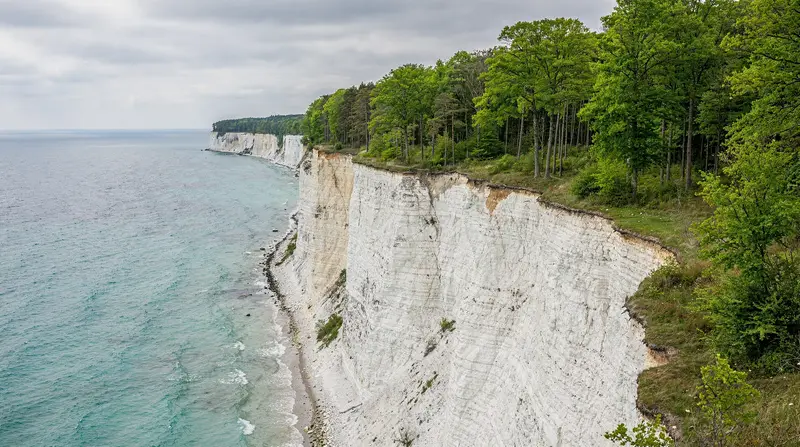
Quick answer: Møns Klint is the most visually dramatic landscape within reach of Copenhagen — 128-metre white chalk cliffs dropping straight into Baltic Sea. It takes roughly 2 hours each way by car, or 2.5–3 hours by public transport. A car makes it vastly easier. Budget a full day: GeoCenter (2 hours) + cliff walk (2–3 hours) + optional fossil hunt fills 6–7 hours comfortably.
| Where | Møn island, 130 km south-east of Copenhagen |
| Cost | Cliff path free; GeoCenter ~195 DKK adults |
| Time needed | Full day (6–7 hours on site plus travel) |
| Getting there | Car (2hrs) recommended; train + bus possible (2.5–3hrs) |
| Best time | May–September for the cliff path; overcast for photos |
What makes Møns Klint worth the distance
Most Copenhagen day trips cluster within 45 minutes by train — Køge among them. Møns Klint is 130 km away, which is why many visitors skip it. That’s a mistake if you’re after scenery rather than history. The cliffs are a genuinely rare geological feature in this part of Europe — pure white chalk laid down 70 million years ago, now exposed by erosion and standing 128 metres above the sea. On a clear day with the green forest above and Baltic blue below, it’s one of the most photogenic spots in Denmark.
For a full picture of how Møns Klint fits alongside other Zealand day trips, see the day trips from Copenhagen guide. The chalk was laid down during the Cretaceous period when this part of the world was covered by a warm tropical sea. The white material is composed almost entirely of the skeletal remains of microscopic marine algae called coccoliths.
Over millions of years, layer upon layer accumulated on the seafloor. Much later, tectonic pressure from ice sheet movement during the ice ages pushed the chalk layers upward and sideways, creating the dramatic fold structures visible in the cliff face today. The result is not a simple vertical wall but a layered, complex structure with visible geological history running through it like the rings of a tree.
The island of Møn itself is also one of the darkest sky areas in northern Europe, certified under the Dark Sky Park programme. Stargazing in autumn and winter, when the skies are clear, can be exceptional — though that’s a separate trip from the day-trip version. If you’re staying overnight, the GeoCenter can advise on observation spots and conditions.
Getting there: car vs. public transport
By car: The most practical option. Copenhagen to Møns Klint is roughly 130 km via Route 59 south through Zealand. Allow 1 hour 45 minutes to 2 hours depending on traffic. The GeoCenter has a large paid car park (50 DKK for the day). GPS coordinates for the GeoCenter car park: 54.9739° N, 12.5383° E.
By public transport: Take a regional train from Copenhagen H to either Vordingborg (1 hour 20 minutes) or Stege (change at Vordingborg, adds 30 minutes). From Stege, local bus 678 runs to Møns Klint in about 45 minutes. The total journey is around 2.5–3 hours each way. Bus schedules are infrequent (typically 4–6 times per day in summer), so plan your return carefully before you go.
Organised tours remove the transport problem entirely. This full-day tour from Copenhagen includes transport, the GeoCenter, and the forest tower at Camp Adventure — useful if you don’t have a car and don’t want to wrestle with rural bus timetables.
GeoCenter Møns Klint: worth the admission?
Yes, but manage expectations. The GeoCenter is a well-designed science museum focused on the geology of the cliffs and the mass extinction event from 66 million years ago (the K-Pg boundary is partially represented in the chalk). It’s aimed at a general audience, not specialists, and does a good job of explaining how chalk cliffs form and why you find fossils of sea creatures at the top of a 128-metre cliff.
The museum’s standout feature is the immersive space dedicated to the Chicxulub asteroid impact. The exhibit doesn’t use cheap shock tactics — it methodically builds the geological evidence and helps you understand how scientists know what they know. This is harder to do well than it sounds, and the GeoCenter manages it.
The lower levels cover local ecology — the forest above the cliffs, the marine environment below, and the species that have colonised the chalk landscape over the centuries. This section is less compelling than the geology exhibits but relevant if you’re interested in the natural environment as well as the rocks.
Allow 90 minutes to 2 hours. The interactive elements work well for children (there are dedicated activity stations throughout). The panoramic viewing platform over the cliff edge is excellent and included in admission — it gives you the overview before you descend, which helps you understand the scale.
Special exhibitions rotate throughout the year. Check the GeoCenter website before visiting if you want to know what’s running beyond the permanent collection.
Admission (2026): 195 DKK adults, 95 DKK children aged 3–14, under 3 free. Open daily 10:00–17:00 (to 18:00 July–August, shorter hours November–March — confirm current hours at geocenter.dk).
Skip the café inside the GeoCenter — food is overpriced and mediocre. There’s a café in the car park area with outdoor seating that’s marginally better, but the best option is a packed lunch eaten at the cliff-top picnic tables.
Møns Klint for photographers
The cliffs present a few specific photographic challenges. The white chalk is highly reflective and blows out easily in direct sun — overcast days produce better exposed images than bright summer afternoons. The best light is in the morning (the cliffs face roughly east) or in the final hour before sunset.
From the beach, shooting upward shows the full drama of the cliff height. The fold structures in the chalk are most photogenic in the northern section, where the layers have been pushed into pronounced curves. For the classic “white cliffs and blue sea” image that shows up in every Denmark travel article, position yourself on the beach 200–300 metres north of the GeoCenter stairs and shoot south.
Drone flying is prohibited over the cliff area — the airspace restriction exists to protect nesting birds in the cliff face. Enforcement is active in summer.
The cliff top offers wide landscape views across Møn and toward the sea, best in the morning before haze builds. The Forest Tower at Camp Adventure provides aerial views of the surrounding landscape if elevated photography is a priority — see the Camp Adventure section above.
The cliff walk: practical details
The main cliff path starts behind the GeoCenter and descends via a series of staircases to the beach at the base of the cliffs. The route is well-maintained but involves roughly 500 steps each way on the main descent. This is not a casual stroll — people who have difficulty with steep steps should stick to the cliff-top viewing platforms, which are accessible from the GeoCenter without descending.
The path runs along the base of the cliffs for several kilometres in either direction. The best section for geology is the area immediately below the GeoCenter stairs, where the fold structures in the chalk are most dramatic. Moving north from this point, the cliffs become lower and the beach wider; moving south, the cliffs are higher and more vertical.
What to know before you go:
-
Wear proper shoes with grip. The steps are steep and can be slippery after rain. The beach itself is large flint cobbles — uncomfortable in sandals.
-
The cliff base is accessible throughout most tidal cycles. At very high tide, a few narrow sections require care.
-
Fossils are visible in the chalk — sea urchins (Echinocorys), belemnites (pointed internal shells of squid-like creatures), and shell fragments. You may collect small quantities for personal use; commercial collecting is not permitted.
-
Do not stand directly under unstable chalk overhangs or fresh fall debris. Chalk erosion is active and warning signs are posted for specific sections. Respect them.
-
The full cliff walk from one end to the other (Hvideklint to Klinteskoven) is about 7 km one way — not a day-trip-sized undertaking unless you arrange a pick-up at the far end.
-
The cliff face is most photogenic in morning light (east-facing) or on overcast days when the chalk isn’t overwhelmingly bright.
Most day visitors do the central section: descend via the GeoCenter stairs, walk 1–2 km in each direction along the beach, and return. This takes about 2–3 hours at a relaxed pace.
A practical note on the descent: The main staircase is the most direct route but not the only one. There’s an alternative path to the north (signposted from the GeoCenter car park) that descends more gradually. If your group includes anyone who finds the main staircase steep on the knees coming back up, the alternative route is worth using for the return leg.
Camp Adventure Forest Tower
About 25 km northwest of Møns Klint, the Camp Adventure Forest Tower is a spiralling walkway that rises 45 metres above the forest canopy with views over the surrounding landscape. It’s a worthwhile addition if you’re driving and want a second activity. The Møns Klint and Forest Tower day tour combines both sites. Admission to the tower alone is 130 DKK adults.
If you’re choosing between the tower and the GeoCenter, the GeoCenter wins for content related specifically to Møns Klint. The tower is impressive architecture but doesn’t add geological context.
Fossil hunting at Møns Klint
The fossil hunt add-on tour is run by guides who know where to look in the chalk layers. If you’re travelling with children or anyone who would genuinely enjoy finding a 70-million-year-old sea urchin, it’s worth booking. Solo fossil hunting on the beach is also free and reasonably productive — look in the fresh chalk falls rather than the weathered surface.
What to eat near Møns Klint
The café in the GeoCenter car park area is convenient but mediocre and expensive — the sort of place that exists because it’s the only option immediately at hand. Bring lunch from Copenhagen or stop in Stege on the way.
The town of Stege (20 minutes drive from the cliff) has a good bakery (Stege Bageri on Storegade — the bread is excellent), a well-regarded restaurant called Lollik, and several cafes. Budget 100–140 DKK for a sandwich lunch with coffee. If you’re visiting in summer, Stege’s ice cream shop (Stege Is) is locally famous.
At the cliff itself, a kiosk near the GeoCenter sells drinks and basic snacks in summer. There are picnic tables on the cliff top near the main staircase — the view makes a packed lunch considerably more enjoyable than the café option.
Where to stay if you extend to two days
Most visitors do Møns Klint as a day trip. Staying overnight is worth it if you want to:
- Watch sunset from the cliff top (dramatic, and the car park empties by 18:00 in summer)
- Experience the dark sky stargazing that makes Møn notable among astronomers
- Combine with a cycle tour of the island — Møn is well-signed for cycling, with marked routes connecting the cliff, Stege, and the surrounding farmland
Accommodation options near the cliff: Møns Klint Camping (affordable, well-maintained, directly adjacent to the GeoCenter); several holiday cottage rental platforms cover the island; and there’s a small selection of B&Bs in Stege.
Planning your Møns Klint day: sample schedule
Arriving by car (recommended):
- 09:00: Leave Copenhagen
- 11:00: Arrive at GeoCenter car park
- 11:00–12:45: GeoCenter museum
- 12:45: Packed lunch on the cliff-top picnic tables
- 13:30: Descend to beach via main staircase
- 14:00–16:30: Cliff walk (1–2 km in each direction, fossil hunting, swimming if conditions allow)
- 16:30: Return to car park
- 17:00: Optional: 25 km detour to Camp Adventure Forest Tower
- 19:00: Return to Copenhagen (arrive approximately 21:00)
Arriving by public transport:
- 07:30: Train from Copenhagen H to Vordingborg
- 08:45: Arrive Vordingborg, change to local bus
- 09:30: Arrive Stege, change to bus 678 (check timetable in advance)
- 10:30: Arrive Møns Klint
- 16:00: Last bus back to Stege (check return time carefully — missing this means a taxi)
- 19:00: Train from Vordingborg to Copenhagen
- 20:30: Arrive Copenhagen
Møns Klint with limited mobility
The cliff-top viewing platforms and the GeoCenter itself are fully accessible — flat paths, ramps, and a viewing platform reached without stairs. The 500-step descent to the beach, however, is the main event for most visitors and has no accessible alternative; anyone unable to manage a long steep staircase should plan to experience Møns Klint from the cliff-top platforms rather than the beach level. The GeoCenter’s exhibitions, including the Chicxulub impact space, are all on accessible flooring with lifts between levels. Parking close to the GeoCenter entrance is available for visitors with mobility needs — ask at the ticket desk on arrival.
Nature and wildlife around the cliffs
Beyond the geology, Møns Klint sits within a protected forest and coastal reserve that supports species uncommon elsewhere in Denmark. The beech forest above the cliffs (Klinteskoven) is one of the largest unbroken beech woodlands in the country and hosts several rare orchid species in late spring — the lady’s slipper orchid, in particular, draws specialist visitors in May and early June to specific, well-marked locations within the forest.
Peregrine falcons nest in the cliff face itself, which is the reason drone flights are banned in the area; birdwatchers with binoculars can sometimes spot them from the cliff-top platforms without disturbing the nesting sites. The GeoCenter’s ground-floor ecology section has a small display on both the orchids and the falcons if you want context before heading into the forest.
Honest comparison: Møns Klint vs. Stevns Klint
Both are chalk cliff UNESCO-adjacent sites (Stevns Klint is actually UNESCO-listed; Møns Klint is not). The comparison matters if you’re deciding which to prioritise:
- Møns Klint is more dramatic visually — taller, more photogenic, better swimming beach at the base
- Stevns Klint has stronger scientific significance (the K-Pg mass extinction boundary is visible in the rock) and the unusual Højerup Old Church perched on the edge
- Møns Klint requires more travel time and ideally a car
- Stevns Klint is more accessible from Copenhagen and can be combined with Køge as a single day
If you can only do one, Møns Klint wins on pure visual impact. If you’re interested in the geology and the UNESCO status, Stevns Klint is the better call.
Frequently asked questions about Møns Klint
How far is Møns Klint from Copenhagen?
Møns Klint is approximately 130 km south-east of Copenhagen on the island of Møn. By car it takes 1 hour 45 minutes to 2 hours depending on traffic. By public transport (train + bus) allow 2.5–3 hours each way.
Do you need a car to visit Møns Klint from Copenhagen?
No, but a car makes the visit considerably easier. Public transport requires a train to Stege and then a local bus with infrequent service. An organised day tour is the best alternative to a car if you don’t drive.
Is Møns Klint free to visit?
The cliff path and beach are free. The GeoCenter museum charges 195 DKK for adults. There is a paid car park at the GeoCenter (50 DKK). The cliff walk itself has no admission fee.
How long should you spend at Møns Klint?
Allow at least 4–5 hours on site: 90 minutes for the GeoCenter and 2–3 hours for the cliff walk. A full day (including travel from Copenhagen) means leaving early morning and returning in the evening.
When is the best time to visit Møns Klint?
May to September offers the best combination of weather, accessible cliff paths, and full GeoCenter hours. Summer weekends are busy; arrive before 10:00 to get a cliff-side car park space. Winter visits are quieter but some cliff sections may be closed after heavy rain.
Can you swim at Møns Klint?
Yes — there’s a beach at the base of the cliffs. The water is clear and the setting is striking. The sea can be cold even in summer (17–20°C in July). The beach is pebbly rather than sandy. There are no lifeguards.
Are there toilets at Møns Klint?
Yes, at the GeoCenter and at the top of the main staircase. No facilities at the beach itself.
Top experiences
Bookable activities with verified prices and instant confirmation on GetYourGuide.