Aalborg Day Trip from Copenhagen
Aalborg: North Jutland's largest city, 4h30 from Copenhagen. Waterfront revival, street art, Lindholm Høje Viking site — honest guide for day-trippers.
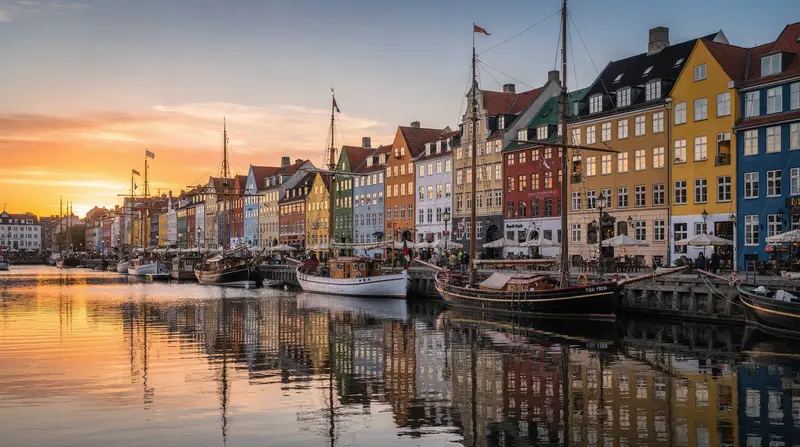
Best of Aalborg: Private Walking Tour with a Local
Quick facts
- From Copenhagen
- ~4h–4h30 by InterCity train (IC)
- Train price
- ~DKK 300–550 return (DSB, advance booking)
- Currency
- DKK (Danish krone)
- Best for
- Waterfront walk, street art, Viking burial site, craft beer
- Population
- ~120,000 (largest city in North Jutland)
Quick answer: Aalborg is a genuinely interesting city but the train journey from Copenhagen — 4 to 4.5 hours each way — makes it an overnight proposition rather than a realistic day trip for most visitors. If you’re doing a Jutland road trip or coming up from Aarhus, it fits naturally. As a standalone day trip from Copenhagen, the travel time is hard to justify unless you have specific reasons to go.
| Where | North Jutland, on the Limfjord, ~250 km from Copenhagen |
| Getting there | ~4h–4h30 by InterCity train, via the Great Belt and Aarhus |
| Cost | ~DKK 300–550 return train; DKK 60–100 per museum entry |
| Time needed | Full day minimum (5–6 hours on site); overnight recommended |
| Best combined with | Aarhus and Skagen, as a 3–4 day Jutland loop |
Getting to Aalborg from Copenhagen
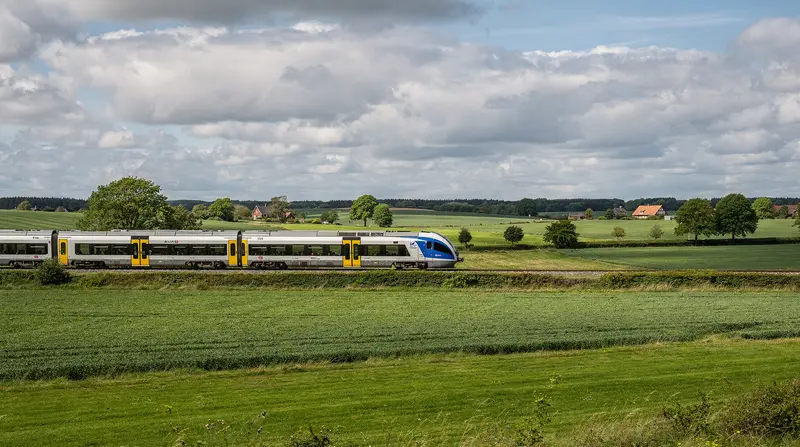
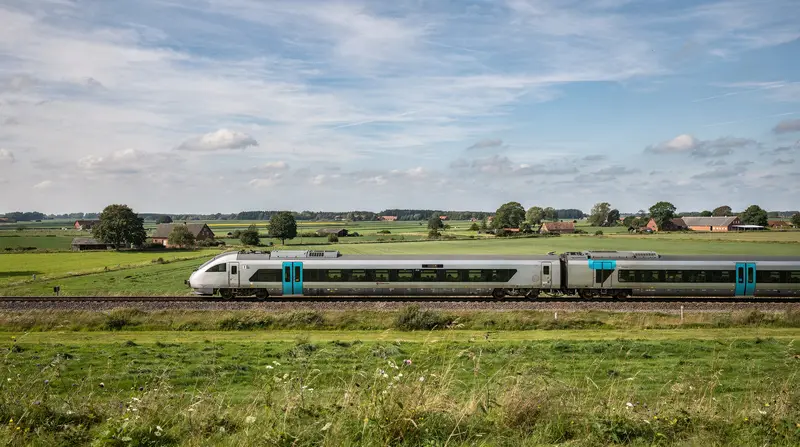
The InterCity (IC) train from Copenhagen Central (København H) to Aalborg takes approximately 4 hours to 4 hours 30 minutes, crossing to Jutland via the Great Belt (Storebælt) and continuing north through Funen, Odense, Fredericia, and Aarhus before reaching Aalborg. Trains run several times daily.
Return tickets cost DKK 300–550 depending on advance booking and ticket type. DSB’s Orange (cheapest, fully non-refundable) can be significantly cheaper if booked well in advance. The DSB app and website are the most straightforward booking tools.
The journey time makes Aalborg better suited to an overnight or multi-night stay, particularly if you’re planning to continue north to Skagen. If you’re travelling specifically for Aalborg, plan for at least two days including travel time.
Private walking tour of Aalborg with a local guideThe Aalborg Waterfront
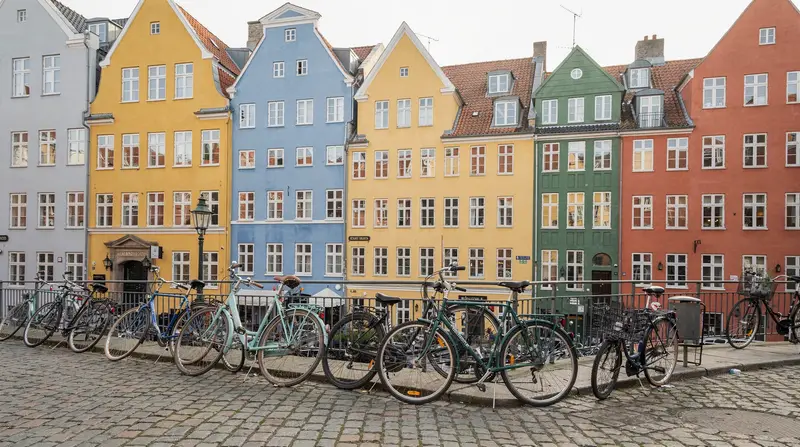
Aalborg sits on the southern bank of the Limfjord, and its waterfront transformation — completed over the past decade — is the most immediately striking thing about the city today. The old industrial harbour at Aalborg Havn has been redeveloped into a mixed residential and cultural quarter: museums, restaurants, kayak rentals, and open public spaces replace the industrial infrastructure that once defined this stretch of water.
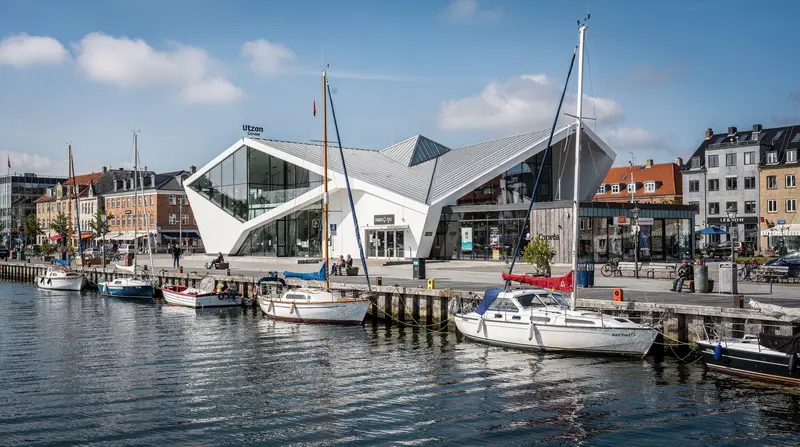
The Utzon Center, designed by Jørn Utzon (the architect of the Sydney Opera House) and completed posthumously in 2008, anchors the waterfront’s cultural offer. It functions as an architecture and design centre with changing exhibitions related to Utzon’s work and broader architectural themes. Entry costs around DKK 80–100 depending on the current exhibition. The building itself is worth seeing even from the outside — a white concrete structure that opens generously toward the water.
Walk east along the harbour from the Utzon Center to find the Nordkraft cultural centre, a converted power station housing a cinema, climbing wall, theatre venues, and various bars and restaurants. This is where much of Aalborg’s evening culture concentrates.
The Old Town and Jomfru Ane Gade
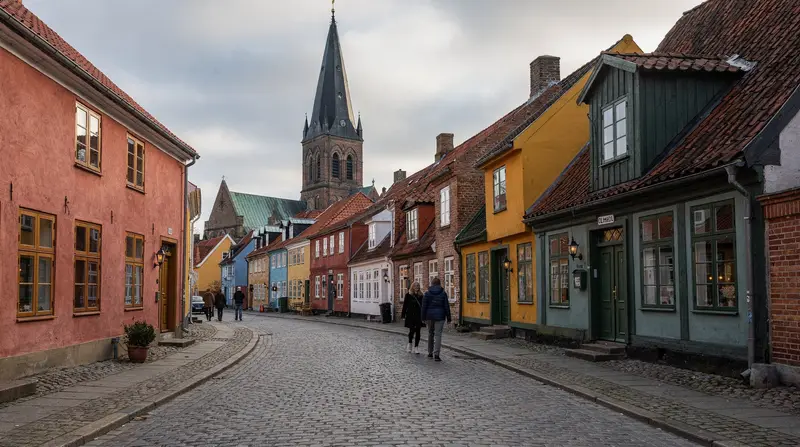
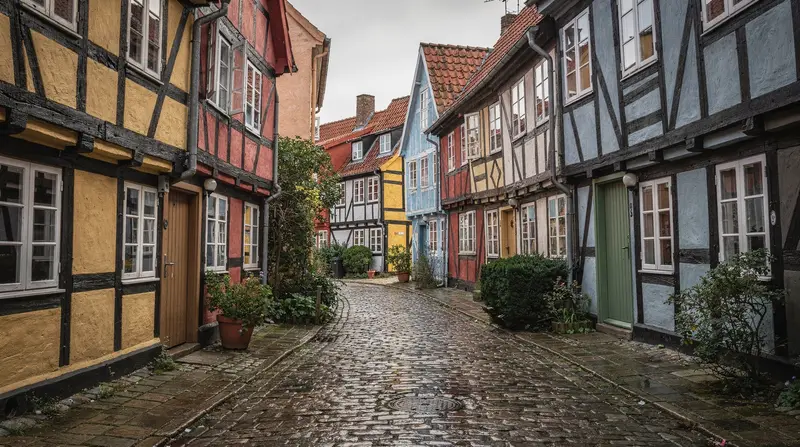
The historic centre is a 10–15 minute walk from the waterfront, centred on Jomfru Ane Gade — a pedestrian street lined with bars and restaurants that turns into Aalborg’s main nightlife strip after dark. During the day it’s quieter and more representative: old merchant houses, some dating to the 16th and 17th centuries, form a coherent street scene that rewards a slow walk.
Budolfi Cathedral (Sankt Budolfi Domkirke) dates to the late medieval period, though most of the current structure is 18th century. The white Baroque exterior stands out against the older surrounding buildings. Entry is free.
Aalborghus Castle sits at the northern edge of the old town, directly above the fjord. Built in the 1550s under Christian III, the current structure is partly original and partly rebuilt. The dungeons are accessible and worth a brief visit for the genuine medieval atmosphere; entry is free.
Aalborg guided craft beer walk with 6 tastingsStreet Art
Aalborg has invested significantly in public street art since the early 2010s, and the result is a genuine urban art scene rather than a few commissioned murals on conspicuous walls. The Kattesundet area — the lanes south of Jomfru Ane Gade — and the industrial zones around Vesterbro contain the densest concentration of large-scale murals. Several international artists have worked here alongside local Aalborg artists.
This is not a formal street art trail with maps and guided tours (though tours exist), but a neighbourhood you walk through and look at. The quality is variable — some pieces are strong, others are filler — but the cumulative effect of street-level art across a walkable city centre is enjoyable for anyone who pays attention to this kind of work.
Lindholm Høje Viking Burial Ground
About 3 kilometres north of the city centre (across the fjord bridge, then a 20-minute bus ride or 15-minute taxi), Lindholm Høje is Denmark’s largest and best-preserved Viking Age burial ground. Around 700 graves from the Iron Age and Viking period (roughly 400–1000 CE) are marked by stones arranged in oval and triangular ship-shapes in the hillside above the fjord. The setting — open heathland with a view across the water — is striking.
The adjacent museum provides archaeological context and houses finds from the site. Entry costs approximately DKK 80 for adults (museum; the burial ground itself is accessible without charge). Allow 1.5–2 hours including the museum visit.
Lindholm Høje is genuinely significant and not overrun with tourists — a combination that makes it better than many more-famous Viking sites.
Food and Drink in Aalborg
Aalborg has a food culture that punches above its size. The waterfront redevelopment has brought in a cluster of restaurants and cafés along the Aalborg Havn that are considerably better than what was here a decade ago, and the Jomfru Ane Gade area — while primarily known as a nightlife strip — has enough lunch-quality restaurants to feed visitors during the day.
For a proper Danish lunch, smørrebrød restaurants operate in the old town and around Nytorv (the main square). Prices in Aalborg are noticeably lower than Copenhagen for equivalent quality — a two-course lunch at a traditional restaurant runs DKK 130–180.
The craft beer scene is well-developed relative to Aalborg’s size. Several local microbreweries operate, and the guided craft beer walk covers the scene in a structured way for visitors who want to understand it. Aquavit is the city’s traditional spirit (the Aalborg Akvavit brand is nationally known), and most traditional bars will have a selection.
The Nordkraft food options in the converted power station are the best for a quick casual meal in an interesting setting — a mix of street food vendors and small restaurants across the building’s ground floor.
Aalborg’s University and Cultural Scene
Aalborg University (Aalborg Universitet, AAU) is a relatively young institution founded in 1974, with around 20,000 students. The campus is split between a main site north of the city centre and a second campus in the city. The university has given Aalborg some of the cultural energy that universities typically bring — independent bookshops, music venues, and café culture around the campus and in Vesterbro.
The Aalborg Symphony Orchestra performs year-round at the Aalborg Kongres and Kultur Center (AKKC), a major venue near the waterfront. The Kunsten Museum of Modern Art Aalborg (KUNSTEN) — designed by Finnish architect Alvar Aalto and completed in 1972 — is one of Denmark’s better regional modern art museums, with a collection spanning Danish and international art from the 20th century. Entry costs around DKK 100. The building itself is worth seeing: a careful late Aalto design in white concrete, set in a park south of the city centre.
Aalborg vs Aarhus vs Skagen: which Jutland stop first?
If you can only justify one long-haul trip north from Copenhagen, it helps to see the three main North Jutland stops side by side rather than guessing from marketing copy.
| Aalborg | Aarhus | Skagen | |
|---|---|---|---|
| Time from Copenhagen | ~4h–4h30 by train | ~3h by train | ~4h train + 1h bus from Aalborg |
| Best for | Waterfront, street art, Viking site | Art (ARoS), open-air museum | Painters’ light, dune landscapes |
| Standalone day trip? | Not realistic — overnight better | Tight but doable in one long day | No — needs Aalborg as a base |
| Honest verdict | Worth an overnight, not a rushed day | The strongest single-day case | Best as an add-on, not alone |
For most first-time visitors with limited time, Aarhus is the stronger single-day argument — it’s an hour closer and ARoS plus Den Gamle By fill a day more efficiently than Aalborg’s more spread-out sights. Aalborg earns its place when you’re already committed to a multi-day Jutland loop, ideally structured using the week-long day trips itinerary as a template.
For the full logistics of getting around by rail once you’re in Jutland, see the getting around Copenhagen and Denmark guide, and check the ranked list of day trips from Copenhagen for how Aalborg stacks up against closer options. If overall trip budget is a concern, the Copenhagen trip cost breakdown shows how a Jutland detour affects the total, and Odense is worth slotting in en route if you’re travelling by car rather than direct train.
Honest Assessment
Aalborg is a city that rewards visitors who spend enough time there. The waterfront is genuinely well-designed; the old town has the scale and texture of a historic Danish city without the tourist density of Roskilde or Helsingør; Lindholm Høje is one of the better Viking sites in the country. The craft beer and food scene is solid for a city this size.
The honest problem is the journey. Four-plus hours each way from Copenhagen is a significant investment for a city that, while good, is not exceptional in the way that Aarhus’s ARoS or LEGOLAND’s park would justify the travel. Aalborg earns its place in a Jutland itinerary — ideally combined with Aarhus to the south and Skagen to the north — but probably doesn’t justify a standalone journey from Copenhagen unless you have a specific reason to go.
A realistic hour-by-hour plan for one day
If you’re doing the rushed day-trip version rather than an overnight, here’s how the hours actually break down once train time is accounted for.
07:00–07:30 — Depart Copenhagen Central on the earliest practical InterCity train. 11:00 — Arrive Aalborg. Walk the waterfront from the station: Utzon Center exterior, Nordkraft, 20–25 minutes at an easy pace. 11:30–13:00 — Old town and Jomfru Ane Gade in daylight, Budolfi Cathedral, a smørrebrød lunch near Nytorv.
13:15–14:45 — Choose one: the street art walk through Kattesundet, or the bus/taxi out to Lindholm Høje (allow the full 90 minutes including transit). 15:00–16:00 — KUNSTEN museum if design or modern art interests you, or a slower second pass through the old town if you skipped it earlier. 16:15 — Coffee and pastry before the return leg. 17:00–17:30 — Depart Aalborg. 21:00–21:30 — Arrive back in Copenhagen.
This schedule leaves almost no slack — a delayed train or a longer lunch pushes your return past 22:00. It also means choosing between Lindholm Høje and a museum rather than doing both, which is the honest trade-off of a single-day Aalborg trip. Anyone travelling with children or wanting a relaxed pace should treat this timetable as the argument for staying overnight instead.
Aalborg with Children
Aalborg is decent but not exceptional for families with young children. The waterfront has open space for running around, the Lindholm Høje Viking burial ground appeals to older children (8+) with an interest in history, and the Aalborg Zoo (Aalborg Zoologiske Have) — a mid-sized zoo on the Jutland north of the city — is a solid option.
The Aalborg Historical Museum (Aalborg Historiske Museum) covers the city’s history from the Stone Age through the modern period and has family-oriented exhibits. Entry is free on certain days; standard adult entry costs around DKK 60. It’s located in the old town, easy to reach on foot.
The Nordkraft cultural centre has a climbing wall that children respond well to, and the waterfront area has paddle boat hire in summer. These are minor attractions rather than headline draws, but they help fill a full day for families.
Aalborg in Winter
Aalborg hosts a significant Christmas market from late November through December, concentrated in Jomfru Ane Gade and Nytorv. The Christmas walking tour (a guided evening walk through the decorated city) is one of the more popular seasonal offerings. Aalborg in winter is genuinely atmospheric — the lit waterfront buildings reflecting off the fjord, fewer tourists, and the Christmas market adding warmth to an otherwise quiet period.
The winter light in North Jutland is dramatic: short days (under 7 hours of daylight in December), low sun angles, and the flat landscape creating long shadow effects. Photographers interested in winter light find this region rewarding precisely because it’s inhospitable-looking in a way that southern European destinations are not.
Practical Information
Duration: If you do go for a day, you need to arrive early (around 10:00am) and leave by 5:00–6:00pm to be back in Copenhagen at a reasonable hour. That gives you 5–6 hours in the city, which is enough to cover the waterfront, old town, and either Lindholm Høje or a museum — not all of them.
Food: Good lunch options around the waterfront and in the old town. Jomfru Ane Gade concentrates its best restaurants; the Nordkraft food options are solid for an afternoon visit. Smørrebrød at a local café is the most Denmark-appropriate meal here.
Combining with Skagen: Skagen is 1 hour north of Aalborg by bus (or car). A two-night Jutland trip combining Aarhus, Aalborg, and Skagen makes sense. See the Skagen guide for details.
See also: The Aarhus guide covers the Jutland southern anchor for comparison. The day trips guide places Aalborg in context with the full range of Copenhagen day trip options.
Frequently asked questions about Aalborg
How far is Aalborg from Copenhagen by train?
Approximately 4 to 4.5 hours on the InterCity (IC) train from Copenhagen Central. This makes Aalborg the most distant realistic day-trip destination from Copenhagen, and the honest recommendation for most visitors is an overnight stay rather than a same-day return.
Is Aalborg worth visiting from Copenhagen?
Yes, but it’s better suited to an overnight stay or as part of a Jutland road trip than a standalone day trip. The city has a well-renovated waterfront, a genuine street art scene, and the excellent Lindholm Høje Viking burial ground nearby. Combined with Aarhus to the south and Skagen to the north, Aalborg sits naturally in a 3–4 day Jutland itinerary.
What is Aalborg known for?
Historically, Aalborg was a centre of aquavit production (Aalborg Akvavit remains a nationally known spirit). Today it’s known for its waterfront regeneration, the Utzon Center (designed by the Sydney Opera House architect), Lindholm Høje Viking burial ground, and a lively student and bar culture centred on Jomfru Ane Gade.
What is Lindholm Høje?
Lindholm Høje is a large Viking and Iron Age burial ground about 3 kilometres north of Aalborg city centre, across the Limfjord. Around 700 graves are marked with stones arranged in ship shapes on an open hillside. It’s one of the largest and best-preserved Viking burial grounds in Scandinavia and is significantly less touristy than more famous sites. Entry to the grounds is free; the adjacent museum charges around DKK 80.
How is Aalborg’s street art scene?
Genuinely substantial for a city this size. The Kattesundet area and the lanes south of Jomfru Ane Gade have the highest concentration of large-scale murals, built up over roughly a decade of investment and community arts projects. The quality varies, but the quantity is impressive enough to make a focused walk worthwhile.
Is Aalborg good for craft beer?
Yes. Aalborg has a cluster of independent breweries and craft beer bars. The guided craft beer walk is a well-organised way to see the scene if you’re interested. Several of the best are in the Vesterbro and Nordkraft areas near the waterfront.
Top experiences
Bookable activities with verified prices and instant confirmation on GetYourGuide.